 Plant
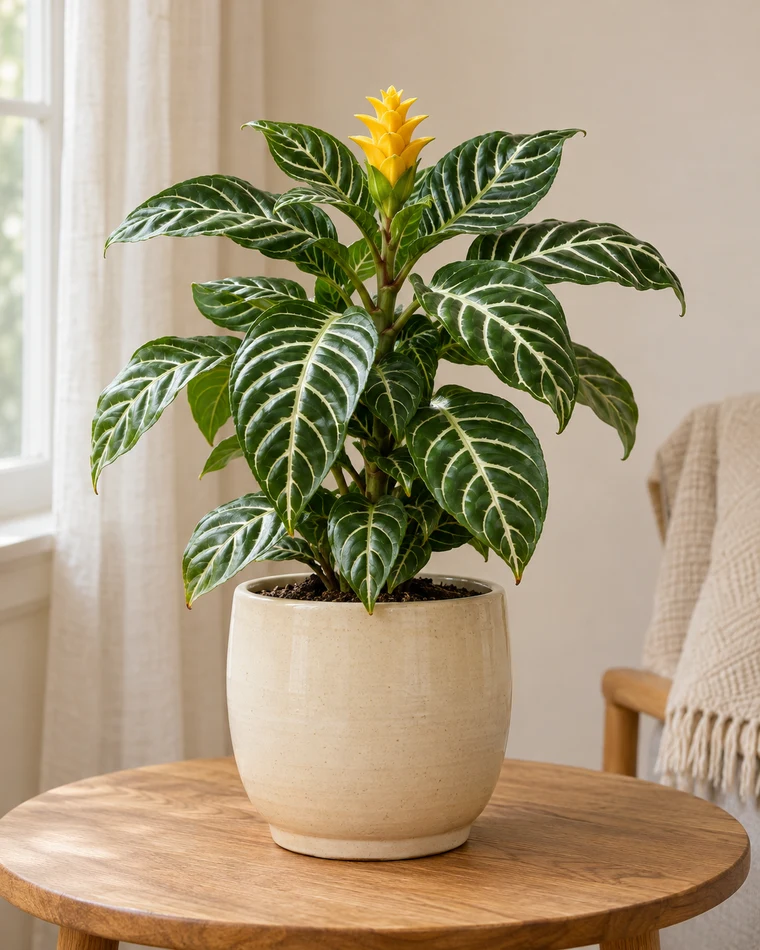
Zebra plant.
Aphelandra squarrosa
Zebra plant combines glossy, pale-veined foliage with a striking yellow flower spike. Aphelandra squarrosa rewards steady warmth, bright filtered light and attentive watering, but reacts poorly when its roots become either waterlogged or completely dry. Its showy bracts are different from the small true flowers. Learn how to keep the foliage healthy after flowering, encourage a compact shape and renew an older specimen from suitable stem cuttings.
How to help it thrive.
Checked:
Quick care reference
- Identity: Aphelandra squarrosa, Acanthaceae; native to Brazil.
- Light: bright indirect daylight, protected from abrupt strong sun.
- Water: keep lightly moist, never persistently waterlogged or completely dry.
- Warmth: NC State recommends at least about 18°C (65°F).
- Humidity: high humidity with airflow; inspect for mites in dry rooms.
- Prune: after flowering, cut back to a strong leaf pair.
- Propagate: healthy side shoots about 8–10 cm (3–4 in) long.
- Safety: no verified pet assessment in the replacement references; Aphelandra foliage is ornamental.
Overview and botanical identity
Aphelandra squarrosa is an evergreen Brazilian shrub in Acanthaceae, the acanthus family. Its upright stems carry strongly patterned foliage, and mature outdoor shrubs can become much larger than typical nursery houseplants. Indoors it is usually managed as a compact, pruned specimen. NC State notes that indoor plants may be short-lived and that cuttings can renew them; this is a practical option, not a fixed expiry date for every plant.
[2][1][3]How to identify this plant
The broad, glossy leaves grow in opposite pairs and show bold pale veins against a darker blade. Yellow modified leaves, called bracts, form the showy terminal spike; smaller tubular flowers emerge between them. This plant is not a zebra haworthia, a drought-adapted succulent, and not the prayer plant sometimes called zebra plant. Match Aphelandra squarrosa on the label before following watering instructions or checking safety.
[2][3]Light and placement
Bright indirect light supports both patterned foliage and the plant’s ability to flower. Protect it from sudden harsh direct sun, especially close to hot glass. In inadequate light, growth may become weak and flowering less likely; adding fertilizer does not replace light. If moving to a brighter location, watch the newest leaves for improvement and stop escalation if bleaching or sharply bounded scorch patches appear.
[2][1][3]Watering without a rigid schedule
Aim for consistent moisture without stagnant water around the roots. Unlike a succulent zebra plant, Aphelandra should not be left to dry completely between waterings. Check frequently enough to catch the transition from wet to lightly moist, then water thoroughly as needed. NC State links both excessive dryness and overly wet conditions to leaf browning or loss. A wilted plant with wet soil must not be automatically watered again.
[2][1][3]Soil, drainage and repotting
Use a well-drained houseplant substrate that retains moisture rather than a very dry cactus blend or compact garden soil. RHS recommends peat-free houseplant compost with added horticultural grit for drainage. NC State describes a preference for acidic soil, but that does not justify adding vinegar or chasing a precise number without testing. Keep the existing stem base at the same level when repotting and avoid a large jump in pot size.
[2][1][3]Temperature and humidity
NC State recommends warm conditions at least around 18°C (65°F) and high humidity. Treat that temperature as a growing recommendation rather than an exact damage threshold. Keep it away from cold drafts and hot, dry airflow. Dry edges can accompany low humidity, but root moisture still needs checking. A warm bathroom is useful only if it also has sufficient light and airflow; the room’s name alone does not establish suitability.
[2][3]Feeding during active growth
Feed during active growth and after new shoots start following a quieter period. RHS describes regular liquid feeding, while growth rate and the product label should guide actual frequency and dilution. An already fertilized substrate reduces the immediate need for more. Avoid trying to force another flower spike with concentrated bloom fertilizer; root stress, poor light and dry air can be more limiting than nutrient supply.
[1][2][3]Growth, cleaning and pruning
After the flower spike has finished, prune the main stem back to a strong pair of leaves to encourage side shoots, as RHS advises. Preserve healthy leaf pairs and avoid repeatedly cutting a weak plant. An elongated specimen can be reshaped over time, while suitable shoots provide propagation material. Do not remove the attractive yellow bracts merely because one small flower has faded: check whether the whole spike is actually declining.
[1][2][3]Propagation that suits the species
RHS recommends allowing postflowering side shoots to reach approximately 8–10 cm (3–4 in) before detaching them for rooting. Take a healthy stem cutting with nodes, remove leaves that would sit below the rooting-medium surface, and retain upper foliage. Place the lower node in an airy, moist medium with warm indirect light. A ventilated cover can limit water loss; permanently sealed, dripping conditions encourage problems rather than guaranteeing roots.
[1][3]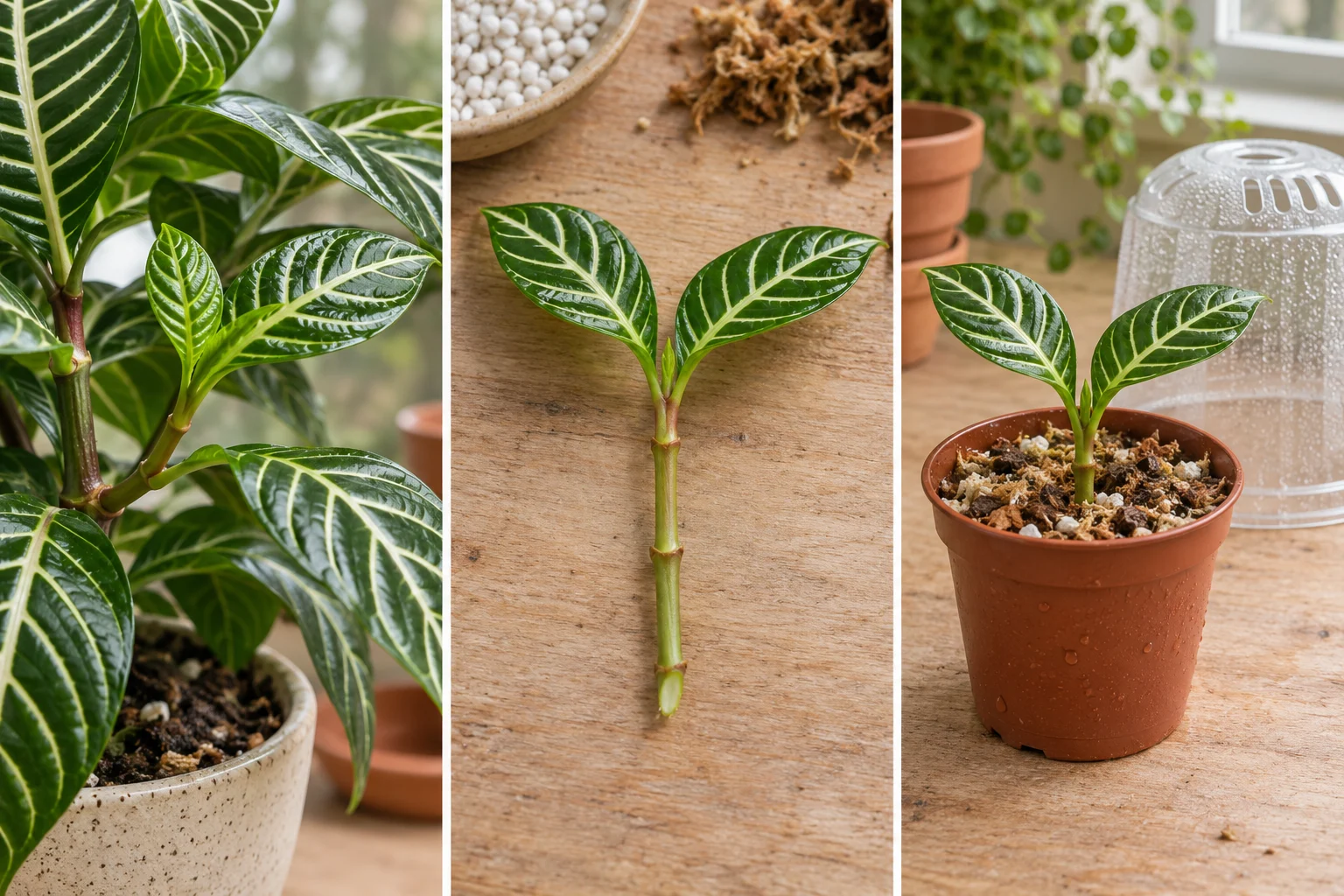
Panels, from left to right
- After the flower spike finishes, prune above a strong pair of leaves and allow healthy side shoots to develop.
- Select an 8–10 cm (3–4 in) side shoot with nodes; make a clean cut and remove lower leaves.
- Insert the lower node into moist, airy rooting medium. Keep warm in indirect light with a ventilated humidity cover if needed.
Pests and disease prevention
NC State lists aphids, scale, whiteflies, spider mites and mealybugs among potential pests. Examine the tender shoots and undersides for insects, sticky deposits, webbing or cottony clusters rather than treating every spot as the same problem. Wet roots and poorly drained pots can also drive decline without an insect cause. Keep dropped leaves out of the pot and avoid leaving moisture trapped around crowded, deteriorating foliage.
[2][3]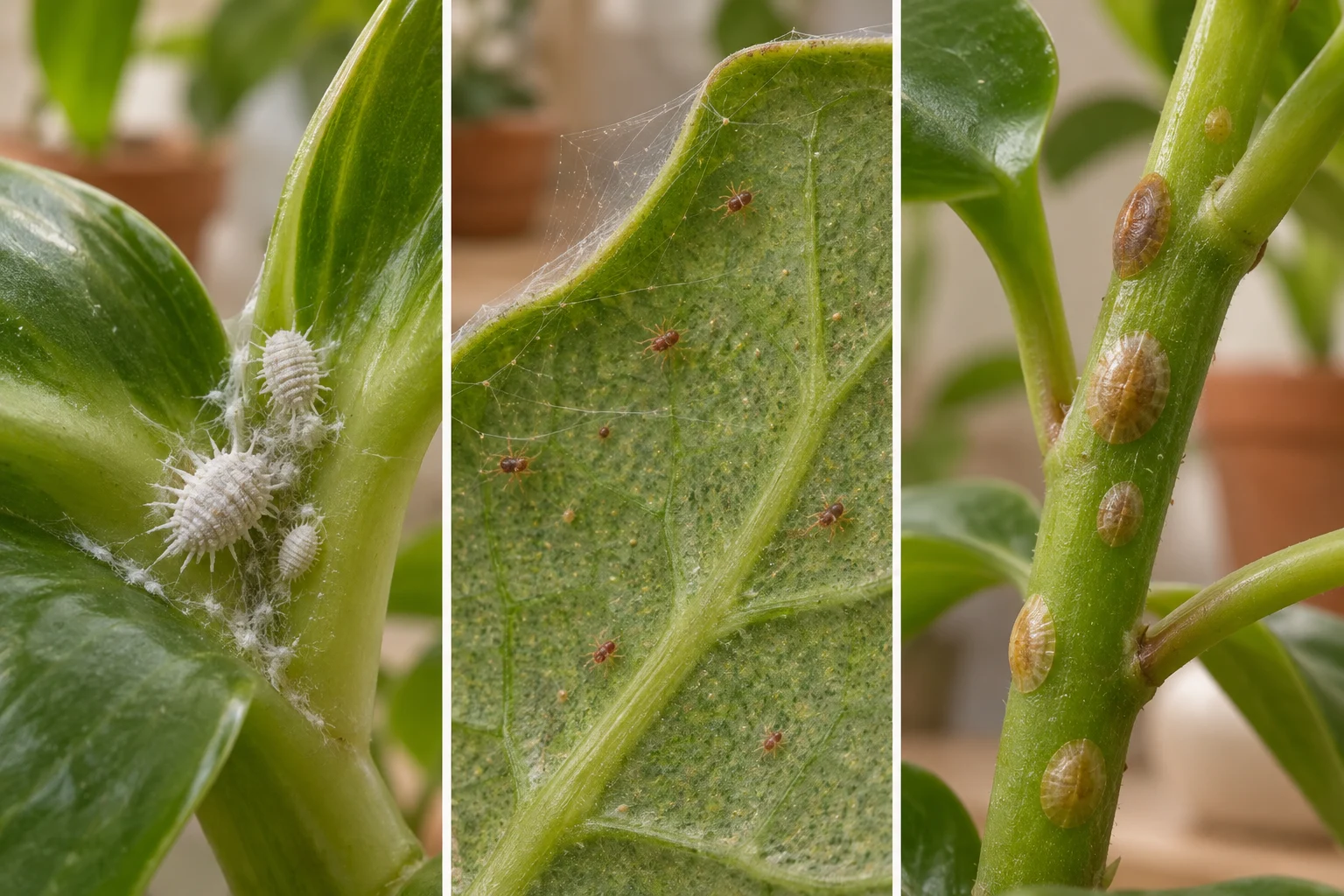
Panels, from left to right
- Mealybugs
- Spider mites
- Scale insects
Troubleshooting: check before treating
Lower leaves turning brown and dropping can follow either a dry root ball or persistent wetness, so check which condition is present. Brown tips may also involve low humidity. A drooping plant can have dry roots or damaged wet roots. If damage begins after a move, compare sun exposure and temperature. An old bare stem may not refill immediately; prune thoughtfully after recovery and consider renewing it from healthy shoots.
[2][3]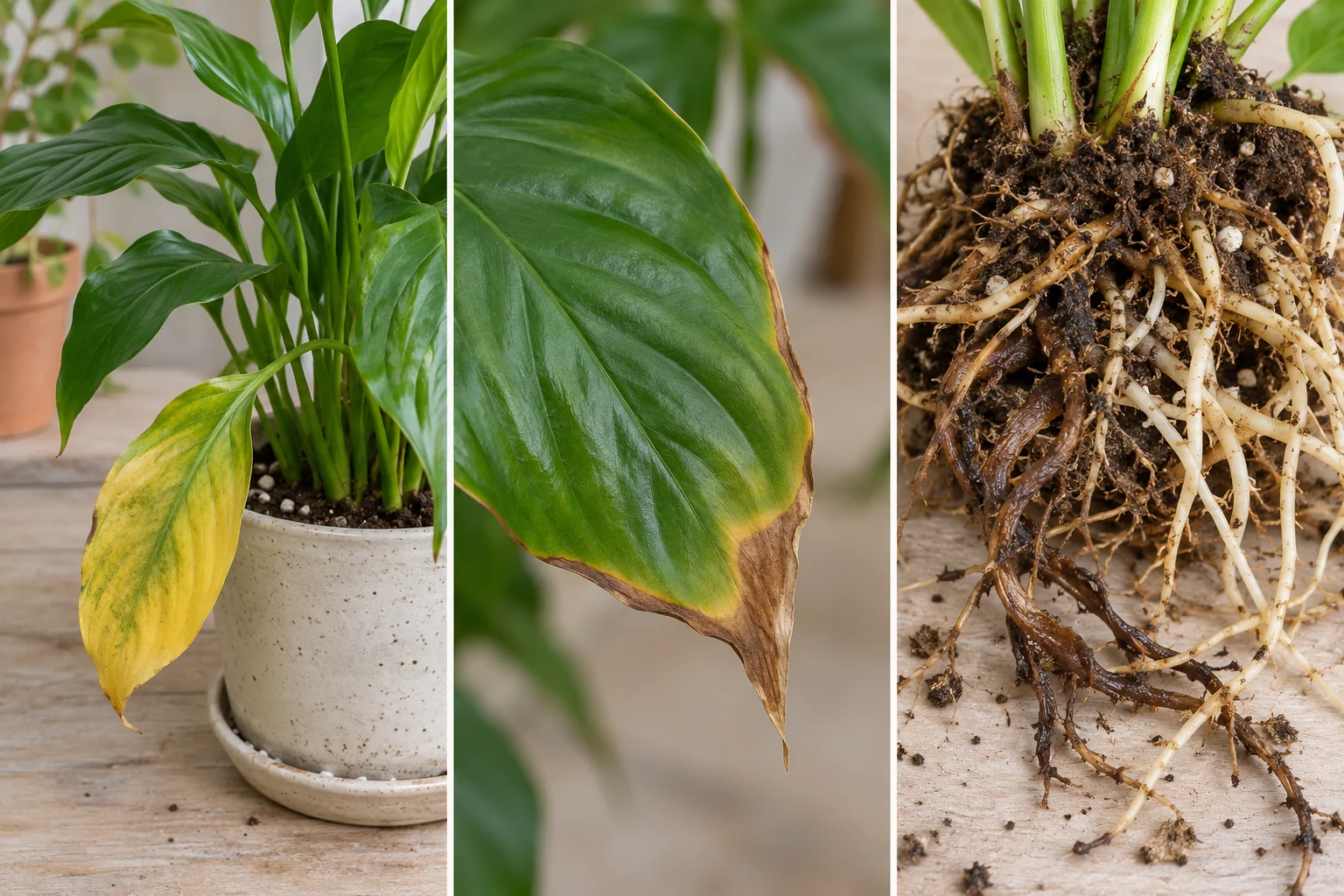
Panels, from left to right
- Yellowing foliage
- Brown leaf edges
- Damaged roots
Yellowing or leaf loss
- Possible causes
- Possible complete drying, persistent wetness or stress after an environmental change.
- What to check
- Compare pot weight and moisture with recent care; note whether the oldest leaves alone are affected.
- Next step
- Restore consistent, well-drained moisture; avoid fertilizer changes until roots and conditions are assessed.
Brown edges or damaged leaves
- Possible causes
- Possible low humidity, irregular moisture or sudden strong sun.
- What to check
- Inspect the damage pattern, measure conditions near the leaves and check undersides for pests.
- Next step
- Adjust the identified exposure or moisture problem gradually; old damage will remain, so monitor new leaves.
Drooping or stalled growth
- Possible causes
- Possible dry roots, wet-root damage, insufficient light or seasonal slowdown.
- What to check
- Check substrate moisture before watering and review light and temperature.
- Next step
- Water only as the root zone needs; improve stable growing conditions and seek horticultural advice if decline persists.
Seasonal adjustments
NC State describes a winter slowdown or semi-dormant period. Reduce water in line with slower uptake while still avoiding a completely dried root ball; “less water” does not mean abandoning the plant. Resume regular feeding when new growth starts. A warm room under supplemental light may sustain activity beyond the usual season, so use visible growth and substrate drying rather than a rigid winter shutdown.
[2][1][3]Flowers and reproduction
The bright yellow spike consists largely of bracts; the small tubular flowers are separate structures. This distinction explains why some color can remain after individual flowers fade. Flowering requires a sufficiently healthy plant and adequate light, but this guide does not promise a particular month or guaranteed rebloom indoors. After the entire spike declines, postflowering pruning can encourage a fuller plant and provide side shoots for cuttings.
[2][3]Children, pets and handling
The bold white veins identify Aphelandra squarrosa, not every plant sold as zebra plant. Its horticultural profile is not a species-specific veterinary safety assessment; the references reviewed here do not confirm a cat-and-dog safety conclusion. Display the foliage beyond chewing reach and keep the nursery label. A veterinarian needs the exact identity and any treatment history when assessing an ingestion.
[2][3]Advanced growing methods
A compact plant needs even light more than a climbing support. A grow light can help when winter daylight is inadequate, but increase exposure gradually and preserve a regular dark period. This species depends on a balance between moist roots and oxygen; transferring it into semi-hydro should be considered a separate experiment, not a cure for unexplained wilting. Restore stable basic care before changing several variables at once.
[1][2][3]Names, forms and cultivars
Cultivars are selected for compact growth, vein contrast and flowering characteristics; nursery labels should identify the actual selection when possible. A name on a retail display is not evidence that the plant tolerates complete drought or deep shade. Do not confuse differences in age, pruning or nursery growth conditions with a guaranteed cultivar trait. The common-name conflict with zebra succulents is the most consequential identification issue for home care.
[2][3]Frequently asked questions
Is zebra plant a succulent?
Aphelandra squarrosa is not a succulent. Some haworthias also carry the common name zebra plant, but their drought-tolerant care does not apply here. Check the scientific name and the broad, pale-veined leaves before choosing a watering routine.
[2]Is it toxic to cats or dogs?
We have not verified a cat-and-dog safety assessment for Aphelandra squarrosa from the replacement references. Do not treat the zebra nickname as a safety label. Keep the leaves for display, and consult a veterinarian if a pet chews them or develops symptoms.
[2]Should the soil dry completely?
No. Aim for lightly moist, well-aerated roots and avoid both complete drying and stagnant saturation. Feel the substrate and assess pot weight rather than using a fixed weekly dose. A wet, wilted plant needs investigation before more water.
[2][1]Are the yellow parts all flowers?
No. The showy yellow structures are mainly bracts, which are modified leaves. Smaller tubular flowers emerge between them. Some yellow display may remain after individual flowers finish, so assess the entire spike before removing it.
[2]How do I prune after flowering?
Once the spike has finished, cut the main stem back to a strong leaf pair with clean tools. This can encourage side shoots. Retain enough healthy foliage and delay substantial pruning if the plant is already stressed or declining.
[1][2]How long should a propagation shoot be?
RHS recommends side shoots about 8–10 cm (3–4 in) long. Use healthy stem material with nodes, remove lower leaves and root in an airy moist medium. Rooting time varies; do not treat a calendar deadline as evidence of failure.
[1]What temperature is suitable?
NC State recommends conditions at least around 18°C (65°F). Avoid cold drafts and chilling near glass. This is a cultivation guide, not a guarantee that every plant is undamaged above one exact temperature or injured immediately below it.
[2]Should I stop watering in winter?
No. Reduce watering as growth and uptake slow, but do not let the entire root ball dry out. Restart more frequent checks and feeding when new growth appears; warm plants under lights may not follow the same seasonal pattern.
[2][1]Can I keep it in a bathroom?
Only if that bathroom supplies bright indirect light, adequate warmth and airflow. Extra humidity helps, but a dark room remains unsuitable. Check actual conditions near the leaves rather than relying on the room type.
[2]Compare related plants
- False aralia: False aralia also appreciates steady warmth and humidity, but has finely divided compound foliage and different pruning and cutting material.
- Moth orchid: Moth orchid offers a different flowering habit; its epiphytic roots and bark-based care must not be copied for moisture-loving zebra plant.
Care reminders with PlantPal
Use PlantPal to note your zebra plant’s flowering and post-bloom pruning, and to remind you to check moisture before its leaves wilt.
Track this plant in PlantPal