 Plant
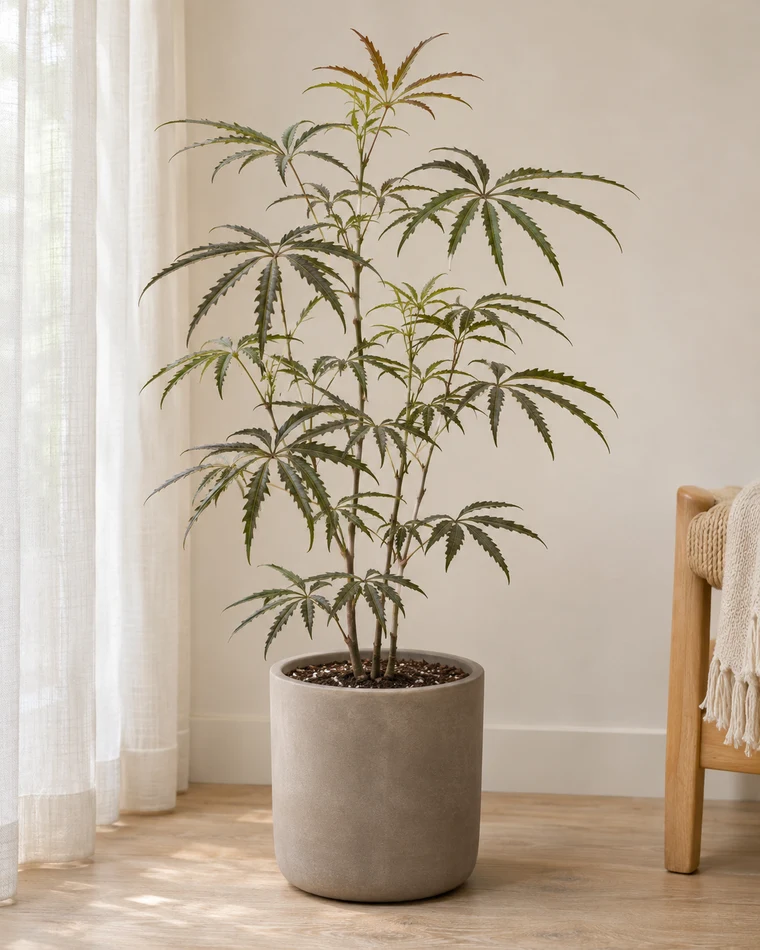
False aralia.
Plerandra elegantissima
False aralia offers an airy silhouette of narrow, toothed leaflets above slender upright stems. Plerandra elegantissima is a New Caledonian shrub or tree whose foliage changes as it matures. Bright filtered light, steady warmth and a moist but well-aerated root zone suit it better than repeated changes of position. This guide covers the old botanical names still found on labels, practical propagation methods and the distinction between pet toxicity and skin-contact sensitivity.
How to help it thrive.
Checked:
Quick care reference
- Identity: Plerandra elegantissima, Araliaceae; native to New Caledonia.
- Older names: Dizygotheca elegantissima and Schefflera elegantissima.
- Light: bright filtered or indirect daylight.
- Water: moist but well-drained roots; check the pot rather than a fixed schedule.
- Humidity: high humidity with ventilation; avoid drying or cold drafts.
- Pruning: selective shaping with clean tools and gloves.
- Propagation: semi-hardwood stem cuttings, air layering or seed; timing varies.
- Handling: possible contact skin allergy; pet safety not established by the reviewed horticultural sources.
Overview and botanical identity
Plerandra elegantissima belongs to Araliaceae and is native to New Caledonia. Older labels and references use Dizygotheca elegantissima or Schefflera elegantissima for the same species. Outdoors in suitable tropical conditions it becomes a shrub or tree; an indoor pot restricts the root system and pruning manages height. Large landscape dimensions should not be read as a likely living-room outcome, and there is no evidence-based fixed indoor lifespan to promise.
[2][1][4]How to identify this plant
A leaf is compound: several narrow, toothed leaflets radiate from a shared point. Juvenile foliage creates the familiar delicate appearance; new growth may have a coppery tone before darkening. UF/IFAS documents broader, heavier adult leaves and notes that both stages may occur on the same plant. This normal change should not immediately trigger a disease treatment or a conclusion that the nursery supplied another species.
[2][3][4]Light and placement
Use bright filtered or indirect light, as RHS recommends, and protect the foliage from abrupt intense exposure. UF/IFAS describes light shade for landscape culture; that does not make a dark indoor corner equivalent. Weak or leaning growth suggests checking the actual light available at leaf level. Introduce any grow light gradually, and keep leaves clear of fixtures and hot glass rather than using extra fertilizer to compensate for shade.
[1][3][4]Watering without a rigid schedule
Aim for a moist, well-drained root zone rather than constant saturation. Check the surface, deeper moisture and the weight of the pot together, because a dry-looking top can hide wet lower compost. Water when the root ball is approaching the appropriate lightly moist condition, before complete drying, and let excess escape. The selected sources do not establish an exact dry-depth threshold or a fixed number of days between waterings.
[2][1][4]Soil, drainage and repotting
RHS recommends a peat-free, loam-based compost with good drainage; UF/IFAS likewise emphasizes fertile, well-drained soil. Choose a mix that retains moisture without collapsing into a dense mass. Keep the stem base at its previous level and use a modest pot-size increase when crowding warrants repotting. A tall narrow plant also needs a stable container. There is no verified species-specific pH target here that requires routine chemical correction.
[1][3][4]Temperature and humidity
High humidity is recommended by NC State, and shelter from wind is emphasized by UF/IFAS. Indoors, keep the plant in a comfortably warm, stable location away from cold drafts and drying ventilation. The selected references do not establish a precise ideal temperature range or humidity percentage, so this guide avoids invented thresholds. Do not mistake a horticultural outdoor hardiness category for a recommended year-round living-room temperature.
[2][1][4]Feeding during active growth
Use a balanced houseplant feeding routine while growth is visible, following the product label and accounting for any fertilizer included in the substrate. False aralia does not need a special “tree-strength” dose because of its eventual outdoor size. If leaves decline, inspect moisture, light and pests before adding supplements. UF/IFAS reports poor salt tolerance in landscape conditions, reinforcing the need to avoid unnecessary salt accumulation rather than escalating fertilizer.
[4]Growth, cleaning and pruning
The plant naturally grows upright and may be sparsely branched. Prune selectively to manage size or remove damaged growth, preserving healthy foliage and a clear stem structure. Wear gloves because RHS warns of possible skin allergy from contact. Gentle cleaning and regular inspection are preferable to leaf-shine products. Changes from narrow juvenile leaflets to broader mature leaves reflect development and are not something to reverse by severe pruning or nutrient manipulation.
[2][1][4]Propagation that suits the species
RHS supports propagation from semi-hardwood stem cuttings or seed; UF/IFAS also records air layering. For cuttings, select healthy shoots with partly firmed stems and nodes, remove lower leaves and place the lower node in an airy, moist rooting medium. Provide steady warmth, indirect light and ventilated humidity. Air layering can suit a woody stem when an established upper section is desirable, but careful technique and patient root development are required.
[1][3][4]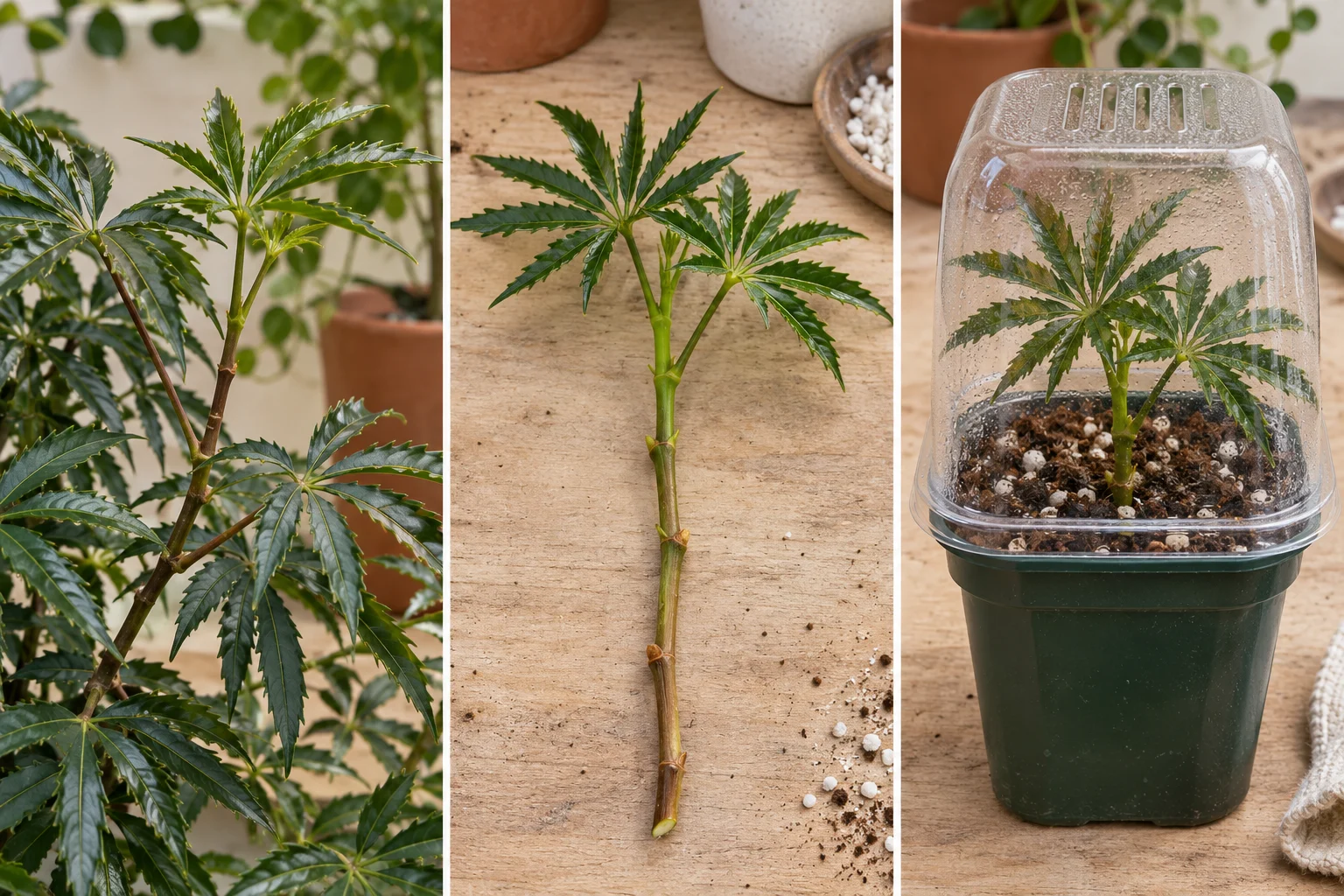
Panels, from left to right
- Select a healthy semi-hardwood shoot with nodes and prepare clean tools. Wear gloves because contact may cause skin allergy.
- Take a stem cutting, remove lower leaves and retain healthy upper foliage; do not use an isolated leaflet.
- Insert the lower node into an airy moist rooting medium. Keep warm in indirect light with humidity and ventilation, monitoring for roots without promising a fixed date.
Pests and disease prevention
Potential pests include spider mites, scale, mealybugs, aphids and thrips according to the horticultural references. Check the fine foliage closely: small insects, stippling, sticky residue or cottony deposits can be easy to miss. UF/IFAS highlights mites and scale as important foliage problems. Root-zone trouble can coexist with pests, so an insect treatment alone may not restore a plant held in persistently wet or poorly aerated substrate.
[2][3][4]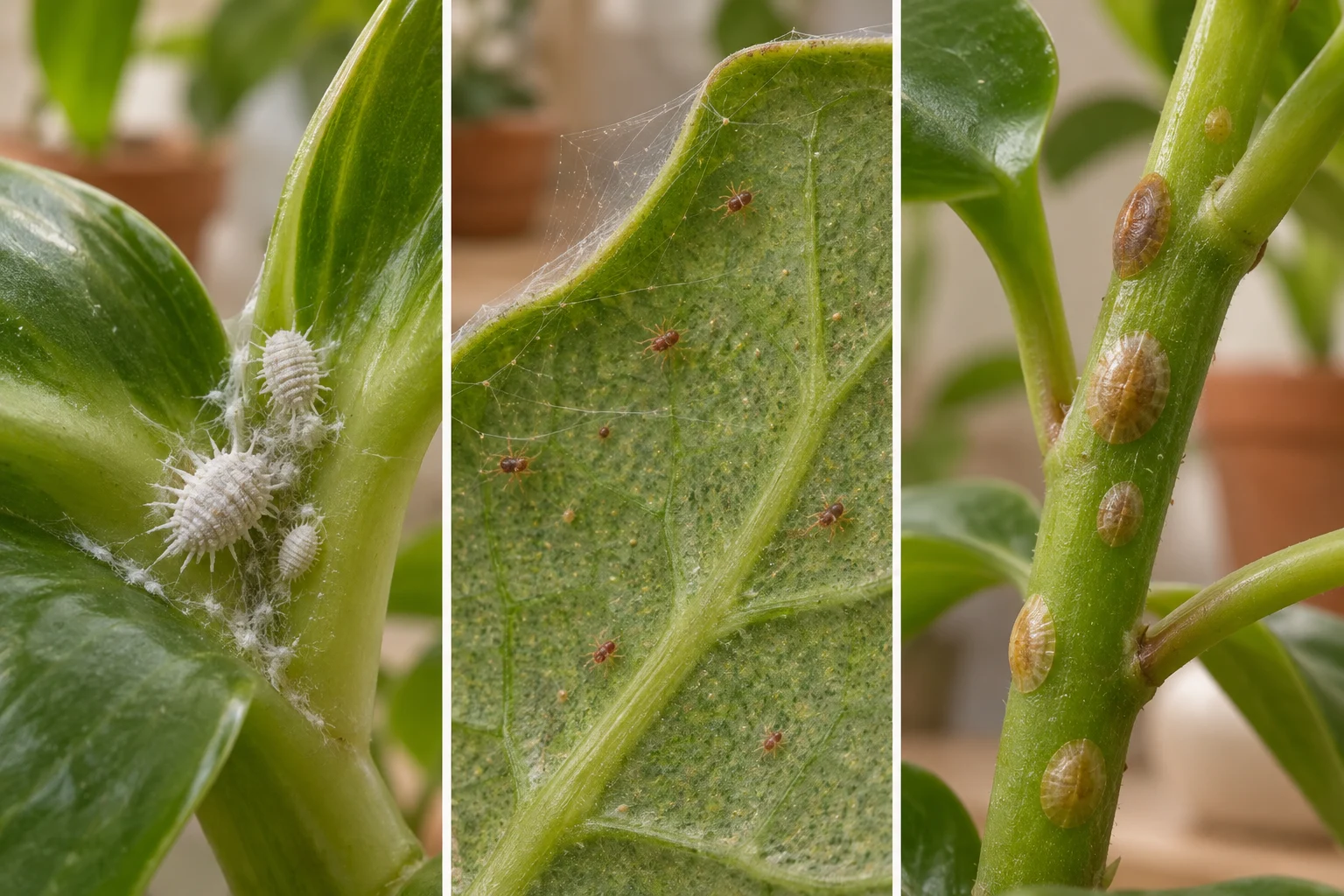
Panels, from left to right
- Mealybugs
- Spider mites
- Scale insects
Troubleshooting: check before treating
Leaf yellowing or loss can follow a moisture problem, inadequate light or a stressful change in conditions; these are possibilities, not diagnoses from a photograph. Brown edges also need a humidity and pest check. If the plant is shedding after relocation, review all changes before moving it repeatedly. Broadening leaflets without tissue damage can be normal maturity rather than trouble. A soft base or continued rapid decline warrants professional horticultural assessment.
[2][1][4]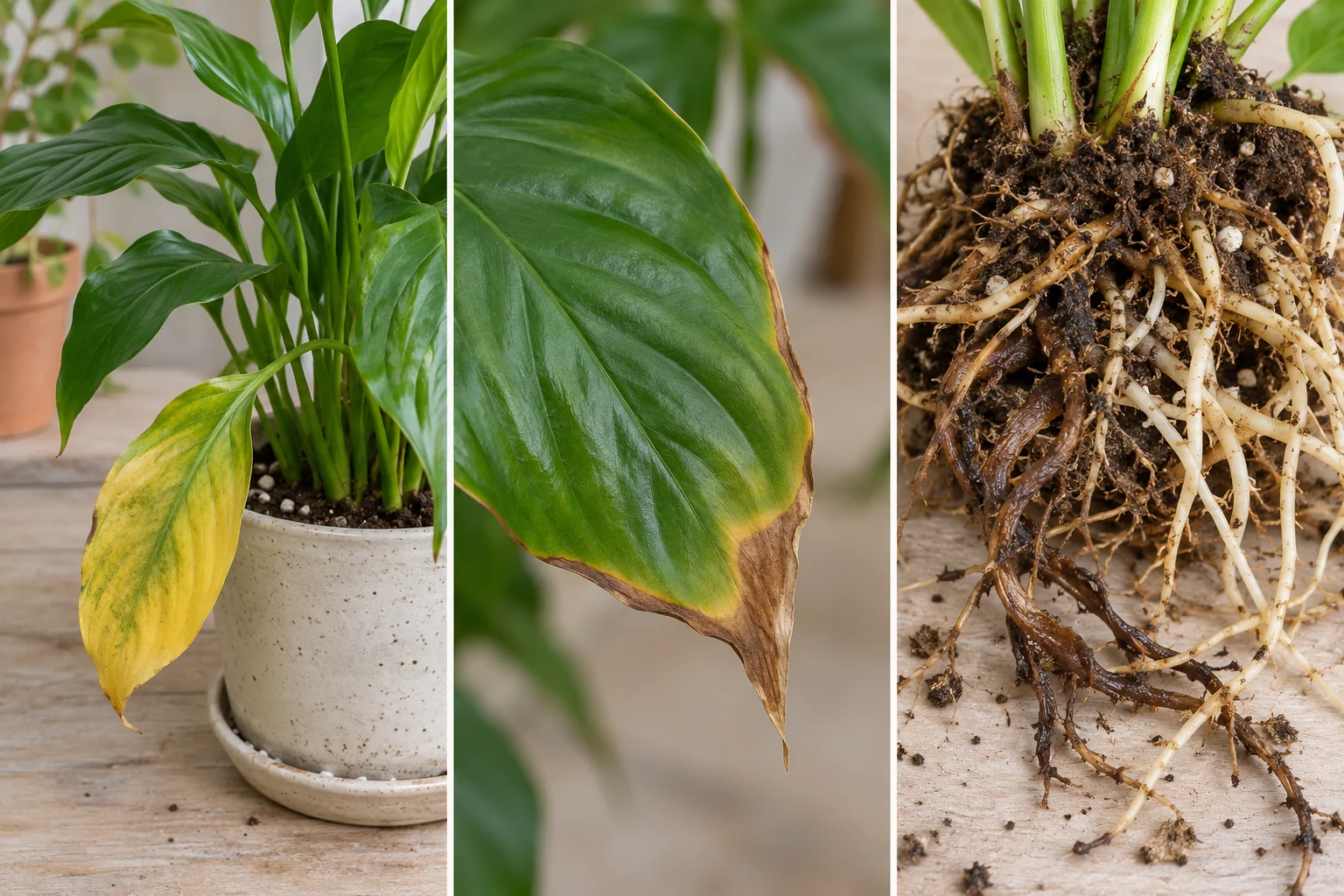
Panels, from left to right
- Yellowing foliage
- Brown leaf edges
- Damaged roots
Yellowing or leaf loss
- Possible causes
- Possible moisture imbalance, inadequate light, relocation stress or pests.
- What to check
- Review recent changes and inspect root-zone moisture, leaflet undersides and stems.
- Next step
- Stabilize the conditions that are actually unsuitable; avoid repeated relocation or speculative fertilizer treatments.
Brown edges or damaged leaves
- Possible causes
- Possible dry air, irregular moisture, salt stress or pest feeding.
- What to check
- Check humidity and drafts, inspect for stippling or insects and review fertilizer use.
- Next step
- Adjust the identified factor and isolate if pests are found; monitor new growth because old damage does not reverse.
Drooping or stalled growth
- Possible causes
- Possible dry roots, persistent wetness, low light or seasonal slowdown; broader healthy leaflets may simply indicate maturity.
- What to check
- Compare pot moisture and light with earlier records; distinguish healthy shape changes from damaged tissue.
- Next step
- Improve the limiting condition gradually, avoid unnecessary repotting and seek advice for rapid or persistent decline.
Seasonal adjustments
As daylight decreases, reassess how quickly the pot dries and reduce watering or feeding only as actual growth slows. A warm room may keep the plant active, while heating makes the air drier. In brighter weather, water use can rise without requiring a larger pot. If summer outdoor conditions are suitable, acclimate in shelter and filtered light, then inspect carefully for pests before bringing the plant indoors.
[1][4]Flowers and reproduction
Small flowers occur in clusters on mature plants, and fruits can follow under suitable conditions; indoor flowering is uncommon. NC State and UF/IFAS describe the reproductive structures, but a home grower should not expect reliable flowers or seed. The decorative juvenile foliage is usually the reason for growing it. A healthy plant may remain flowerless for years without needing a bloom stimulant or corrective treatment.
[2][3][4]Children, pets and handling
Plerandra elegantissima is also sold under the names Dizygotheca and Schefflera elegantissima. The reviewed horticultural references do not establish a species-specific safety assessment for cats and dogs. RHS warns that contact can cause skin allergies: wear gloves when cutting its stems, and keep trimmed leaves away from children and pets. A plant label is useful for a veterinarian after chewing or a concerning reaction.
[2][1][4]Advanced growing methods
This is a woody, upright plant rather than a climbing aroid, so a moist moss pole is not its natural requirement. A temporary unobtrusive support may stabilize a leaning stem, but check lighting and root anchorage first. Semi-hydroponic transfer should not be presented as a proven rescue for leaf drop. Keep care changes limited and measurable so that a response can be connected to the light, watering or substrate adjustment actually made.
[1][3][4]Names, forms and cultivars
The most important names to recognize are the botanical synonyms on older labels: Plerandra, Dizygotheca and Schefflera elegantissima refer to this species. That does not make it identical to all other Schefflera or Aralia species. Some nursery forms differ in leaflet width or variegation, but age itself changes leaf shape substantially. Verify a cultivar label before assigning every broader leaf or color difference to a named selection.
[2][1][4]Frequently asked questions
Are Plerandra, Dizygotheca and Schefflera elegantissima the same plant?
Yes: these are older names for Plerandra elegantissima, as confirmed by the botanical references. Keep the current name and synonyms together when recording care or requesting advice; the identification does not extend to other species sold as aralia.
[2][1]Is false aralia toxic to cats and dogs?
A cat-and-dog safety conclusion is not established by the horticultural sources checked here. For false aralia, the confirmed handling concern is possible skin allergy; prevent chewing and keep the botanical name available when asking a veterinarian about an exposure.
[2][1]Why are the new leaflets broader?
False aralia changes leaf form as it matures. UF/IFAS describes broader adult foliage and the coexistence of juvenile and mature leaves. If the leaves are otherwise healthy, broadening alone does not establish disease, a fertilizer problem or misidentification.
[2][3]Why are leaves dropping after a move?
Changes in light, temperature, airflow and watering may all contribute, so inspect them together. Avoid moving it again and again without a reason. Check for pests and assess the root zone if leaf loss continues or the plant deteriorates.
[2][1][4]What is a semi-hardwood cutting?
It is stem material that has begun to firm rather than an extremely soft tip or a very old hard trunk section. RHS supports this method for false aralia. Choose a healthy shoot with nodes and retain upper foliage while removing lower leaves.
[1][3]Is air layering possible?
Yes, UF/IFAS records air layering as a propagation method. It allows roots to form on a suitable stem while that section remains attached to the parent. Technique and rooting time vary, so do not detach an unrooted layer prematurely.
[1][3]What humidity percentage should I target?
NC State recommends high humidity but the selected species references do not provide one validated indoor percentage. Measure near the plant, avoid drying airflow and maintain ventilation. Brown edges alone are not proof that humidity is the only problem.
[2][1]Which pests should I look for first?
Mites and scale are highlighted by UF/IFAS, while NC State also lists mealybugs, aphids and thrips. Look at leaflet undersides and stem junctions. Identify the actual organism before deciding whether physical removal or a labeled treatment is appropriate.
[2][3][4]Compare related plants
- Weeping fig: Weeping fig also makes an indoor woody canopy, but its leaf shape, sap and safety profile differ; do not transfer false-aralia pet guidance to it.
- Lady palm: Lady palm offers a divided-leaf silhouette on clustered canes. Its palm growth and division methods differ from false aralia’s woody stems and cuttings.
Care reminders with PlantPal
Track new leaf growth and leaf drop on your false aralia in PlantPal, alongside notes about changes in its light and location.
Track this plant in PlantPal