 Plant
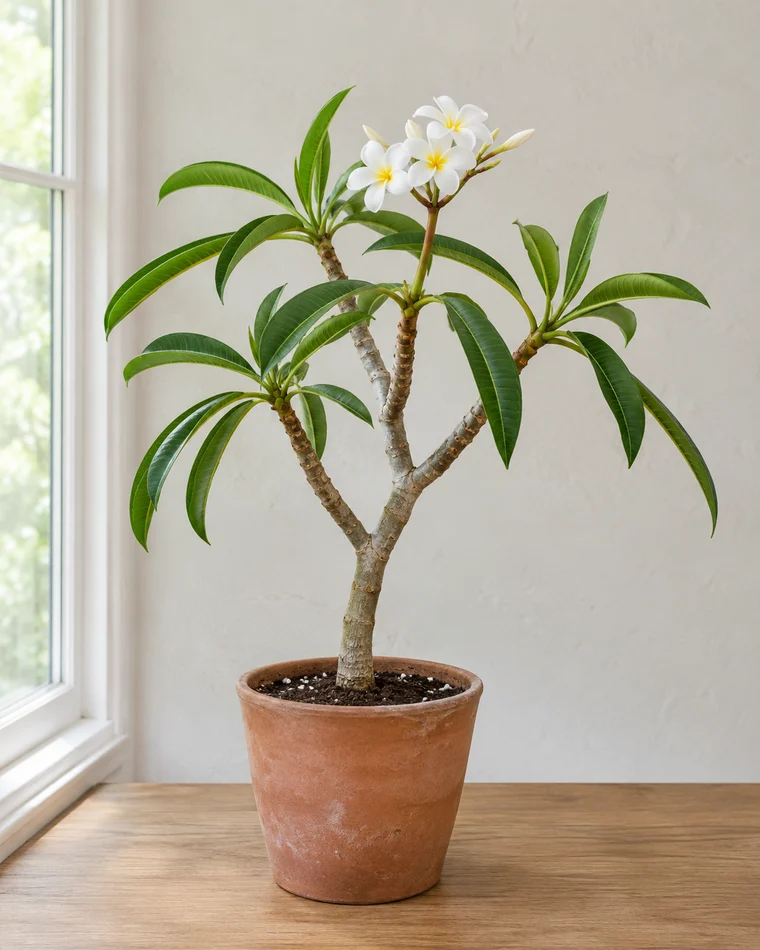
White frangipani.
Plumeria alba
White frangipani, Plumeria alba, is a tropical tree with narrow leaves and fragrant white flowers centered in yellow. It suits a sunny container setting far better than a dim foliage-plant corner. In cooler climates, successful care often combines a warm outdoor season with protected indoor accommodation. This guide explains that practical compromise, including changing water demand, uncertain seasonal leaf loss, stem propagation and precautions around its irritating sap.
How to help it thrive.
Checked:
Quick care reference
- Identity: Plumeria alba, a tropical tree in Apocynaceae.
- Narrow leaves and reliable provenance matter; white flowers alone do not prove species identity.
- Provide full sun with gradual acclimation after indoor protection.
- Use freely draining medium and remove trapped runoff.
- Match watering to actual roots, foliage and seasonal activity.
- Protect from frost and cold glass; do not force a chilling period.
- Prepared stem cuttings need a dry sealed base and careful establishment.
- Sap is irritating; prevent ingestion and contact by children and pets.
A tropical tree with realistic indoor limits
White frangipani is Plumeria alba, a woody perennial in Apocynaceae. It is cultivated for fragrant white flowers with yellow centers. A nursery pot does not turn it into a naturally small shade plant: the species can develop a substantial branching canopy and needs the light and warmth of a tropical tree.
Container dimensions, pruning and climate strongly influence growth. For many owners it is better understood as a sunny patio or conservatory plant that spends cold weather indoors. A bright-looking but sunless room may sustain it without delivering the flowers shown in tropical garden photographs. Choose it for conditions you can provide, including a realistic plan for moving and housing the mature canopy.
[1][2][4][3]Narrow leaves help distinguish Plumeria alba
The species has narrow, leathery, lance-shaped green leaves clustered toward the branch ends. White flowers with small yellow centers appear in terminal groups and are fragrant. The stems are thicker than the delicate flower display suggests, and damage releases white sap. Observe the complete plant: leaves, their tips and arrangement, branch form and flowers together are more useful than flower color alone.
Many other plumerias and hybrids also have white flowers, so a white bloom does not confirm Plumeria alba. Keep a reliable nursery label or documented provenance and seek expert help if the foliage does not fit. Common names such as frangipani or temple tree often cover several taxa. Do not substitute a photograph of a broad-leaved hybrid while presenting it as a precise species identification, and do not test sap to resolve uncertainty.
[1][2][4]Provide the sun a flowering tree needs
Indoors, place an established plant at the sunniest suitable window or in a bright conservatory; a shaded shelf is unlikely to support strong flowering. Consider how much direct exposure actually reaches the leaf crown through the year. A large plant can have leaves above or beside the useful window area even when its pot seems ideally placed.
Introduce stronger sunlight gradually after indoor winter protection, especially when new leaves have formed in lower light. A grow light can supplement a short or obstructed day, but an undersized lamp may not illuminate a spreading tree adequately. Use equipment suited to the canopy and follow its positioning guidance. Judge success by sturdy growth and, eventually, flowering rather than promising that any household lamp will substitute for tropical sun.
[1][2][4]Match water to roots, leaves and activity
An established leafy frangipani in sun can use substantial water, yet its roots still need a freely draining medium. Check the pot before watering and let excess moisture escape instead of leaving the container in a reservoir. Drought tolerance described for established landscape trees does not mean that a small root-bound plant or a newly rooted cutting can be abandoned through a hot spell.
Water demand changes markedly when growth slows or foliage is lost. Reduce watering to match a less active plant and the actual drying rate rather than maintaining a summer schedule. A leafless stem in wet medium does not need more water simply because it looks bare. Equally, leaf retention in a warm bright environment means the plant may still be active. Evaluate stem firmness, drainage and moisture together; dormancy should not be assigned solely from the month.
[1][2][4]Drainage first, with support for thick branches
Use a container medium that drains freely and maintains air around roots. A large decorative pot without an outlet is a poor match for this plant's seasonal changes in water demand. The canopy also creates leverage, so choose a stable container and keep it upright without burying the stem more deeply. A heavy outer pot can help with balance only if trapped runoff is regularly removed.
Repot an established plant when roots or degraded medium justify it, allowing room for further growth without surrounding a small root system with excessive wet material. Newly formed plumeria roots can be fragile, so avoid unnecessary disturbance of a recently rooted cutting. Plan how the canopy and pot will move through a doorway before increasing the container size. A manageable specimen is easier to overwinter safely than a tree that cannot be moved without breaking branches.
[1][2][4]Protect from cold rather than testing survival
Plumerias are tropical plants vulnerable to cold damage. UF/IFAS places them in warm landscape climates and recommends containers that can be brought inside farther north. Protect this plant from frost and from chilling at window glass. The fact that a damaged outdoor tree sometimes regrows does not justify exposing a valued container specimen to the same conditions.
A warm growing position with air movement is more useful than a permanently humid enclosure. Keep a protected plant away from direct heater airflow, which can dry tissues while the pot remains cool and wet. Monitor both day and night conditions when planning an outdoor season. Do not force a cold resting period in an attempt to make an evergreen plant behave like a deciduous one; leaf retention and seasonal slowing depend on conditions and identity.
[1][2][4]Support flowering without relying on a booster
Feed an established, actively growing container plant with an appropriate fertilizer according to the product label, considering any nutrients already present in its medium. Commercial landscape recommendations are not pot doses and should not be transferred by guesswork. Adequate sunlight, healthy roots and a mature flowering framework remain essential; high-phosphorus marketing does not remove those requirements.
Avoid feeding a newly stuck unrooted cutting or a declining plant as a shortcut to establishment. Reduce or pause fertilizer when growth slows markedly. If leaves remain sparse, review light, root moisture and recent temperature changes before diagnosing a shortage. Record the product and application rather than repeatedly adding different fertilizers to chase a bloom. Excessive salts in a small container can create a new problem without solving the original one.
[1][2][4]Prune with flowering tips and brittle branches in mind
Plumeria flowers form at branch ends, so removing healthy tips changes both the shape and the potential flower display. Plan selective pruning around the plant's condition and your space constraints. A severe cutback may reduce the next flowering display; it is not a reliable way to get more flowers immediately. Keep branches clear of movement routes because their thick appearance does not make them immune to mechanical breakage.
For necessary work, use clean tools and protect skin and eyes from the irritating sap. Support the plant by its container rather than lifting or dragging it by a limb. Remove damaged material with a clear purpose, and obtain experienced help for large cuts or an unstable specimen. Avoid repeated tip trimming just to fit an unsuitable indoor corner; choose a long-term location that can accommodate the framework you intend to retain.
[1][2][4]Root a sound, prepared stem cutting
Stem cuttings are a documented propagation method for Plumeria alba; plumerias are commonly propagated this way to retain a chosen parent's characteristics. Use correctly identified, healthy material and protect against sap during preparation. The cut base must dry and seal before it is placed into freely draining medium. The University of Hawai‘i describes a curing period for plumeria cuttings, but readiness also depends on conditions and the cutting itself; a wet fresh wound is not the desired starting point.
Support the prepared cutting upright and provide warmth and suitable light without keeping its unrooted base soggy. Do not treat emerging leaves as proof that a large root system already exists, because stored stem reserves can support initial activity. Minimize disturbance while roots develop and move it carefully after establishment. Seeds may produce variable offspring and require reliable provenance if species identity matters. An unknown white-flowered parent does not automatically produce verified Plumeria alba material.
[1][2][4]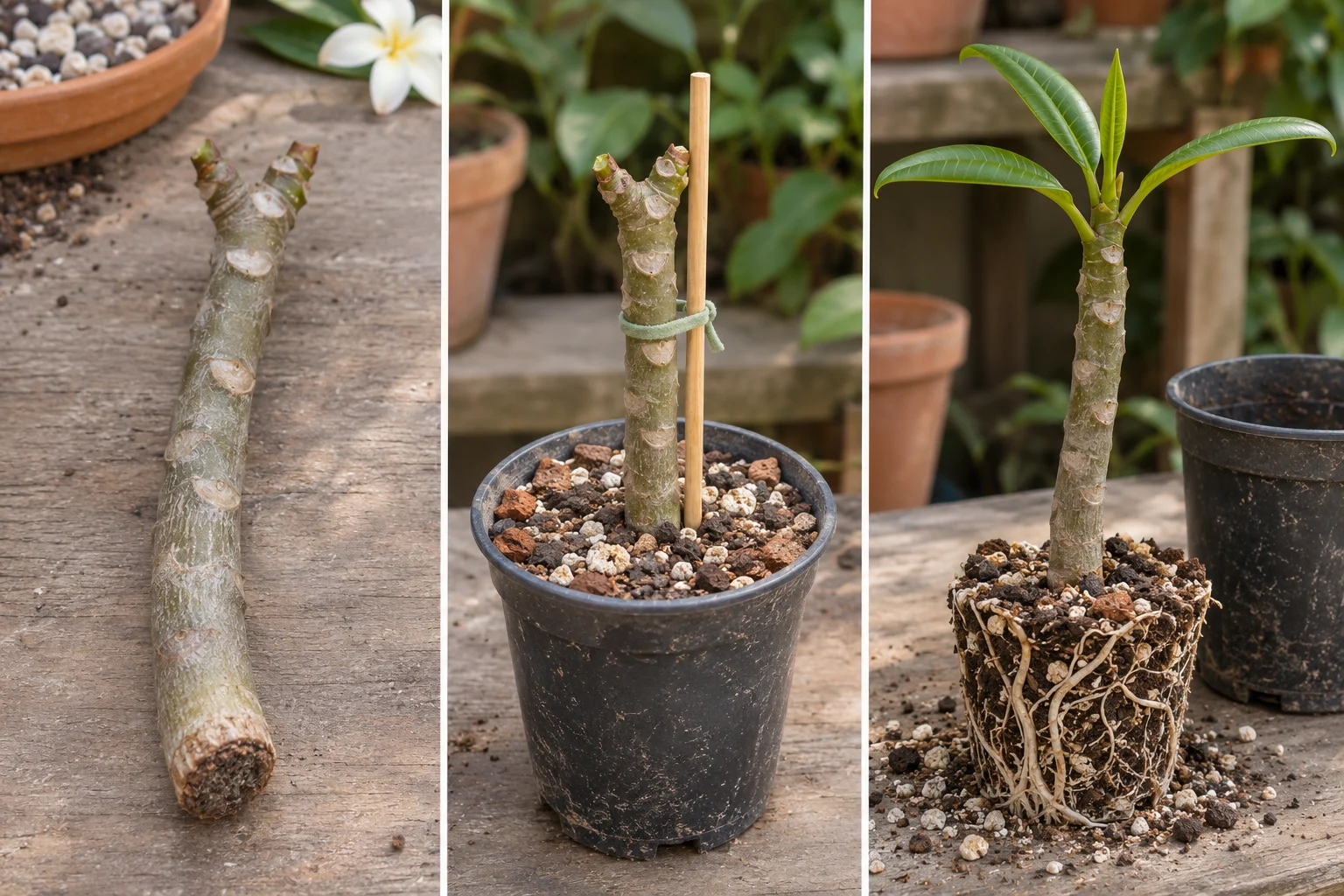
Panels, from left to right
- Select healthy, correctly identified stem material and protect against sap while preparing a cutting.
- Let the base dry and seal, then support the cutting upright in freely draining medium without keeping it soggy.
- Allow roots to establish with warmth and suitable light, then transplant carefully to protect the young roots.
Look below leaves for rust and sap-feeding pests
Orange powdery or raised areas on leaf undersides can suggest rust; sticky foliage with dark surface growth may accompany sap-feeding insects. Inspect both sides of leaves before treating the visible color alone. Black sooty growth can be secondary to insect honeydew, which means wiping away the dark coating does not address its source.
Collect fallen affected leaves and keep them away from the pot and neighboring plants. Isolate a suspect plant where practical, and seek a reliable identification before using a locally approved treatment. Product choice must suit the confirmed problem and the setting; indoor application rules may differ from outdoor landscape use. Continuing stem softness or wet-root decline needs a separate assessment rather than assuming every problem is leaf rust.
[1][2][4]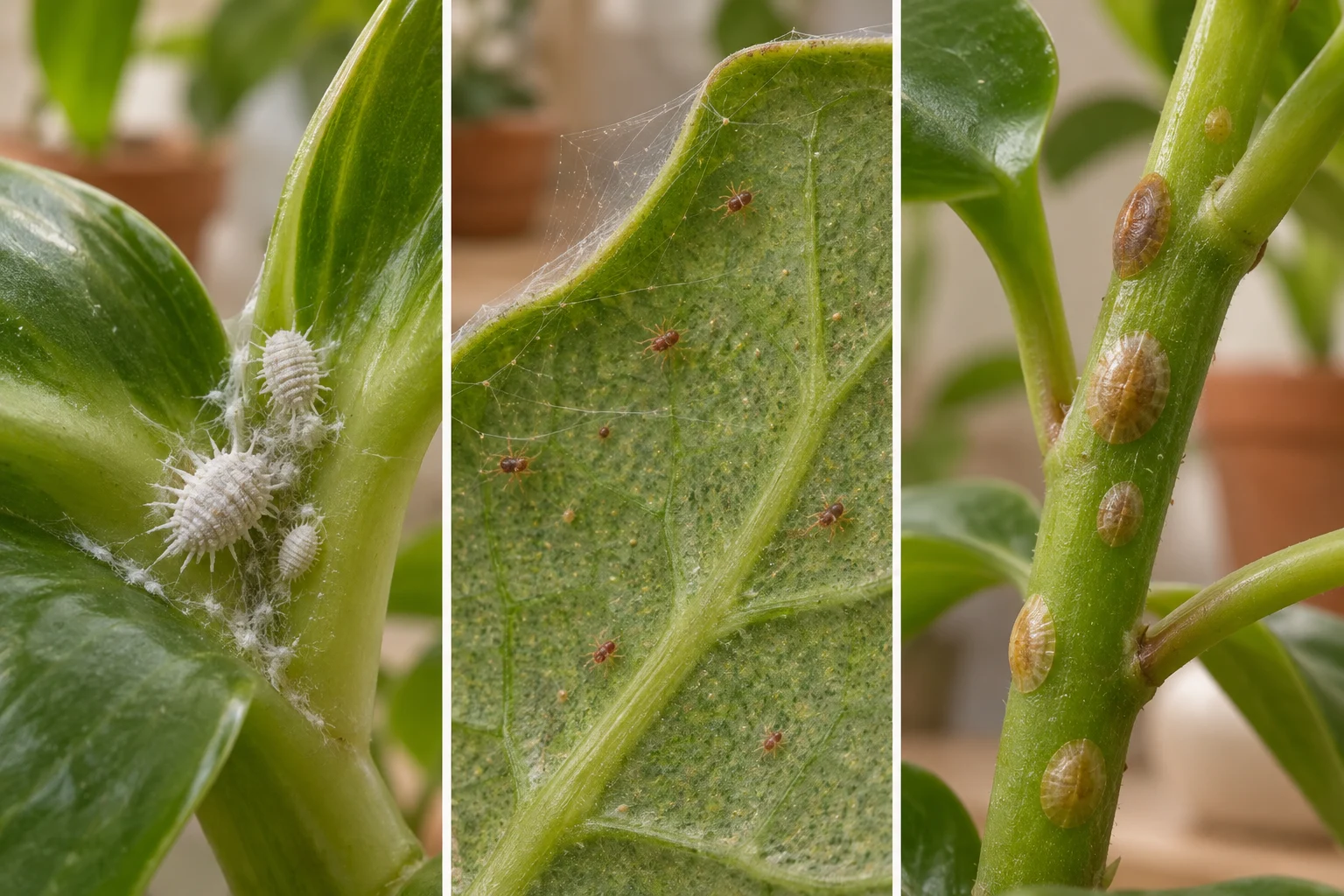
Panels, from left to right
- Mealybugs
- Spider mites
- Scale insects
Distinguish seasonal leaf loss from collapse
A slower, partly bare frangipani can be responding to changing conditions, but leaf loss is not automatically harmless dormancy. Review whether stems remain firm, whether the root zone dries and whether leaves have spots, pests or sudden cold injury. A softening base or spreading dark stem tissue is more concerning than orderly loss of older leaves on a firm framework.
A plant that retains leaves yet does not flower may simply lack enough light or maturity, or may have had flowering tips pruned away. Yellow leaves after a watering change require examining roots before adding fertilizer. Keep photographs of the crown and individual affected leaves, and compare them with the timing of weather, relocation and pruning. When decline progresses rapidly, obtain horticultural help rather than forcing a diagnosis from the general term 'frangipani'.
[1][2][4]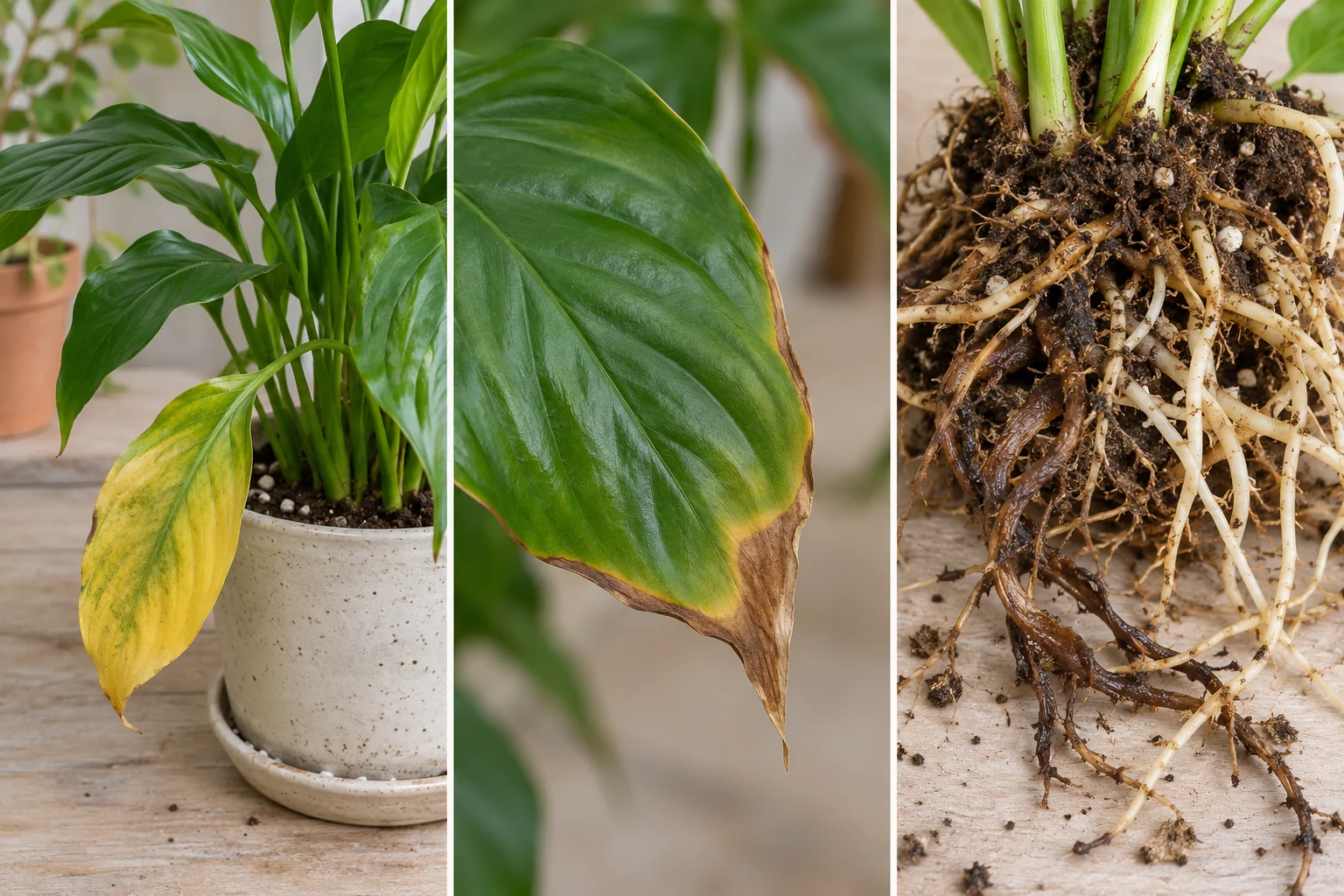
Panels, from left to right
- Yellowing foliage
- Brown leaf edges
- Damaged roots
Leaf loss on a firm frangipani framework
- Possible causes
- Seasonal slowing is possible, but cold exposure, pests or root stress can also remove foliage.
- What to check
- Review recent temperatures, leaf markings, stem firmness and the drying rate of the root zone.
- Next step
- Adjust water to actual activity and protect from cold; investigate soft stems rather than assuming dormancy.
Orange marks under narrow frangipani leaves
- Possible causes
- Plumeria rust may produce orange powdery or raised areas, although other damage can look similar.
- What to check
- Examine both leaf surfaces and nearby foliage, noting whether the marks spread and leaves fall.
- Next step
- Collect affected fallen material and obtain a reliable diagnosis before choosing a permitted treatment.
Leafy growth without white flower clusters
- Possible causes
- Insufficient sun, immaturity or recent removal of flowering tips may explain the missing display.
- What to check
- Compare direct light at the crown with the pruning history and the plant’s established size.
- Next step
- Improve growing conditions and retain suitable branch tips rather than escalating bloom-booster fertilizer.
Follow the plant, not a compulsory dormancy schedule
UF/IFAS describes winter leaf loss in plumerias grown in Florida. Use the plant’s actual growth and local conditions when adjusting care. Actual light, temperature, water use and reliable identification should guide seasonal decisions.
Before a cold period, inspect for pests and move a container into protected conditions while branches can be handled safely. Reduce water as growth and drying slow; do not maintain a wet pot around a bare inactive plant. When warmth returns, increase sun exposure gradually and adjust watering as leaves and roots become active. If a warm bright plant keeps its foliage, do not deliberately chill or desiccate it to imitate another grower's winter photograph.
[1][2][4]Fragrant white flowers require suitable conditions
Plumeria alba produces white flowers with yellow centers in terminal clusters. Their scent is part of the plant's appeal, but indoor flowering is limited by available light, maturity and the condition of branch tips. Tropical flowering seasons reported by a botanical garden should not become a guarantee for a cool-climate home. A healthy plant may spend its protected indoor period without flowers.
Other plumerias and hybrids can share a similar white-and-yellow display, so flower color alone does not settle identification. Flowers may be followed by seed-bearing structures if pollination succeeds, but this is not required for ordinary care. Do not infer edibility from their use in decorative garlands. Enjoy the flowers without using them as food garnishes or assuming that fragrance means every plant part is safe to touch or chew.
[1][2][4]Irritating sap and careful household placement
The University of Hawai‘i describes possible skin and eye irritation from plumeria sap. Wear gloves for cutting or repotting work and protect the eyes when breakage or splashing is possible. Avoid touching the face with contaminated hands, and keep cut material inaccessible.
This profile does not classify Plumeria alba as pet-safe. After chewing or ingestion, seek veterinary or poison-service guidance appropriate to the person or animal involved and give the scientific name. Wash skin contact promptly; eye exposure needs immediate rinsing and urgent professional advice. Decorative use in leis is not evidence that the plant is edible. Keep flowers, fallen leaves and pruning scraps out of reach, particularly when an outdoor plant is temporarily housed inside.
[1][2][4]Plan a conservatory or patio routine
Successful cold-climate ownership often involves two settings: a sunny warm growing position and protected accommodation when outdoor conditions become unsuitable. Measure the doorway, crown width and pot weight before the plant becomes difficult to move. Wheels or a stable plant stand can help only when they support the container safely and do not put the tree at risk of tipping.
Supplementary lighting should be designed for the canopy rather than a single leaf cluster. Monitor the change in growth and drying after moving between spaces. Water-culture conversion, oversized pots or frequent pruning are not substitutes for adequate sun and sound roots. Keep the botanical label with the specimen and note its actual seasonal leaf behavior; this is especially useful where a seller used 'white frangipani' for an uncertain hybrid.
[1][2][4]White flowers do not identify a cultivar or species
Plumeria alba is the species addressed here. The large range of ornamental plumerias includes other species and hybrids with white flowers, different leaf shapes, varying sizes and different tendencies to retain foliage. A plant sold simply as 'white plumeria' may need better identification before this species account is applied in detail.
Do not assign a named cultivar from flower color alone or transfer a dwarf hybrid's size to P. alba. For a specific nursery selection, retain its full name and provenance. Cuttings preserve the identity of the parent material more directly than seedlings, but only when that parent was correctly identified in the first place. Where identity remains uncertain, describe it honestly as a white-flowered Plumeria instead of creating false botanical precision.
[1][2][4]Frequently asked questions
Do white flowers prove my frangipani is Plumeria alba?
No. Other species and many hybrids produce white flowers. Compare narrow leaf shape, branch features and reliable provenance. If the identity is unresolved, use white-flowered Plumeria rather than claiming a precise species from color alone.
[1][2][4]Can Plumeria alba flower in an ordinary shaded living room?
Flowering is unlikely to be reliable there because this is a full-sun tropical tree. A sunny conservatory, suitable supplemental lighting or a warm outdoor growing season is more realistic. Survival in a room does not guarantee the tropical flower display.
[1][2][4]Must my white frangipani lose every leaf each winter?
No universal leafless schedule applies. Follow actual activity, temperature and moisture use, and verify identification rather than forcing dormancy.
[1][2][4]Why is my bare frangipani stem still firm?
Reduced seasonal activity can leave a firm framework with few leaves. Check the root zone and recent conditions before assuming death or adding water. Soft spreading tissue, a failing base or pest-damaged leaves requires a different investigation.
[1][2][4]Should I water a leafless Plumeria alba as often as in summer?
Usually water demand is lower when growth and leaf area decline, but check the actual medium and plant condition. A bare plant sitting in wet soil should not receive more water just to encourage leaves. Warm, leafy plants may remain more active.
[1][2][4]Does landscape drought tolerance mean a potted frangipani needs no summer water?
No. A container has a limited root volume and can dry quickly in sun. An established landscape tree, a small potted plant and an unrooted cutting have different water reserves and needs. Check the root zone rather than transferring landscape advice unchanged.
[1][2][4]Why did my frangipani stop flowering after tip pruning?
Flowers develop at branch ends, so pruning can remove the potential flowering framework and delay the display. Allow healthy regrowth and provide suitable sun. Repeated trimming to fit a small space conflicts with maintaining flowering tips.
[1][2][4]Can a fresh frangipani cutting go straight into wet compost?
That increases the risk of decay at the unrooted base. Use healthy prepared material with a dry, sealed cut surface and freely draining medium. Protect against sap during preparation and avoid maintaining soggy conditions while roots develop.
[1][2][4]Do new leaves on my plumeria cutting prove it has rooted?
Not necessarily. Stem reserves can support initial leaf development before a substantial root system forms. Avoid repeated disturbance or suddenly increasing watering. Wait for convincing establishment before moving it into a larger container.
[1][2][4]What could orange powder beneath Plumeria alba leaves mean?
Rust is a plausible explanation, but confirm the pattern rather than diagnosing from color alone. Inspect both leaf surfaces, collect fallen affected material and seek local guidance if it persists. Do not apply unrelated pest sprays without identifying the cause.
[1][2][4]Why is a white frangipani leaf sticky and blackened?
Sap-feeding insects may leave honeydew on which sooty mold develops. Look for mealybugs or other pests near leaves and stems. Removing the dark coating alone may leave the underlying insect problem unresolved.
[1][2][4]Will a high-phosphorus booster make my indoor frangipani bloom?
It cannot replace enough sunlight, sound roots or mature branch tips. Use an appropriate label-directed feeding routine during growth, and investigate environmental limits first. Landscape fertilizer doses should never be guessed into a small container.
[1][2][4]Can I use white frangipani flowers as a food garnish?
Do not infer edibility from fragrant flowers or decorative lei use. Plumeria sap contains irritants and this profile makes no food-safety claim. Keep flowers and other material from being eaten by children or pets.
[1][2][4]Is Plumeria alba safe for a pet that chews fallen flowers?
This profile does not classify it as pet-safe. Prevent access to fallen flowers, leaves and cuttings, and contact a veterinarian after suspected ingestion or sap exposure. Provide the scientific name rather than relying only on frangipani.
[1][2][4]Why did my frangipani leaves scorch after spring relocation?
Leaves formed indoors may not be ready for immediate intense outdoor sun. Increase exposure gradually and compare damage with the exposed side and timing of the move. Full-sun preference does not eliminate the need to acclimate.
[1][2][4]Can I keep a full-sized Plumeria alba small by leaving it in a tiny pot?
A severely restricted container can create water and root problems rather than a healthy miniature tree. Plan manageable root space, selective pruning and adequate sun. If a genuinely small plant is required, obtain a reliably identified compact selection instead of assuming the species stays dwarf.
[1][2][4]Compare related plants
- Chinese hibiscus: Chinese hibiscus is another sun-demanding flowering container shrub, but its leafy growth and pruning response differ from the thick, seasonally less leafy framework of frangipani.
- Pencil cactus: Pencil cactus shares succulent stems and sap precautions, while requiring its own drying routine and having a more serious latex-contact hazard; its tiny flowers are unlike frangipani blooms.
Care reminders with PlantPal
Add white frangipani to PlantPal for reminders to review pot moisture and seasonal changes before watering or moving it.
Add white frangipani