 Plant
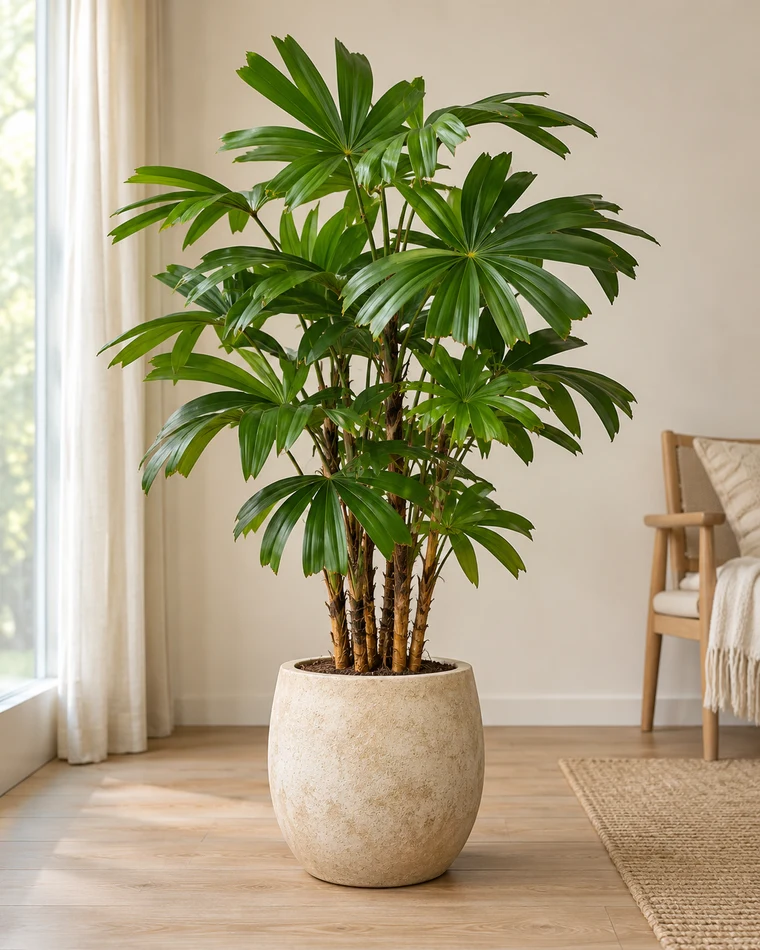
Lady palm.
Rhapis excelsa
Lady palm forms upright clumps of slender, fiber-wrapped canes topped with pleated fans. Rhapis excelsa grows steadily rather than quickly indoors, making it a useful structural plant for a bright room. Its spreading rhizomes distinguish it from solitary palms and make careful division possible. Give the roots air as well as moisture, protect the leaves from harsh sun and let changes in the pot guide your watering routine.
How to help it thrive.
Checked:
Quick care reference
- Botanical name: Rhapis excelsa; family Arecaceae.
- Habit: slow indoor clump with fan leaves and rhizomes.
- Light: good indirect light; protect from harsh sun.
- Water: regular moisture with partial surface drying and complete drainage.
- Pot: draining mix and a modest increase when roots fill the container.
- Cold protection: bring summer pots inside before below 10°C (50°F).
- Propagation: established rooted rhizome divisions or seed.
- Safety: identify Rhapis excelsa precisely; the reviewed references do not establish pet safety.
Meet a genuinely clumping palm
Rhapis excelsa, commonly called lady palm or broadleaf lady palm, belongs to the Arecaceae family. Botanical sources place its origin in southern China and northern Vietnam. It spreads through underground rhizomes, producing new canes that form a substantial clump. This habit matters when choosing a container and when deciding whether a mature plant can be divided.
Indoor growth is usually slow, and the size reached depends strongly on light, root space and years of care. Large specimens can become floor plants rather than permanent tabletop decorations. Outdoor or conservatory dimensions in botanical references should not be treated as a promise for an ordinary room. A healthy palm can be maintained for many years, but its useful indoor life has no fixed expiry date.
[1][2]Look for pleated fans and fibrous canes
The leaves are divided into broad, pleated segments that radiate from the leaf stalk like a fan. Their ends look blunt or naturally ragged rather than sharply pointed. Several upright canes emerge from the base, and older stems carry a brown, fibrous covering. These features create a more architectural outline than the fine feathered foliage of parlor palm.
Do not pull away sound stem fibers simply to make the canes look smooth. Check the base for actual new shoots, rather than assuming every leaf stalk is a separate plant ready to detach. Other Rhapis species and named selections can look similar. A botanical label helps separate genuine variation from damage, and prevents confusion with unrelated plants that also use 'palm' in their common names.
[1][2]Filtered daylight supports a dense clump
Place lady palm in good indirect light, protected from intense direct sun. It tolerates shade, but survival in a dim area is different from producing a dense supply of healthy new leaves. In low light, water use drops and a large pot can remain wet much longer. Assess light at leaf level and keep the container accessible enough to check its moisture.
After a move, introduce stronger light gradually. Bleached patches or crisp exposed areas may indicate sun injury; sparse, slow growth may call for a light assessment. Rotate a manageable pot gently when needed for balanced exposure, without repeatedly relocating it between very different environments. Supplemental grow lighting can help where daylight is inadequate, with positioning based on the fixture instructions and the plant's response.
[2][1]Moisten the root ball without leaving it submerged
Water when the upper mix has begun to dry and the deeper root zone is no longer persistently wet. Use both a finger check and the pot's weight, especially with a large floor container whose surface can be misleading. Lady palm appreciates regular moisture during growth, but saturated roots do not become healthier with more frequent small top-ups.
Apply water slowly across the surface and allow the excess to drain completely. Empty the saucer or decorative outer container before returning the plant. If the mix has dried unevenly, several gentle passes are more useful than pouring into one channel. Watering intervals change with season and light; inspect first rather than following a rigid weekly schedule. Investigate salts and feeding history if leaf-tip damage persists despite sensible moisture control.
[2][1]Allow room for rhizomes, not a reservoir of wet mix
Use a well-drained, humus-rich potting mix with enough structure to preserve air around the roots. A suitable peat-free houseplant mix can be adjusted with an aerating component if it compacts or drains poorly. The goal is consistent moisture and drainage, not a universal recipe that ignores the room, pot and plant size. A container needs unobstructed drainage holes.
Repot when the clump and roots have filled the available space or the mix has broken down. Choose only a modest increase in pot size and retain the original planting depth. In a heavy specimen, inspect stability and arrange help before lifting. Do not cut healthy roots simply to fit an unsuitable decorative container. Fresh mix and a clear drainage hole matter more than a layer of stones beneath waterlogged soil.
[2][1]Avoid abrupt cold and drying airflow
Ordinary stable indoor warmth suits a container-grown lady palm. Keep it away from cold window glass and blasts from heaters or air conditioners. NC State advises returning summer containers indoors before temperatures fall below 10°C (50°F). This practical protection threshold should not be confused with the cold tolerance of established landscape palms in a different climate.
Lady palm can tolerate typical household humidity, so an exact percentage is not needed for routine success. Dry air can contribute to tip damage, but wet roots, salts and irregular watering should also be checked. If supplemental humidity is necessary, use a clean humidifier with adequate air movement. Do not keep leaves and crowded leaf bases continually wet in an effort to imitate a rainforest.
[1][2]Match fertilizer to actual growth
Feed modestly while the palm is actively growing, using a balanced fertilizer appropriate for container foliage plants and following its label. RHS describes monthly liquid feeding during the growing season, but the correct dose still depends on the product. A slow-release fertilizer is an alternative; do not automatically combine both approaches or add extra because the plant grows slowly.
Reduce feeding as growth and light decline. Check whether fresh potting mix already contains nutrients before fertilizing a repotted plant. Brown tips, pale foliage and weak growth are not specific proof of deficiency. Examine drainage, roots and light before increasing fertilizer. If deposits accumulate on the mix or pot, review the water and feeding routine and ensure excess irrigation water can leave the container.
[2][1]Care for the leaves without cutting the cane tips
Lady palm gradually adds new leaves and basal canes. Each cane has a growing point at its top; cutting it off will not produce a shorter branching cane. Preserve healthy green leaves and remove fully dead ones carefully with clean tools. The naturally divided, slightly ragged ends of the fan segments should not be mistaken for a defect that needs repeated trimming.
A complete dead cane can be removed near its base when its condition is clear, protecting adjacent shoots and fingers. Major thinning changes the look of a slow-growing clump for a long time, so work conservatively. Wipe dust from accessible leaves or rinse gently and drain. Avoid leaf-shine products, and investigate persistent leaning or wobbling rather than hiding unstable roots behind a support.
[1][2][3]Divide only an established, rooted section
Rhapis excelsa can be propagated by rhizome division or seed. For a home grower, dividing an established clump is more practical than expecting rapid results from seed. A leaf, bare cane or newly emerging shoot without enough roots is not a substitute for a viable division. Keep each selected section's growing points and root system intact.
During active growth, unpot a healthy mature clump and locate a section with its own developed roots. Separate the connecting rhizome carefully with a clean blade where needed, avoiding unnecessary tearing. Replant at the same depth in a modest draining container, water to settle the mix, and provide sheltered indirect light. Keep moisture even without saturation. Delay heavy feeding and repeated handling while the division establishes; recovery time varies.
[1][2]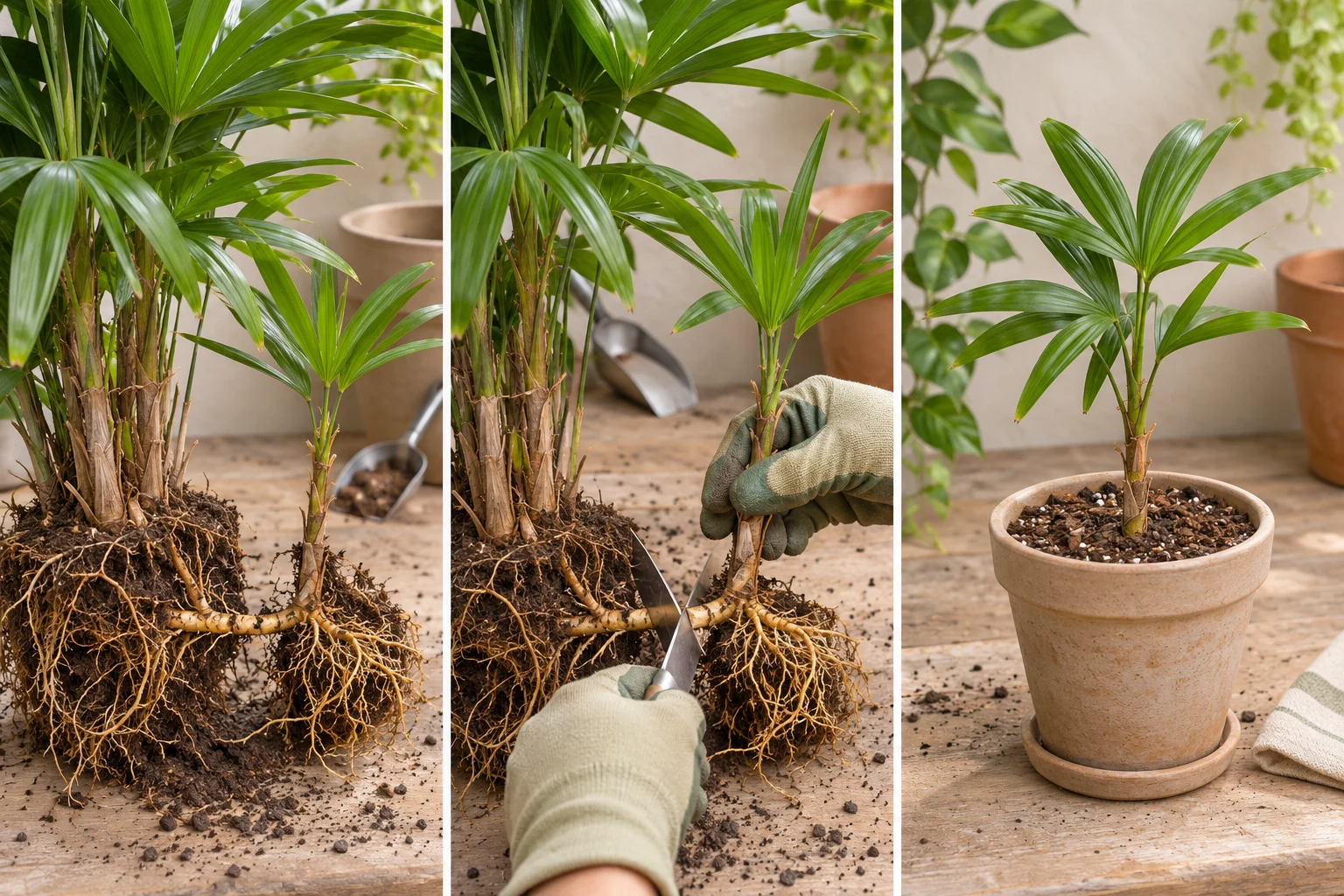
Panels, from left to right
- Remove a healthy mature clump from its pot and identify a section with established roots and intact cane growing points.
- With a clean blade, separate the connecting rhizome while preserving the section's roots; do not take a bare cane or leaf cutting.
- Replant at the same depth in a modest draining pot, water and drain, then provide stable indirect light while it establishes.
Check inside the clump as well as the leaf tips
Spider mites, scale insects and mealybugs can occur on lady palm. Inspect the underside of each fan, the leaf stalks and sheltered cane junctions. Sticky deposits may point toward sap-feeding insects, while fine stippling and webbing can suggest mites. Confirm that insects are present: brown leaf tips by themselves do not identify a pest.
Separate an infested plant from others and remove accessible pests gently by wiping or rinsing suitable foliage. Use a registered indoor ornamental treatment only when it matches the identified pest, following the label and testing a small area. Do not substitute homemade soap or oil recipes. Reinspect because eggs and hidden pests can survive a first cleaning. Root problems and some leaf spots are associated with poor conditions; improving drainage and airflow is part of the investigation.
[1][2][3]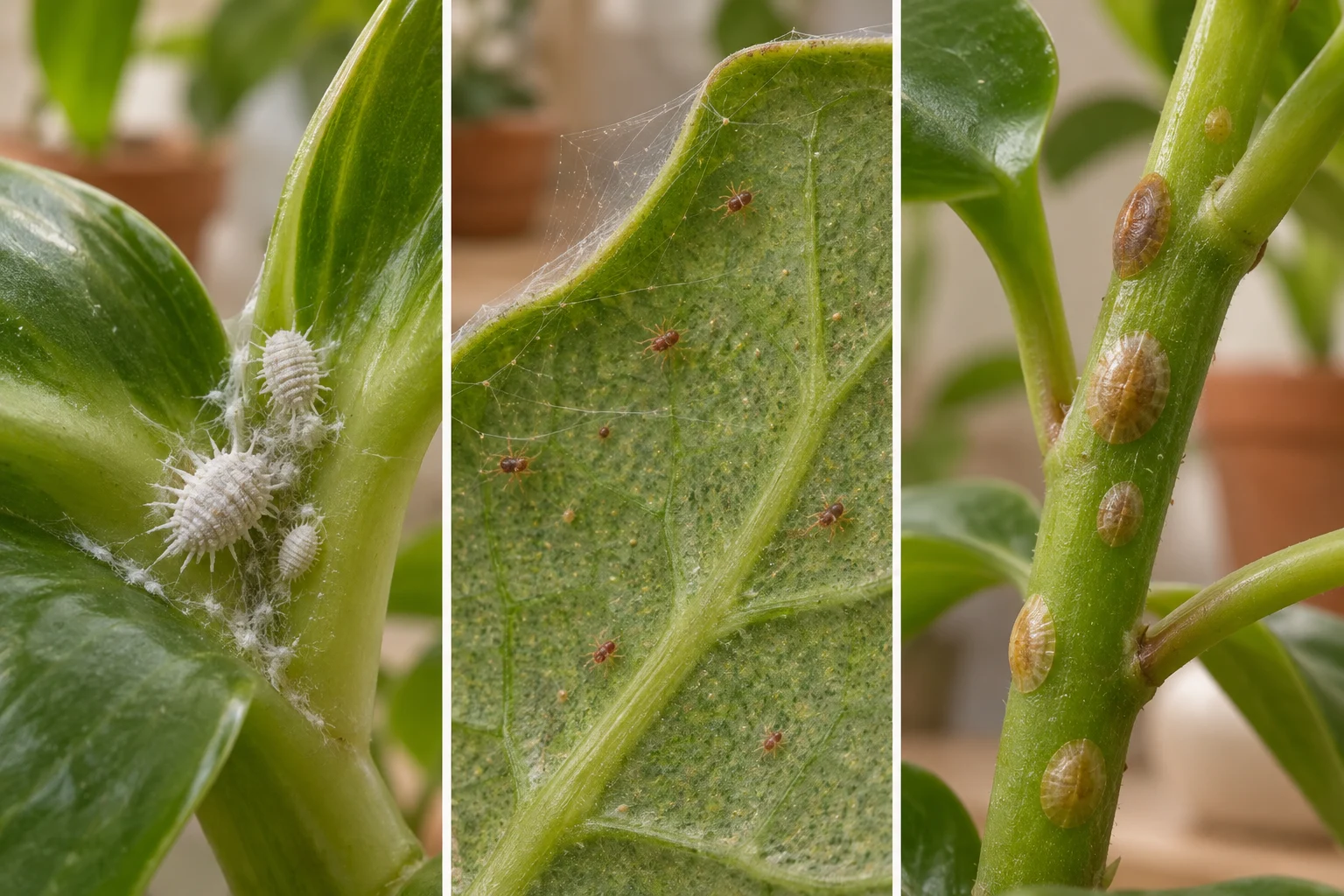
Panels, from left to right
- Mealybugs
- Spider mites
- Scale insects
Distinguish old damage from an active problem
Crisp segment tips can follow uneven watering, low humidity, salt accumulation or exposure injury. They will not become green again. Mark the extent in a photograph and see whether damage expands after you improve the confirmed cause. A few old lower leaves gradually declining is different from many fans yellowing at once or a new central leaf collapsing.
If the plant droops, check the whole root ball before adding water. A light, dry pot calls for thorough rewetting and drainage; a heavy, wet pot calls for a drainage and root check. Persistent leaf spots require examination of their pattern and conditions, not an automatic pesticide. Soft bases, foul mix and widespread decline justify careful unpotting and professional help if the cause remains uncertain.
[1][2][3]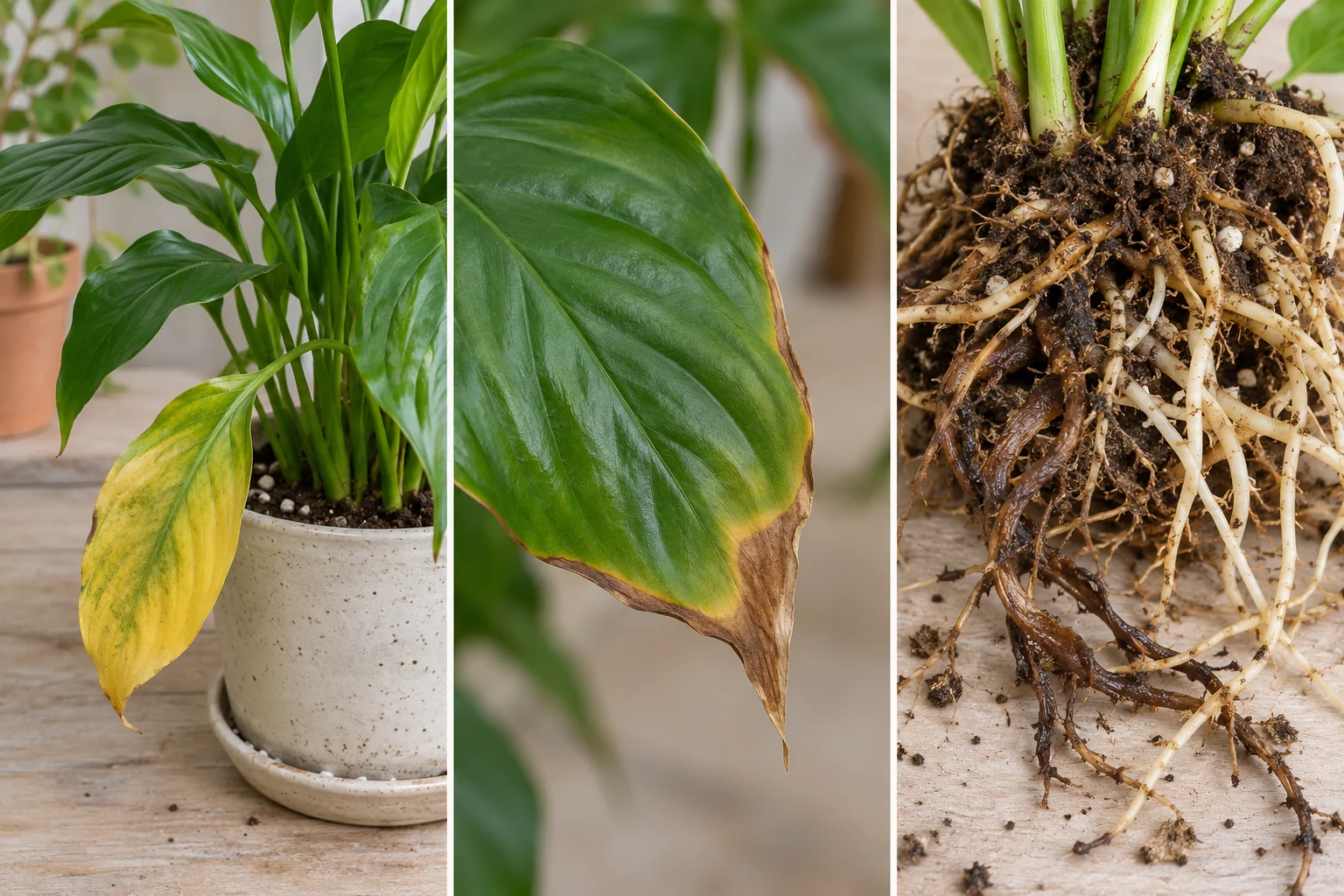
Panels, from left to right
- Yellowing foliage
- Brown leaf edges
- Damaged roots
Crisp fan tips
- Possible causes
- Possible uneven moisture, dry air, salts or exposure injury.
- What to check
- Compare the lower mix, feeding history and position near heaters or strong sun.
- Next step
- Correct the confirmed stress and judge progress on new growth; old brown tissue stays brown.
Yellow fans and wet mix
- Possible causes
- Possible prolonged saturation or roots struggling in low light.
- What to check
- Look for trapped water and blocked outlets; inspect roots if decline is widespread.
- Next step
- Empty the outer pot, restore drainage and wait while the mix remains wet.
Sticky leaves or cottony deposits
- Possible causes
- Scale or mealybugs are possible, but close inspection is needed.
- What to check
- Inspect fan undersides, stalks and sheltered cane junctions.
- Next step
- Isolate and remove confirmed pests gently; use a matching labeled indoor treatment only if needed.
Respond to changing light through the year
Spring is a useful time to review crowding, fresh growth and whether repotting or division is warranted. As daylight and temperatures rise, check whether the container dries faster. A summer move outdoors needs gradual acclimation to a sheltered shaded position; strong sun can injure foliage that developed indoors. Inspect for insects before bringing the plant back into the collection.
In autumn and winter, reduced light commonly lowers water and fertilizer demand. Do not keep watering at the summer rate simply because the room remains warm. Protect the fans from radiators and the roots from cold floors or window areas. A well-lit, warm plant may continue growing, so adjust to its actual activity. Record seasonal observations to make the following year's routine easier to refine.
[2][1]Flowers are an occasional extra
Lady palm is grown for its fans and clumping stems, not for a predictable indoor flower display. Small flower clusters can develop on mature plants, but flowering is uncommon indoors. The absence of flowers is not evidence that routine care has failed, and extra fertilizer or deliberate drought is not a sensible way to force a display.
If a flower stalk appears, observe it without confusing it with a new leaf or basal shoot. Leave it if the plant is healthy, or remove a spent stalk carefully with clean tools. Fruiting and viable seed production should not be assumed from flowering alone. Purchasing correctly identified seed or dividing a suitable established clump is more dependable than planning propagation around an indoor flower stalk.
[1][2]Identify the palm before assessing household safety
NC State connects the older name Rhapis flabelliformis with Rhapis excelsa. This resolves a naming issue, not a veterinary assessment: the horticultural references reviewed here do not establish a species-specific safety conclusion for cats and dogs. Keep the divided fans beyond chewing reach and retain the botanical label; other plants sold as palms can have very different hazards.
A lady palm is grown for its leaves, not as an edible crop. Stabilize the heavy container, clear away clipped stems after division and store fertilizers separately. For a suspected ingestion, provide the veterinarian with the Rhapis label and any product details; do not improvise a home treatment from a general palm description.
[1]Understand conditions inside the pot
A broad mature clump can hide its own soil surface and trap water inside a decorative pot. Make inspections practical: leave access to the mix, know how to empty the outer container and compare the pot's weight over time. Record where new canes emerge and whether yellowing begins in old leaves or new growth; those patterns are more informative than a single brown tip.
Change one care factor at a time when possible. Repeated repotting, stronger feeding and relocation in the same week make the response difficult to interpret. A slowly expanding clump does not need constant intervention. When dividing for size control, assess root ownership first and accept that a small division may take time to regain the visual density of the original mature specimen.
[1][2][3]Separate species identity from collector labels
Rhapis excelsa and the older synonym Rhapis flabelliformis refer to this lady palm. Preserve the nursery label when comparing plants: other Rhapis species and named selections can differ in leaf segmentation, height and variegation. A trade name or photograph alone is not a reliable botanical identification.
Variegated selections may need careful light placement to preserve their appearance without scorching, and a slow-growing collector plant should not be pushed with excess fertilizer. This guide addresses the species rather than guaranteeing the behavior of every named selection. Compare the mature habit, verified identity and health of a purchase before choosing an expensive cultivar based only on a photograph or a descriptive trade name.
[1][2]Frequently asked questions
Can lady palm grow in shade?
It tolerates shade, but good indirect daylight supports fuller growth. Lower light also slows drying, so check the root zone before watering.
[1][2]Are ragged leaf ends normal?
The leaf segments naturally have blunt, somewhat ragged ends. Compare a healthy new fan before trimming what may simply be the species' normal shape.
[1]Can I cut a cane shorter?
Do not top a living cane: removing its growing point will not produce a shorter branching stem. Preserve healthy foliage and remove only clearly dead parts conservatively.
[1][2]Can I divide this palm?
Yes, a mature Rhapis clump can be divided at its rhizomes when each section retains established roots and intact growing points. An unrooted shoot is not a viable division.
[1][2]Can people eat lady palm?
This ornamental guide does not establish human edibility. Do not eat it, and keep fertilizers and pest-treatment residues away from children and pets.
[1]Can I put it outside?
A sheltered shaded summer position can work after acclimation. NC State advises bringing it indoors before temperatures drop below 10°C (50°F).
[1]Why are the leaves sticky?
Scale or mealybugs may produce sticky deposits. Inspect leaf undersides and cane joints before choosing a treatment; do not diagnose from stickiness alone.
[3][1]Why is a new division slow?
A division must establish its retained roots and adjust to its new container. Provide stable indirect light and even moisture; extra fertilizer cannot replace lost roots.
[1][2]Is it the same as parlor palm?
No. Lady palm has fan-shaped leaves and spreading rhizomes. Parlor palm has feathered leaves, and a bushy pot usually contains separate seedlings.
[1]Compare related plants
- Parlor palm: Compare a feather-leaved solitary palm whose nursery clusters are separate seedlings, not rhizome divisions.
- Spider plant: Spider plant offers narrower arching leaves and simple propagation from visible plantlets; Clemson Extension includes it in its pet-safe guidance.
Care reminders with PlantPal
Let PlantPal remind you to inspect moisture, drainage and new fan-shaped leaves. Adjust each care task to the conditions around your palm.
Set up care reminders