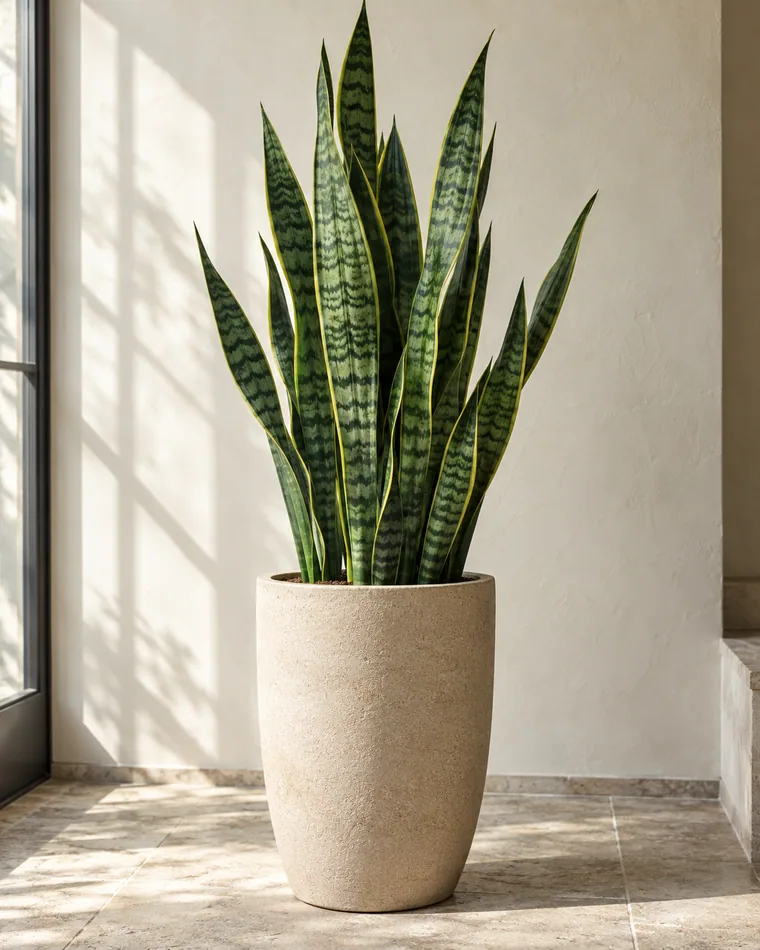
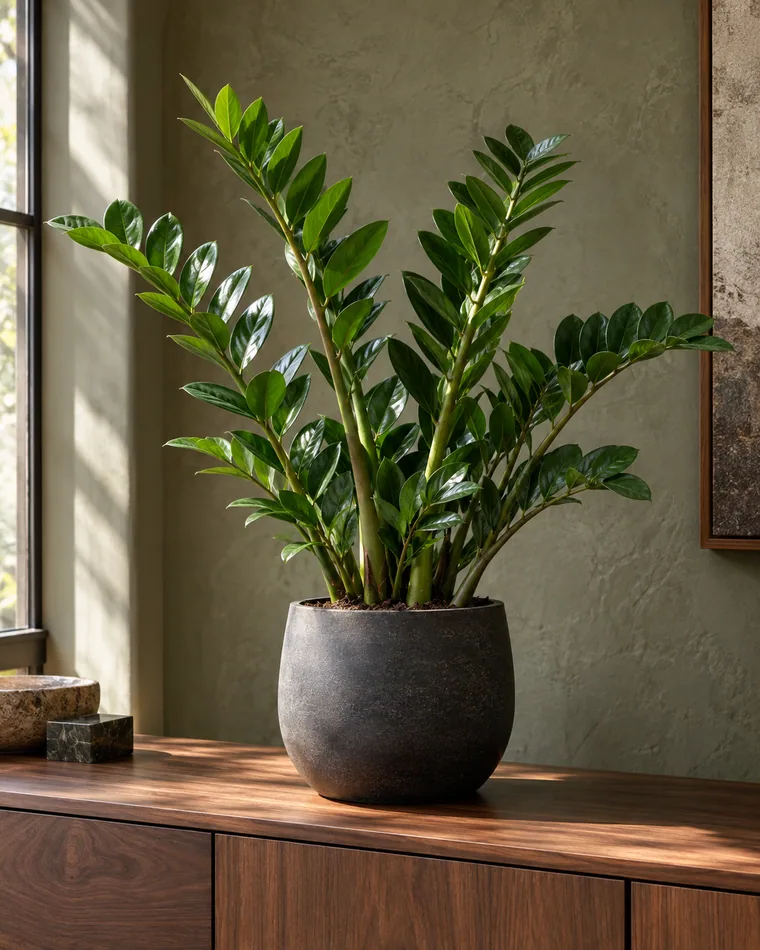
 Plant
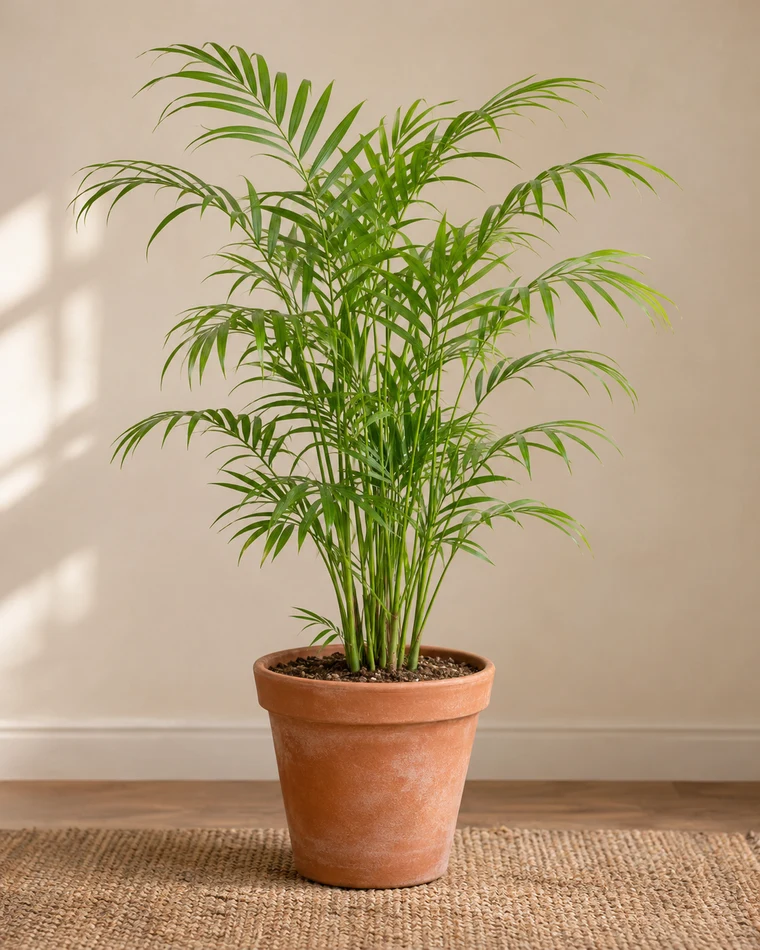
Parlor palm.
Chamaedorea elegans
Parlor palm brings soft, feathered foliage to a room without demanding intense sunlight. Chamaedorea elegans grows slowly, so a healthy specimen rewards patient, consistent care. Its main requirements are filtered light, a draining root zone and watering that follows the pot's actual moisture. This guide explains how to recognize the plant, interpret common changes and care for its individual stems without damaging their growing points.
How to help it thrive.
Checked:
Quick care reference
- Botanical name: Chamaedorea elegans; family Arecaceae.
- Light: bright and indirect; lower light tolerated with slower growth.
- Water: let the upper mix begin drying, then water evenly and drain.
- Pot: drainage holes and a modestly sized, airy root zone.
- Temperature: stable warmth; RHS recommends 20–27°C during active growth.
- Feeding: modestly during active growth; reduce when growth slows.
- Propagation: seed; rooted nursery seedlings can be separated carefully, but stems cannot be rooted as cuttings.
- Safety: Clemson Extension non-toxic to cats and dogs; fruit pulp may irritate skin.
A small rainforest palm for indoor life
Chamaedorea elegans is a palm in the Arecaceae family, native to southern Mexico and northern Central America. Parlor palm, parlour palm and Neanthe bella palm are common nursery names. Its natural setting beneath taller vegetation explains its tolerance of filtered light, although tolerance should not be confused with a preference for a dark corner.
Young plants are often sold as compact tabletop clusters. Each slender stem is usually a separate seedling, rather than a branch from one clumping plant. Indoor specimens may eventually approach 1.5 m, but many remain smaller. Growth is slow and a well-kept plant can remain part of a collection for many years; there is no useful fixed indoor lifespan to promise.
[1][2]Recognize feathered fronds and separate stems
Look for slender green stems carrying arching, feather-shaped leaves. Narrow leaflets sit along a central stalk, giving the foliage a fine, airy outline. New leaves emerge folded near the top of each stem and gradually open. Their softer, lighter color can be normal while they mature; judge a new frond after it has expanded rather than treating its first appearance as a deficiency.
A nursery pot can resemble a naturally branching palm because several seedlings are crowded together. Lady palm has distinctly fan-shaped leaves and fibrous, cane-like stems; it is not the same plant. Do not identify a palm from the word 'palm' alone: unrelated plants sold under that name can have very different care and safety profiles.
[1][2]Offer filtered light rather than deep darkness
Bright, indirect light supports fuller, steadier growth. A position near a window with harsh midday rays filtered by a sheer curtain is often suitable. The plant tolerates lower light, but it will use water more slowly and may produce fewer new leaves. A distant room corner should be assessed by the light reaching the leaves, not by how bright the room looks to a person.
Introduce brighter conditions gradually. Bleached or dry patches after a move into strong sun suggest exposure damage, while persistent weak growth deserves a light and root check. Where daylight is inadequate, a houseplant grow light can supplement it; follow the fixture's distance instructions and observe the plant instead of prescribing one universal distance for every lamp.
[2][1]Check moisture before every watering
Let the upper potting mix begin to dry before watering again, while avoiding prolonged drying of the entire root ball. Check with a finger and compare the pot's weight with its weight after watering. If the surface is dry but the lower mix remains wet, wait. Pot size, light, roots and room temperature all affect the interval, so a weekly reminder should prompt an inspection rather than an automatic dose.
Water the mix evenly until excess escapes the drainage holes, then empty the saucer or outer pot. Never leave the nursery pot standing in water. If dry mix repels water, apply it slowly in several passes and allow complete drainage. Persistent tip damage warrants checking fertilizer buildup and water quality as well as moisture; it does not prove that tap water is the cause.
[2][1]Keep roots aerated in a modest pot
Use a moisture-retentive but freely draining houseplant mix. A peat-free mix improved with a suitable aerating ingredient can provide both water storage and air spaces. The aim is an evenly moistened root ball that drains, rather than a dense plug that stays saturated. A drainage hole is essential; stones at the bottom cannot compensate for a sealed container.
Repot in spring when roots have substantially filled the current container or the mix has deteriorated. Choose a pot only a little wider and keep the existing planting depth. A large jump in pot size leaves a broad volume of wet, unrooted mix. Handle the root ball gently and do not tease apart a healthy nursery cluster merely to give every stem its own pot.
[2][1]Provide stable warmth and sensible humidity
RHS recommends warmth around 20–27°C during active growth, with cooler conditions tolerated as winter growth slows. Steady indoor conditions are more useful than testing a palm's cold limit. Keep foliage away from cold window glass, sudden winter draughts and direct heater or air-conditioning airflow. A palm moved outdoors for summer needs shade and a gradual transition, then protection before cool weather arrives.
Moderate humidity is generally suitable. Dry heated air can contribute to crispy tips, but humidity is only one possibility. Check watering and salts before buying equipment. If a humidifier is useful, maintain it hygienically and preserve air circulation. Occasional misting or a tiny pebble tray should not be treated as a reliable way to control the humidity of an entire room.
[2][1]Feed modestly during active growth
A slow-growing palm needs less fertilizer than a rapidly growing foliage plant. Apply a balanced houseplant feed during active growth, using the product's houseplant directions and avoiding concentrated doses. Do not combine several fertilizers simply because new fronds appear slowly. Watering a stressed or dry plant with a stronger feed can worsen root injury instead of accelerating growth.
Reduce or stop feeding when growth slows in the cooler, darker season. Recently refreshed potting mixes may already contain fertilizer, so check the bag before adding more. Pale leaves can reflect poor light, damaged roots or natural aging as well as nutrition. If white crusts and worsening brown tips follow frequent feeding, review the dosage and drainage; additional fertilizer is not a sensible first response.
[2][1]Preserve every stem's growing point
Expect gradual growth, not a new frond every few days. Each stem grows from its own tip. Cutting the top off will not make that stem branch or become shorter and bushier. Keep healthy green foliage because it supports the plant. Remove a completely brown frond with clean scissors, taking care not to nick the main stem or the folded emerging leaf.
Some lower foliage ages naturally, and a very crowded pot may lose weaker seedlings through competition. Investigate rapid or widespread decline rather than assuming every lost leaf is normal. Dust can be removed with a soft damp cloth or a gentle rinse, followed by drainage. Avoid leaf-shine coatings. A stable pot is normally sufficient support; stakes should not be driven blindly through the root ball.
[2][1][3]Propagation starts with seed, not a cutting
Seed produces new parlor palms. A cut stem or detached frond will not become another palm. RHS also describes separating a healthy nursery cluster into sections with plenty of roots. Because this species is solitary and nursery pots usually contain several seedlings, this separates existing plants rather than producing new rhizome offsets like lady palm. Root disturbance can set them back, so do not pull apart a weak or tightly entangled cluster just to increase your pot count.
For a seed-growing attempt, obtain correctly identified seed from a reputable supplier and follow its preparation and sowing instructions. Use a clean container and free-draining seed medium, maintain warmth and even moisture, and provide indirect light. Avoid saturation under a propagation cover. Germination and early growth require patience, with no guaranteed timetable. Move an established seedling gently with its roots intact rather than repeatedly lifting it to inspect progress.
[2][1]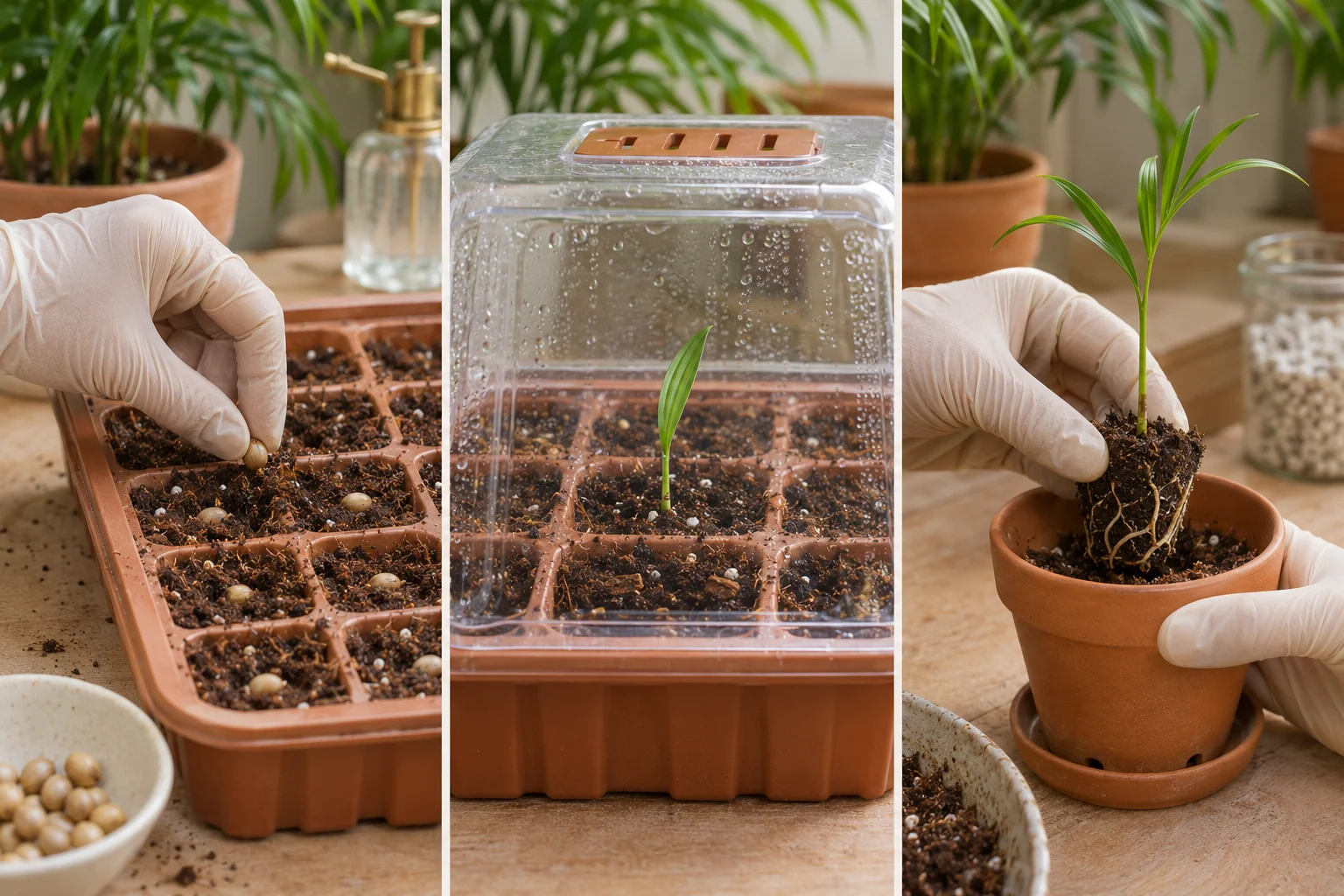
Panels, from left to right
- Sow correctly identified commercial seed in a clean, draining seed mix, following the supplier's preparation and depth instructions.
- Keep the covered tray warm, evenly moist and in indirect light; ventilate and avoid waterlogged medium.
- Once a seedling is established, pot it gently with its roots intact. Allow time for slow growth; never use a cut palm stem.
Inspect leaf undersides before treating
Spider mites and mealybugs are important pests to watch for. Fine stippling and delicate webbing can suggest mites; cottony deposits around leaf bases can suggest mealybugs. These are inspection clues rather than a diagnosis from one damaged leaf. Examine the undersides, leaf joints and neighboring plants in good light, and isolate a suspect plant while you investigate.
For a small confirmed infestation, physically remove visible insects or rinse suitable foliage gently, protecting the mix from prolonged saturation. If a pesticide is needed, choose a product labeled for the identified pest and indoor ornamental plants, follow every label restriction and test a small area first. Homemade dish-soap mixtures can damage leaves. Recheck regularly because one cleaning may miss eggs or hidden insects. Soft roots and persistently wet mix call for drainage investigation, not insect spray.
[1][3]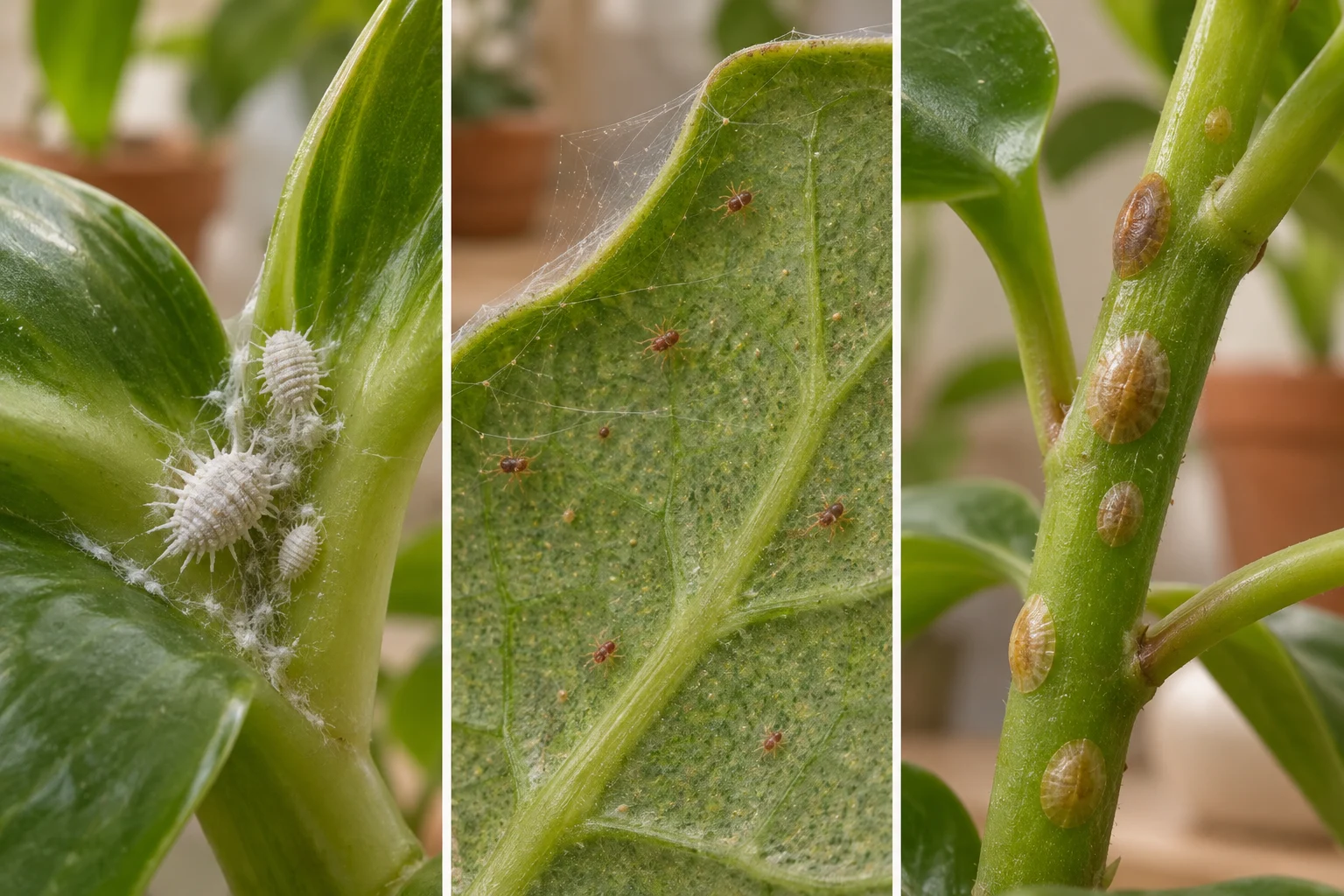
Panels, from left to right
- Mealybugs
- Spider mites
- Scale insects
Use symptoms to choose a check
Yellow leaves can follow persistent wetness, insufficient light, pests or ordinary aging. Start by asking whether one old lower frond or many stems are affected. Check moisture below the surface and confirm that water can leave the pot. Drooping with a light, dry pot suggests a different problem from drooping with a heavy, wet pot; adding water to both can harm the second plant.
Brown tips may reflect dry roots, dry air, salt accumulation or past injury. Brown tissue will not turn green again, so judge recovery by stable damage and healthy new growth. A soft stem base, foul mix or collapsing fronds requires prompt root inspection. If roots are decayed, remove clearly dead material and correct the wet conditions; a severely damaged growing point may not recover.
[2][1][3]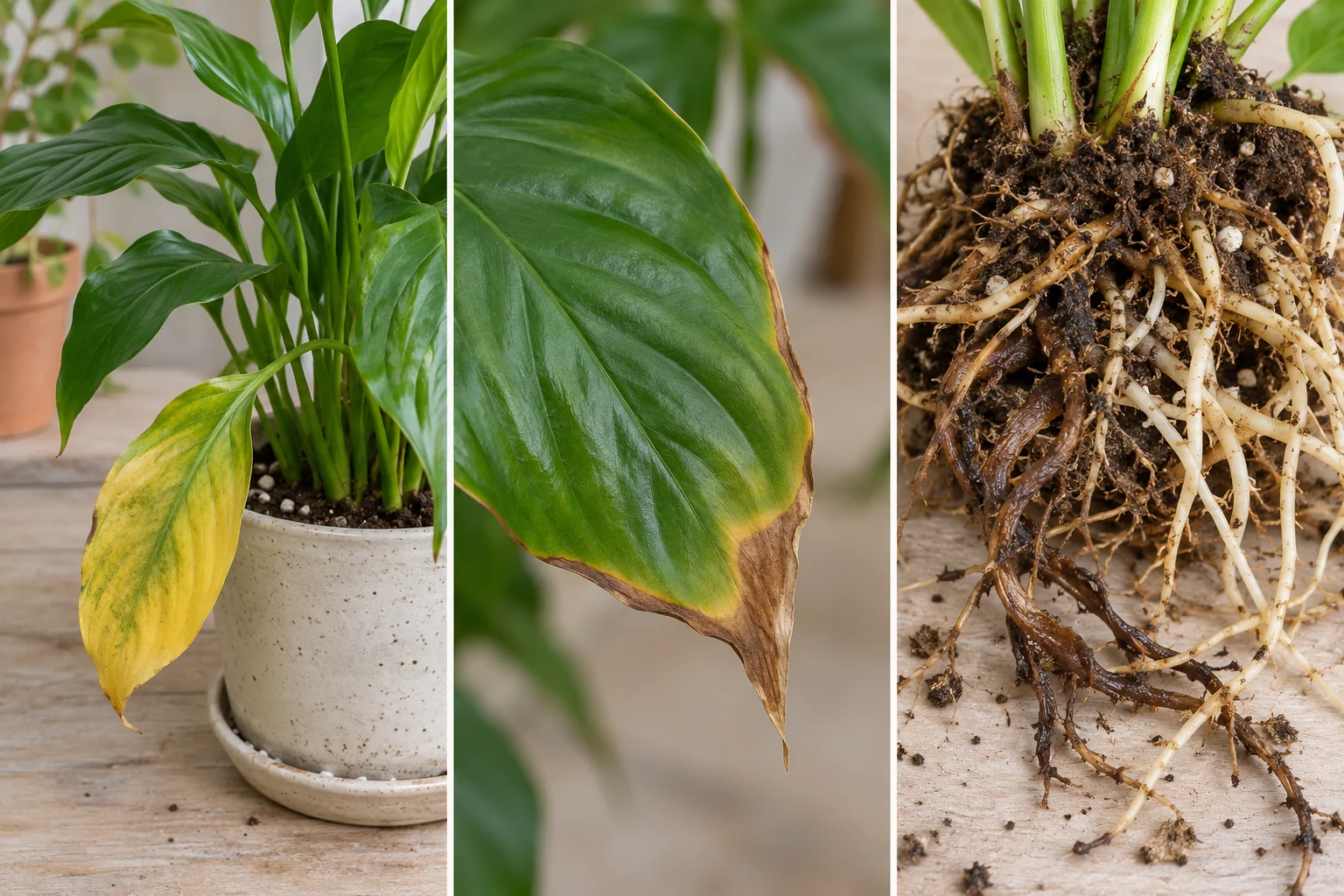
Panels, from left to right
- Yellowing foliage
- Brown leaf edges
- Damaged roots
Brown frond tips
- Possible causes
- Possible dry roots, dry air, fertilizer salts or old damage.
- What to check
- Check moisture deeper in the pot and review feeding and nearby heat sources.
- Next step
- Correct the confirmed stress and watch new foliage; existing brown tips will not turn green.
Yellowing with a heavy pot
- Possible causes
- Possible prolonged wetness, poor drainage or insufficient light.
- What to check
- Inspect the drainage outlet, outer pot and lower root-zone moisture.
- Next step
- Empty trapped water, delay watering while wet and inspect roots if decline continues.
Speckled leaves and fine webs
- Possible causes
- Spider mites are one possible cause; confirm with close inspection.
- What to check
- Examine leaf undersides, joints and nearby plants.
- Next step
- Isolate, remove confirmed pests gently and use only a suitable labeled treatment if needed.
Adjust care to growth and daylight
In spring, check whether increasing daylight is drying the pot faster and whether repotting is genuinely needed. Summer can increase water use, but a shaded or air-conditioned room may behave differently from a hot windowsill. Protect the leaves from newly intense direct sun and inspect plants brought indoors from summer shade before placing them beside the rest of the collection.
As daylight declines, the same pot often remains moist for longer. Space watering checks according to what you find and reduce feeding when growth slows. In winter, avoid both cold glass and radiator heat. A palm under effective grow lights in a warm room may continue growing, so use its behavior rather than the calendar alone. Record changes so repeated seasonal problems become easier to anticipate.
[2][1]Small flowers are possible indoors
Mature parlor palms can produce branching sprays of small yellow flowers. They are interesting botanical features rather than the main ornamental attraction. The species has male and female flowers on separate plants, and indoor fruiting is uncommon. A pot with multiple seedlings does not guarantee compatible flowering plants or successful pollination.
Flower stalks can be left in place if the plant is healthy, or removed carefully when they have finished. Do not mistake a flower stalk for an emerging frond and cut into the crown. There is no need to force flowering with extra fertilizer or drought. If fruit appears, handle it cautiously: the pulp may irritate skin, and the plant's pet non-toxicity listing should not be interpreted as permission to eat its fruit.
[1][2][4]Pet non-toxic, but not a food plant
Clemson Extension lists Chamaedorea elegans as non-toxic to cats and dogs. Confirm the scientific name when buying: 'palm' is used for many unrelated plants, and their safety cannot be inferred from this listing. Non-toxic also does not mean that chewing leaves is desirable or that a plant is suitable for human consumption.
Keep pots stable and discourage chewing, which damages foliage and may cause digestive upset from plant material. NC State notes that fruit pulp can irritate skin; wear gloves when handling fruit and wash afterward. Potting mix and care products have their own hazards. If a person or pet develops symptoms after exposure, seek appropriate professional advice with the plant label or a clear photograph, rather than relying on a common name.
[4][1]Track the root zone, not just the leaves
For more consistent care, compare the same observations over time: pot weight, how long the mix stays moist, where damage begins and whether new fronds expand normally. A photo taken from the same angle can reveal progress that is hard to notice in a slow-growing palm. Change one manageable factor at a time so you can tell whether the adjustment helped.
Dense nursery clusters can contain many competing seedlings, so fullness is not proof of a single vigorous root system. If one stem declines while others remain healthy, inspect its base and nearby mix before treating the whole pot. Avoid frequent unpotting as a routine check. Good light, appropriate pot volume and reliable drainage usually matter more than an elaborate soil recipe or a tightly specified humidity percentage.
[2][1][3]Check names before comparing palms
Neanthe bella is a familiar nursery name for parlor palm rather than a separate species that needs different care. Small and large pots may simply contain plants of different ages or different numbers of seedlings. Judge a purchase by healthy new growth, firm stems and the absence of pests, rather than assuming a fuller pot represents a special cultivar.
Other Chamaedorea species can resemble this palm but may have different growth habits or mature sizes. Lady palm, Rhapis excelsa, is particularly different: it has fan leaves and genuinely spreading rhizomes. A label containing the full botanical name is more useful than a marketing phrase such as 'mini indoor palm.' Keep that name with your care notes so advice, propagation instructions and safety information remain attached to the correct plant.
[1][2]Frequently asked questions
Can I cut the palm shorter?
Do not cut off a stem's growing tip. Parlor palm will not branch from that cut. Remove only dead fronds and choose a smaller specimen if height is unsuitable.
[2][1]Can I divide a bushy pot?
RHS describes separating a healthy cluster into well-rooted sections. The stems are usually separate seedlings, so this separates existing plants rather than multiplying rhizome offsets. Avoid unnecessary disturbance of weak or entangled roots.
[1][2]Can people eat its fruit?
Do not treat it as an edible plant. Fruit pulp may irritate skin; handle fruit with gloves and keep it away from children and pets.
[1][4]Why is one stem dying while others look well?
A crowded pot contains separate seedlings, and weaker plants may decline through competition. Also inspect that stem for damage, pests and persistently wet mix before assuming natural loss.
[1][3]Does misting prevent brown tips?
Misting is not a dependable room-humidity control and cannot repair damaged tips. Check soil moisture, fertilizer accumulation, airflow and humidity together.
[2]Are yellow flower sprays a problem?
No. Mature plants may flower. Leave healthy stalks or remove spent ones carefully, without damaging the central growing point.
[1][2]Why is my palm growing so slowly?
Slow growth is normal. Check light and root health if growth stops unexpectedly, but do not try to force speed with heavy fertilizer or a much larger pot.
[1][2]Compare related plants
- Lady palm: Compare fan-shaped foliage and genuine rhizome division with parlor palm's feathered leaves and seed propagation.
- Spider plant: A different foliage option with a Clemson Extension non-toxic listing and much easier propagation through plantlets.
Care reminders with PlantPal
Use PlantPal care reminders to check the pot's moisture and notice new growth. Adjust each task to your room and season.
Set up care reminders