 Plant
Spider plant.
Chlorophytum comosum
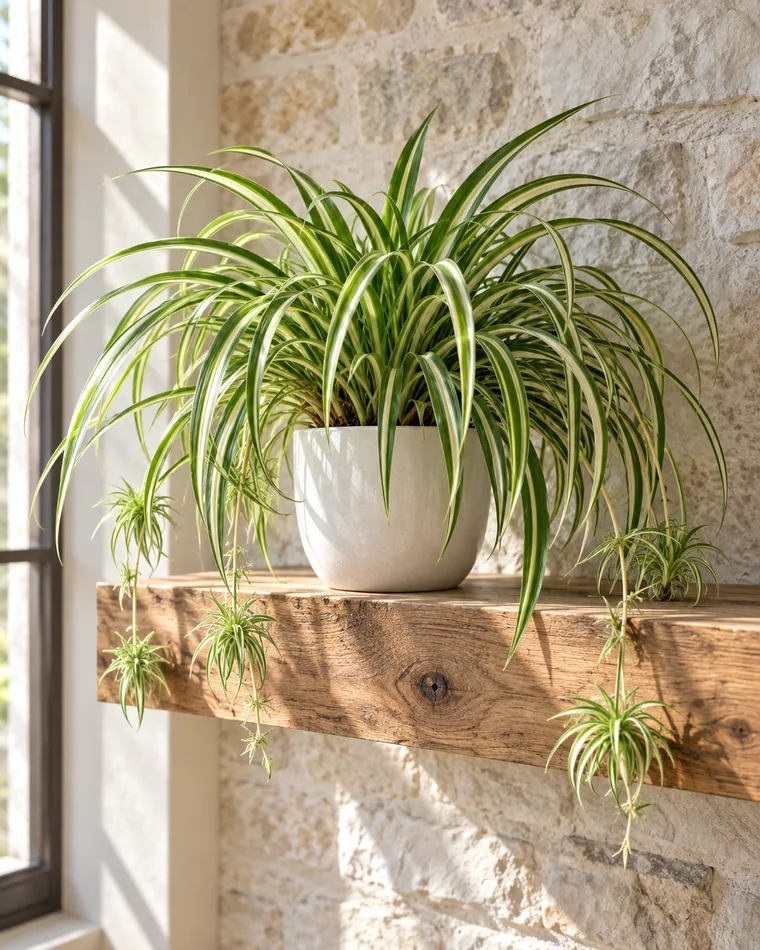
A spider plant (Chlorophytum comosum) brings arching leaves and dangling baby plants to a shelf or hanging pot. It adapts to many homes, but the most useful routine starts with observation: check the light, feel the potting mix and notice what changes before adding more water or fertilizer.
How to help it thrive.
Cats and dogs: non-toxic does not mean edible
The ASPCA lists Chlorophytum comosum as non-toxic to cats and dogs. That is not an invitation to let pets eat it: eating plant material can cause vomiting or an upset stomach. Keep tempting leaves and plantlets out of reach. Contact your veterinarian if your pet seems ill or you suspect it ate a poisonous plant.
Choose bright, indirect light
Start in a bright spot where strong sun does not fall directly on the leaves. Check the spot at different times of day; the light beside a window changes. A dimmer location may be tolerated, but growth can slow and striped leaves can lose their contrast.
Average indoor temperatures and ordinary household humidity usually suit this plant. Keep it away from strong heat sources. If leaves develop scorched patches in direct sun, try a more sheltered position.
Check before you water
Let the mix dry slightly between thorough waterings, without leaving the entire root ball dry for long periods. Use these checks rather than a fixed weekly schedule:
- Feel the mix just below the surface. If it is still wet, wait and check again.
- Lift the pot to learn how it feels after watering and as it dries. If the surface seems dry but the pot is still unusually heavy, check farther down before adding water.
- When watering is needed, wet the mix thoroughly until water drains from the bottom. Empty the saucer or decorative outer pot, then return the drained inner pot.
Investigate brown tips in order
Brown tips have several possible causes, so they cannot identify a single problem on their own. Start with the pot and recent care:
- Check for prolonged dryness, persistently wet mix or water trapped beneath the pot.
- Look for strong direct sun or very dry air near a heat source.
- Review feeding. Excess fertilizer can leave salts that damage leaf tips.
- Consider water quality if the other checks do not explain the damage. Fluoride and other substances in tap water can affect sensitive plants; distilled water is an option to try.
Repot when the roots need room
Use a container with drainage holes and a general-purpose houseplant potting mix. Inspect the roots if growth slows and the pot seems crowded. A dense mass of roots filling the container is a reason to consider repotting.
Move into a slightly larger pot with fresh mix rather than a much larger container. Choose the timing from the plant's condition; an automatic annual pot upgrade is unnecessary. An oversized pot can also discourage the production of baby plants.
Keep feeding modest
A plant repotted regularly into fresh mix may need little additional fertilizer. Check whether the mix already contains nutrients. If feeding is needed during active growth, choose a balanced houseplant fertilizer and follow its label. More fertilizer is not a reliable fix for poor growth; check light and watering first. Heavy feeding can also reduce baby-plant production.
Root a baby plant while it stays attached
The small plantlets on trailing stems can become new plants. Keeping one attached while it roots gives you a straightforward starting method:
- Place a small pot of moist potting mix beside the parent plant.
- Rest the plantlet's base on the surface, leaving its connecting stem intact.
- If needed, use a bent wire pin to keep the base gently in contact with the mix. Keep the mix moist without leaving the pot standing in water.
- Wait until roots have developed into the mix before cutting the connecting stem. Judge by rooting, rather than a promised number of weeks.
Frequently asked questions
Can I trim the brown ends?
Yes. Snip away browned tips with scissors to tidy the leaves. Trimming improves appearance but does not resolve the cause, so keep checking the growing conditions.
Why are there no baby plants?
Young plants may not be ready. Low light, cool conditions or an oversized pot can also discourage them. Avoid adding extra fertilizer simply to force plantlets.
Should I water less when growth slows?
Often, but check the mix first. Light, temperature and the potting medium affect drying. Adapt to conditions in your home rather than a month or season on the calendar.
PlantPal
Want a little help organizing your care routine? Explore PlantPal, your plant care companion. Keep checking the plant and potting mix before watering.
Get PlantPal