 Plant
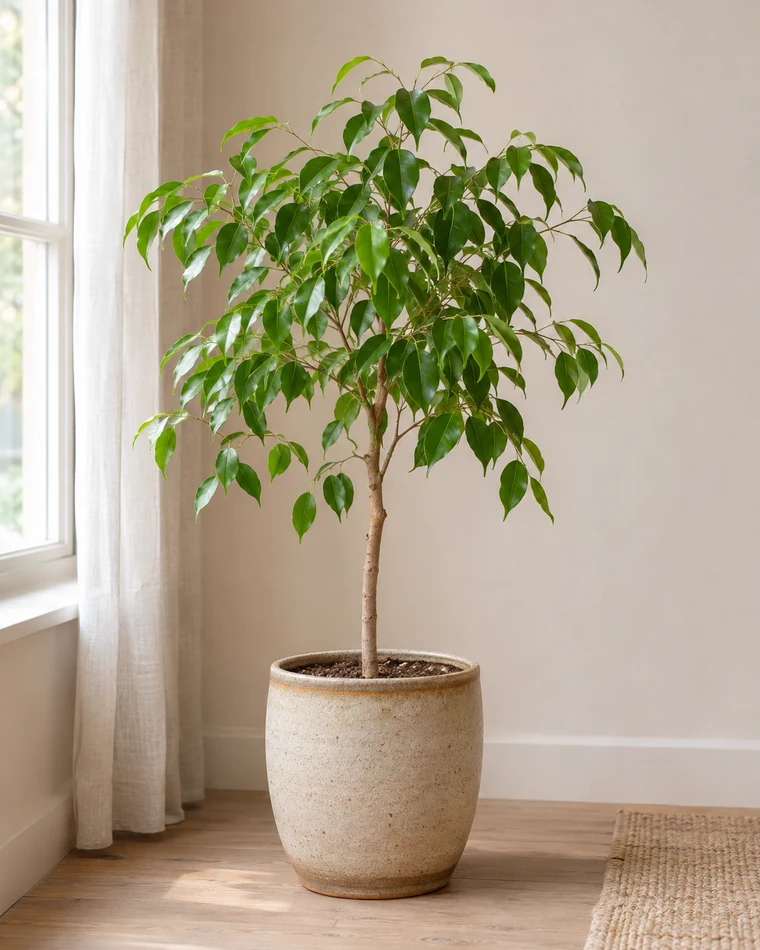
Weeping fig.
Ficus benjamina
Weeping fig combines glossy, pointed leaves with gracefully drooping branches. Ficus benjamina can become a long-lived indoor tree, but it responds visibly to sudden changes in light, moisture and temperature. A stable position and careful root-zone checks are more useful than frequent corrective moves. This guide explains how to manage leaf drop, prune thoughtfully and propagate cuttings while handling its irritating sap and keeping it away from pets that chew plants.
How to help it thrive.
Checked:
Quick care reference
- Botanical name: Ficus benjamina; family Moraceae.
- Light: bright, indirect and consistent.
- Water: allow the upper mix to begin drying, then water evenly and drain.
- Temperature: steady room warmth; avoid drafts and the RHS minimum boundary of 10–13°C.
- Feeding: during active growth, at the product's labeled rate.
- Pruning: selected shoots above nodes; wear gloves for irritating sap.
- Propagation: leafy semi-ripe stem cuttings with nodes.
- Safety: toxic to cats and dogs; not an edible fig.
- Leaf drop: check recent changes, roots and pests before altering care.
A tropical tree adapted to life in a pot
Ficus benjamina belongs to the Moraceae, or mulberry, family. Its broad native range includes parts of Asia, Australia and the southwestern Pacific. Outdoors in suitable climates it becomes a substantial evergreen tree; indoors, root space, light and pruning limit its size. Common names include weeping fig and Benjamin fig, both referring to its gently drooping branch habit.
Container plants are often maintained around 0.6–3 m tall, although individual results vary considerably. A braided trunk is a nursery training style, not a separate species. A healthy specimen can live for many years, but an exact indoor lifespan would be misleading. Plan for access to its pot, sufficient light at the whole canopy and enough space to inspect the leaves as it grows.
[1][2]Recognize pointed glossy leaves and arching branches
The leaves are smooth, glossy and oval to elliptical, narrowing into a distinct point. They sit along slender woody branches that often arch or droop. Younger leaves may be lighter before they mature. Green and variegated selections are sold, so pale margins can be normal coloration rather than a symptom when they match the plant's established pattern.
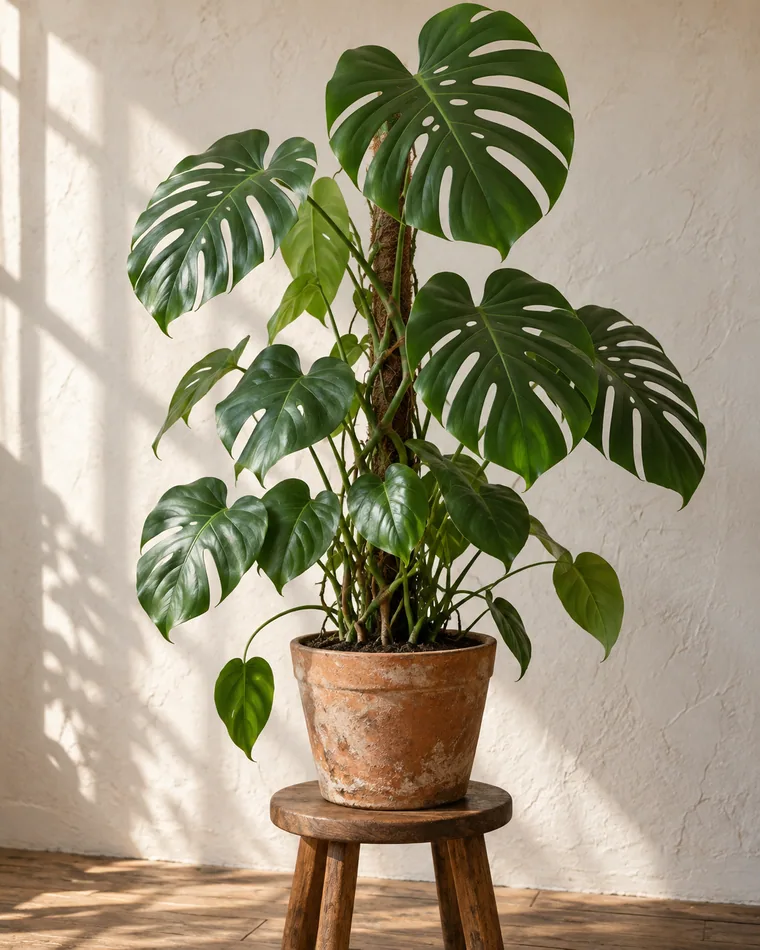
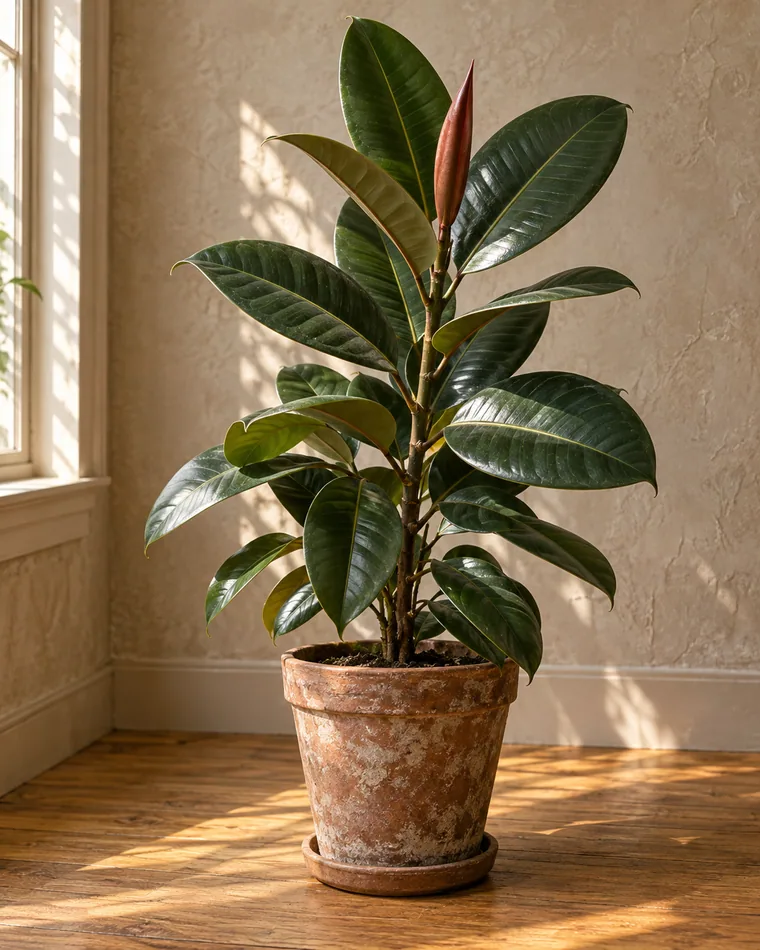
Compare the relatively small pointed leaves with the broad, thick leaves of rubber plant or the large violin-shaped leaves of fiddle-leaf fig. These are different Ficus species. Inspect the trunk and branches without deliberately breaking a leaf: damaged tissues release milky sap that may irritate skin. Keep the botanical name with the plant, especially if it was purchased under a generic label such as 'indoor ficus' or in a bonsai form.
[1][2]Choose bright indirect light and keep it consistent
Bright indirect daylight is a reliable indoor starting point. A position close to a suitable window, with intense rays filtered when necessary, usually works better than a dark corner. Variegated plants need particular attention to adequate light, but pale leaf areas can also scorch in harsh exposure. Introduce a brighter position gradually instead of moving a shaded tree straight into strong sun.
Weeping fig is sensitive to changes in light and may shed leaves after relocation. Choose the best practical position, then allow time for adjustment while checking the roots and new growth. Repeatedly moving it in response to every fallen leaf adds another change. If daylight is inadequate, use an appropriate grow light according to its instructions; a universal lamp distance cannot account for different fixtures and canopy sizes.
[2][1]Let the surface begin to dry, then drain thoroughly
Water when the upper mix has begun to dry while the root ball still retains some moisture. Check below the surface and compare the container's weight rather than relying only on a calendar. A large tree in a dim room may use water slowly; a well-lit plant with a full canopy can dry much faster. Neither constant saturation nor prolonged complete drying is a useful target.
Apply room-temperature water evenly and allow excess to escape through the drainage holes. Empty the outer pot or saucer afterward. If a dry root ball sheds water down its edges, rewet gradually and confirm that the center receives moisture. Leaf drop can result from both wet and dry conditions, so inspect first. Review fertilizer accumulation and water quality when persistent damage remains unexplained, without blaming tap water automatically.
[2][1]Support a woody plant with air around its roots
Choose a stable, freely draining houseplant mix that retains moisture without becoming dense or stagnant. RHS recommends suitable loam-based or multipurpose formulations with added structure where appropriate; a peat-free option can serve the same practical goal. A heavy canopy needs a stable container, but stability should not come from oversized volumes of wet soil or a pot without drainage.
Repot in spring when roots have filled the container or the mix has deteriorated, usually into a slightly larger pot. Keep the original planting depth and handle the root ball carefully. For a large specimen that is not ready for repotting, refreshing a shallow top layer of mix can help, provided surface roots are not damaged. Inspect drainage and pot stability before lifting a tree that may need another person's help.
[2][1]Stable warmth matters more than testing a limit
Keep weeping fig in ordinary steady indoor warmth, away from cold draughts, radiators and direct air-conditioning flow. RHS gives a minimum range of about 10–13°C for ornamental figs; treat that as a caution boundary, not a preferred living-room target. Cold glass and rapid fluctuations can stress foliage even when the room's average temperature seems acceptable.
Moderate to higher humidity can help, especially in dry heated rooms, but do not attribute every falling leaf to humidity. Check moisture, light and recent moves first. A properly maintained humidifier is more dependable than occasional misting for changing room humidity. Keep airflow gentle and leaves clean. If the plant spends summer outside, acclimate it to sheltered filtered light and bring it back before cold conditions arrive.
[2][1]Support new growth without forcing recovery
Feed during active spring and summer growth with a houseplant fertilizer suitable for foliage plants, following its label. Healthy new growth is a better reason to feed than a bare branch after stress. Increasing the concentration will not compensate for damaged roots, insufficient light or a sudden move, and can add another source of root-zone stress.
Reduce or pause feeding when growth slows in the darker season. Newly purchased or recently repotted plants may already have fertilizer in their mix; check before adding more. If leaf tips deteriorate or a crust develops after frequent feeding, review the dose and drainage. Yellow leaves alone do not prove a nutrient deficiency. Check the pattern, root moisture and pest presence before choosing fertilizer as the remedy.
[2][1]Prune deliberately and protect skin from sap
Weeping fig can be shaped by shortening selected shoots above a leaf or node, preferably as the plant approaches active growth in late winter or spring. Use clean, sharp tools and plan the shape before cutting. Unlike a palm, this woody fig can branch after pruning, but severe cuts on a stressed, sparsely leafed specimen add demands when recovery is already difficult.
Wear gloves and protect surrounding surfaces from milky sap. Remove dead or clearly damaged material carefully, and avoid tying stems so tightly that ties constrict growth. A braided trunk may need periodic inspection as it thickens. Wipe dusty leaves with a damp cloth and avoid leaf-shine coatings. Judge shape over a season rather than trimming repeatedly every time a new shoot extends.
[2][1][3]Use a leafy semi-ripe stem cutting
Semi-ripe cuttings are a suitable method for ornamental figs. Choose healthy material during active growth: the shoot should have some firmness rather than being entirely soft and floppy. Wear gloves, use clean tools and take a leafy piece with a node. A detached leaf alone is not the same as a stem cutting capable of producing a complete new plant.
Remove the lower leaves, place the lower node into a clean, moist, airy propagation medium and provide warmth with indirect light. A ventilated cover can help limit moisture loss, but direct sun under plastic can overheat the cutting. Keep the medium damp rather than saturated and check for decay. Do not repeatedly pull the cutting to test roots. Pot up after roots are established; timing and success vary with conditions.
[2]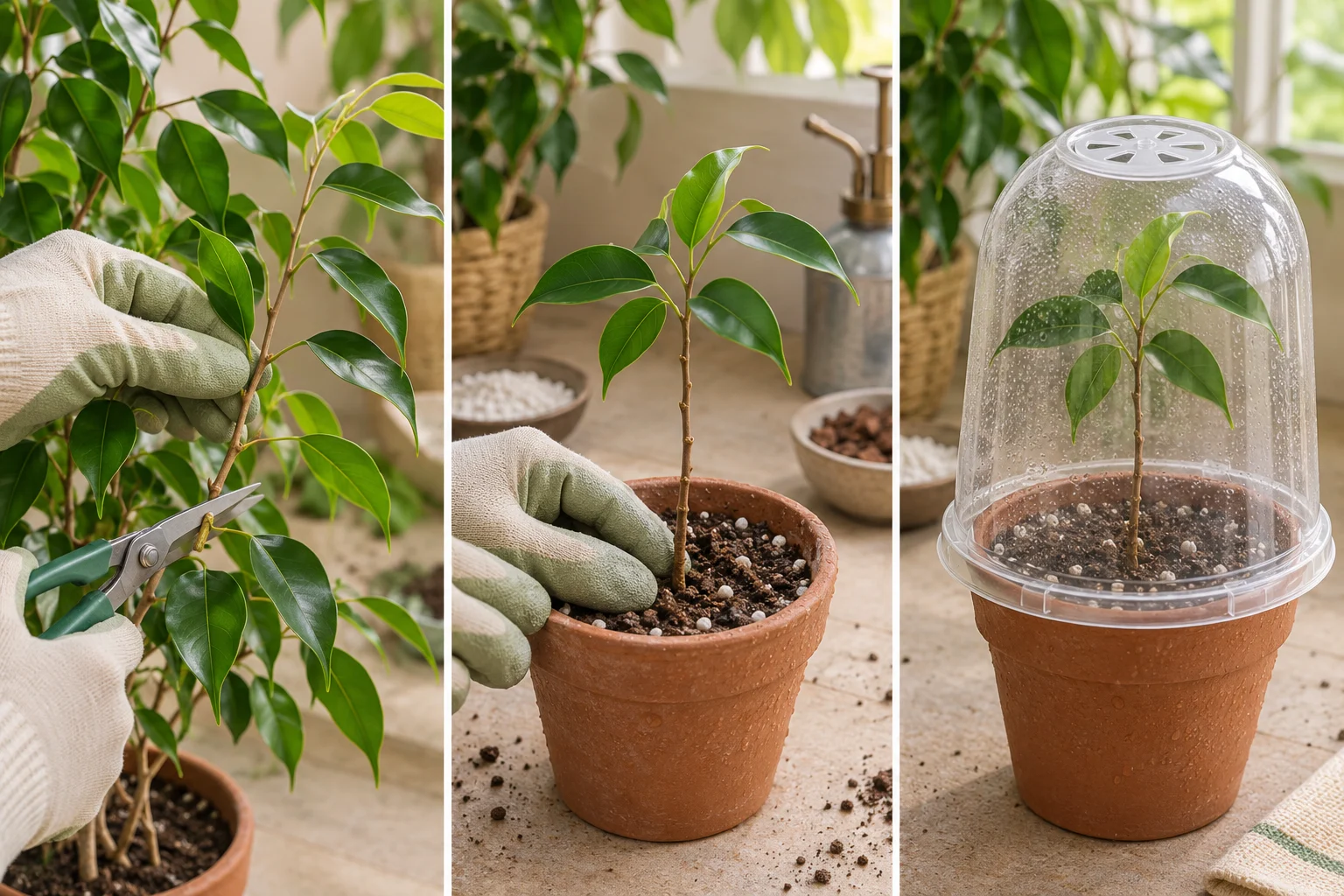
Panels, from left to right
- Wear gloves and take a healthy leafy semi-ripe stem cutting with a node, using clean sharp tools.
- Remove lower leaves and place the lower node in moist, airy propagation mix; keep sap away from skin and eyes.
- Provide warmth, indirect light and a ventilated humidity cover. Pot up only after roots establish, without repeatedly pulling the cutting.
Inspect sticky leaves, webbing and hidden joints
Scale, mealybugs, spider mites and other sap-feeding insects can affect weeping fig. Look underneath leaves and along young stems, branch junctions and sheltered parts of a dense canopy. Sticky deposits can suggest honeydew-producing insects; fine stippling and webbing can suggest mites. Confirm the organism before treating, because leaf drop and yellowing are also common responses to environmental stress.
Isolate an affected plant and remove accessible pests gently by wiping or rinsing suitable foliage. If treatment is needed, select a product labeled for the identified pest and indoor ornamentals, follow the directions and test a small area first. Avoid homemade soap and oil recipes. Reinspect after treatment because hidden stages may remain. Persistent wet roots require a drainage investigation, and a spray cannot correct an oxygen-poor root zone.
[1][3]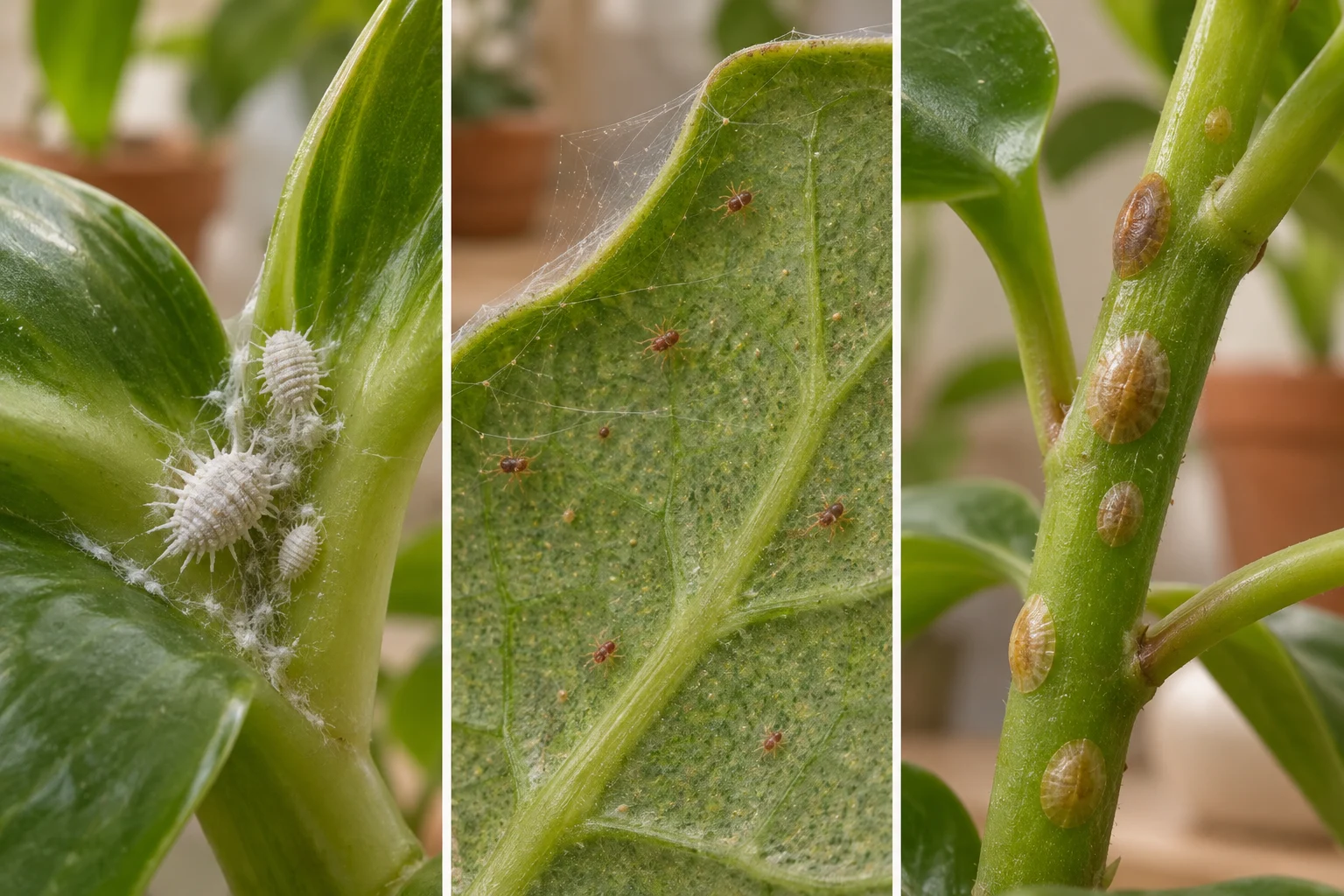
Panels, from left to right
- Mealybugs
- Spider mites
- Scale insects
Investigate leaf drop before changing everything
A recent purchase, relocation or major light change can trigger leaf shedding. First review what changed, then check the root zone, drainage and pests. If branches remain firm and new buds are developing, keep conditions stable while monitoring. Do not respond by moving the tree repeatedly, feeding heavily and watering more all at once; those actions obscure the cause and can compound stress.
Yellowing with persistently wet mix suggests a different investigation from curled, dry leaves with a lightweight pot. Dark spots, soft roots or a sour smell warrant closer inspection, but no single sign identifies a pathogen. A few aging inner leaves can fall naturally. Rapid canopy loss, branch dieback or continued decline despite corrected conditions calls for a more detailed assessment, potentially with a local horticultural adviser.
[2][1][3]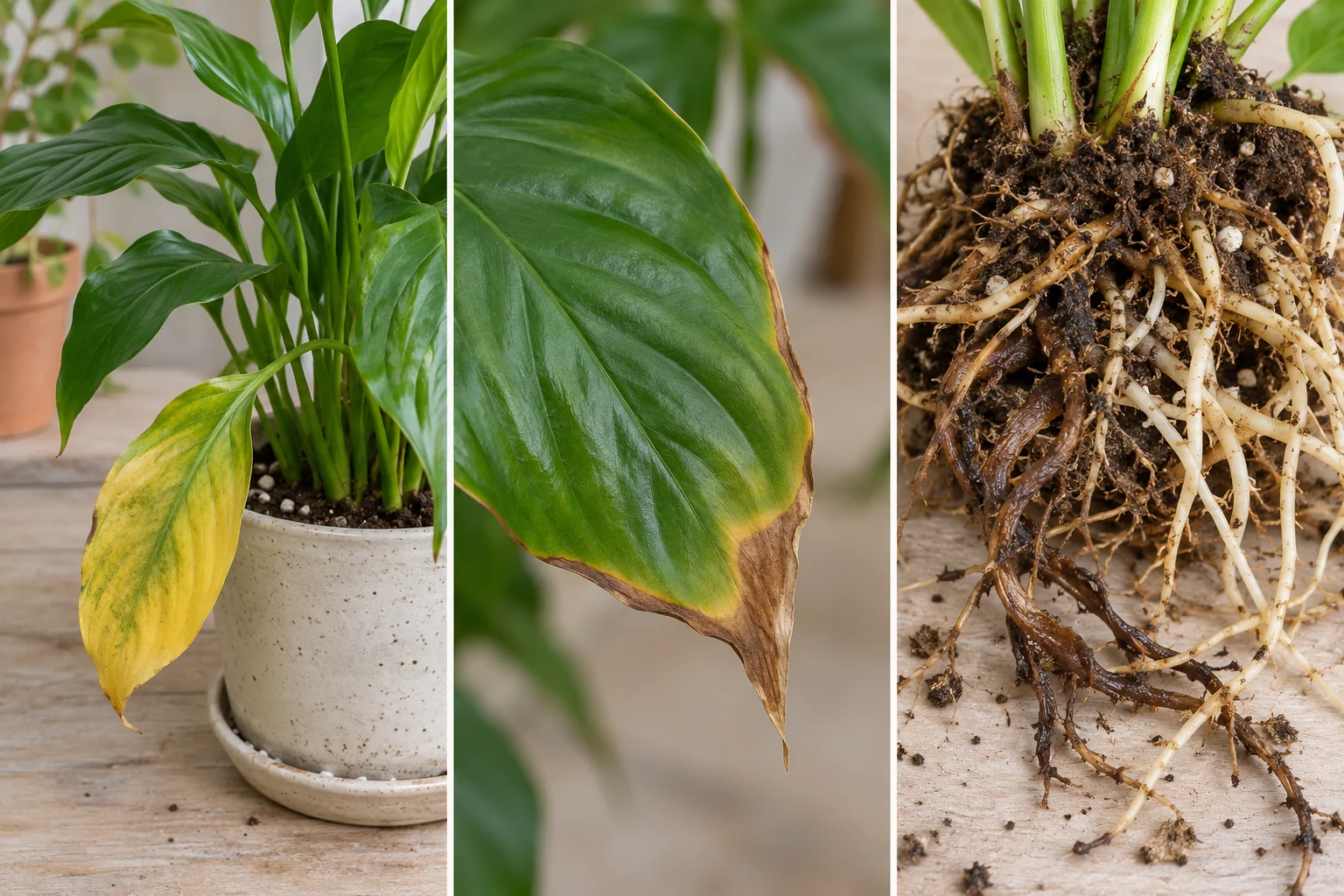
Panels, from left to right
- Yellowing foliage
- Brown leaf edges
- Damaged roots
Leaf drop after relocation
- Possible causes
- Possible adjustment to changed light or temperature; watering problems and pests can also contribute.
- What to check
- Review recent changes, root-zone moisture and leaf undersides.
- Next step
- Keep a suitable position stable and correct any confirmed root or pest issue; watch new buds.
Yellow leaves with wet mix
- Possible causes
- Possible excess moisture, blocked drainage or insufficient light.
- What to check
- Inspect trapped water and deeper moisture; check roots if decline continues.
- Next step
- Restore drainage and delay watering while wet; do not try to rescue stressed roots with extra fertilizer.
Sticky leaves and raised bumps
- Possible causes
- Scale or other sap-feeding insects are possible.
- What to check
- Examine stems, leaf undersides and branch junctions to confirm an insect.
- Next step
- Isolate, remove accessible confirmed pests and use a suitable labeled indoor treatment if necessary.
Make seasonal transitions gradual
In spring, watch for new growth and faster drying, and decide whether pruning or repotting is needed. Avoid combining major pruning, root disturbance and a dramatic change of location unless there is a clear reason. Summer care depends on the room: bright warm windows increase demand, while air conditioning and shaded positions can change it in the opposite direction.
As days shorten, expect the pot to dry more slowly and reduce feeding with reduced growth. Keep the tree away from winter draughts and heating outlets. If moving between outdoors and indoors, acclimate gradually where possible and inspect for pests. Some leaf adjustment may occur, but it should not excuse ignoring saturated roots or severe decline. Maintain useful records of light changes, watering checks and the pattern of leaf loss.
[2][1]The ornamental value is in the foliage
Figs have an unusual enclosed flower structure rather than a conventional showy blossom. Small fig-like structures can appear in suitable conditions, but indoor weeping figs are grown mainly for their foliage and form. A lack of visible flowers or fruit is normal and should not prompt extra fertilizer, deliberate drought or a change to harsh direct sunlight.
Do not confuse ornamental Ficus benjamina with the edible common fig, Ficus carica. Fruit on an ornamental indoor tree is not a snack and should be kept away from pets and children. If structures develop, observe them without breaking tissues unnecessarily and handle any pruning with gloves. This guide does not assume that indoor fruit contains viable seed or that fruiting is a practical home propagation route.
[1][2]Keep this toxic fig away from chewing pets
NC State flags Ficus benjamina as a problem for cats and dogs, so keep this tree and its fallen leaves away from animals that chew plants. Its Ficus guidance also warns that latex can irritate skin. Wear gloves when cutting branches or handling damaged roots, avoid touching your eyes, and clean hands and tools after the work.
Choose a location inaccessible to pets that chew foliage, collect fallen leaves and keep cuttings out of reach. A high pot is not automatically inaccessible to a climbing cat. If ingestion or symptoms occur, contact an appropriate veterinary or poison service with the scientific name and exposure details; do not improvise a home remedy. Pet-toxicity information and human edibility are separate questions: this ornamental fig should not be treated as food.
[1][2]Use a change log to understand a sensitive tree
For a plant prone to shedding leaves after environmental change, a simple record is useful. Note the date of a move, pruning, feeding or repotting, then record moisture and the location of fallen leaves. A photo of the canopy and new buds makes it easier to distinguish continuing decline from slow recovery. Look for trends across weeks rather than drawing a conclusion from one day's fallen leaves.
Keep the root inspection proportional to the evidence. Repeated unpotting can add stress, while ignoring persistently wet mix can allow damage to worsen. A large canopy also creates uneven light and hidden pest refuges, so inspect more than the outermost attractive leaves. Good baseline conditions and patient observation are often more valuable than elaborate supplements or several simultaneous adjustments.
[2][1][3]Read cultivar labels carefully
Weeping figs are sold as green-leaved, variegated and compact selections, as well as standards, braided trees and bonsai. A trained form describes how a plant was grown, not a different botanical species. Compact selections may suit smaller spaces, while variegated leaves need enough light to maintain good growth without exposing pale tissue abruptly to harsh sun.
Do not assume every plant marketed as a Ficus cultivar belongs to Ficus benjamina. Rubber plants, narrow-leaved figs and fiddle-leaf figs have separate identities and can appear beside it in nursery displays. Ask for the full botanical and cultivar name where available, and verify a named selection before expecting a particular mature size. This species guide provides the baseline; the actual plant's vigor, root health and environment still determine care decisions.
[1][2]Frequently asked questions
Why does weeping fig drop leaves after a move?
It can shed leaves while adjusting to changed light or temperature. Keep the new position stable, but also check moisture, drainage and pests rather than assuming every loss is harmless.
[2][1]Can I prune it to stay smaller?
Yes. Shorten selected shoots above a node as active growth approaches, using clean tools and gloves. Avoid severe pruning of a stressed tree.
[2]Will a cutting grow into another tree?
A healthy semi-ripe stem cutting with a node can root in suitable warm, humid conditions. A detached leaf alone is not equivalent, and success is not guaranteed.
[2]Are its figs edible?
Do not eat ornamental weeping-fig fruit. Ficus benjamina is not the edible common fig, Ficus carica; keep any fruit away from pets and children.
[1]Why are leaves yellow while the pot stays wet?
Excess moisture, poor drainage or low light may be stressing roots. Check the lower mix and trapped water before adding more water or fertilizer.
[2][1]What causes sticky leaves?
Scale or mealybugs may produce sticky honeydew. Inspect stems and leaf undersides for insects before selecting a treatment.
[3][1]Does a braided trunk need special care?
The braid is a training form, so the same light and watering principles apply. Inspect ties and contact points as stems thicken to avoid constriction.
[1][2]Will bare branches recover?
Recovery depends on whether branches and roots remain healthy and whether the stress is corrected. Watch for viable buds and new growth; leaf loss alone does not establish that the tree is dead.
[2]Can I mist it instead of watering?
No. Misting does not rehydrate a dry root ball or reliably control room humidity. Check the mix and water the roots appropriately, with complete drainage.
[2]Is a variegated plant cared for differently?
It still needs stable conditions and draining roots. Pay particular attention to sufficient indirect light and avoid sudden harsh sun on pale leaf areas.
[2]Compare related plants
- Rubber plant: Compare another indoor Ficus with much larger, thicker leaves and the same need to handle milky sap carefully.
- Fiddle-leaf fig: Compare a broader-leaved indoor tree that also benefits from stable light and careful watering.
Care reminders with PlantPal
Use PlantPal reminders to check moisture and review changes in your fig's routine. Let observations guide the timing of each care task.
Set up care reminders