 Plant
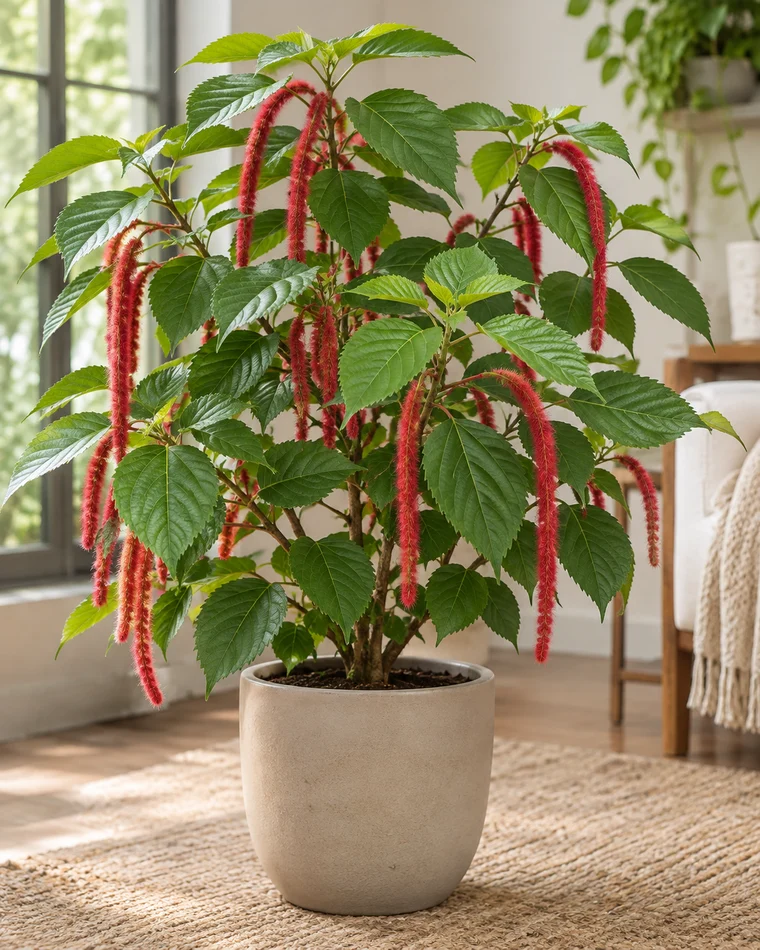
Chenille plant.
Acalypha hispida
Chenille plant carries long red flower tassels beneath broad green leaves. Acalypha hispida is a vigorous tropical shrub that can brighten a warm window or conservatory when its roots stay aerated and its canopy receives useful light. Plan room for the hanging display and keep it away from chewing pets; its soft flowers are not toys.
How to help it thrive.
Checked:
Quick care reference
- Botanical identity: Acalypha hispida, a tropical woody shrub.
- Display: pendant red clusters of tiny female flowers.
- Placement: bright canopy with clearance below the tassels.
- Root zone: moist during growth, never trapped in drainage water.
- Winter: warm protection and water adjusted to slower growth.
- Shaping: selected pruning around the flowering display.
- Propagation: healthy stem cuttings with controlled rooting warmth.
- Handling: keep sap off skin and tassels away from chewing pets.
A tropical shrub wearing hanging red tassels
Acalypha hispida belongs to the spurge family, Euphorbiaceae. Kew's current taxonomic account places its native range in the Bismarck Archipelago; horticultural sources often describe its tropical Pacific ancestry more broadly. The plant is a woody perennial shrub, not an annual grass with foxtail seed heads. In warm landscapes it can become several metres tall. Indoors, pruning and available light usually keep it much smaller, but a flowering pot still needs more space than a tiny windowsill succulent.
A raised container lets the hanging inflorescences clear the rim. Place it where the tassels are visible without being constantly brushed, and where you can still reach the pot to check moisture. The display can recur under favourable warmth and light; continuous flowering is not guaranteed in a dark winter room. Older plants may become open and woody, so a healthy cutting can be useful insurance before a major renewal prune.
[1][3][4][2]Fuzzy flowers hang below ordinary green leaves
Look for broad, toothed, pointed green leaves arranged along branching stems. Long fuzzy red to pink structures hang from the leaf axils and can reach several tens of centimetres. Each tassel is a cluster of many tiny female flowers, whose coloured parts create the velvety surface. It is not a single enormous petal, a root, or a disease growth. The green foliage remains important for recognising a plant outside its flowering display.
Copperleaf, Acalypha wilkesiana, is a relative grown primarily for coloured leaves and has a different overall display. Smaller trailing plants also appear under chenille-related retail names, so a short basket plant should not automatically inherit the mature size or identity of A. hispida. Keep the botanical label with any propagated material. A photograph showing stem, leaf edge and the attachment of an inflorescence is more informative than a close-up of red fuzz alone.
[3][4][2]Give the flowering canopy a bright position
Useful light is essential for a strong flowering shrub. RHS allows full or filtered light under glass, while outdoor references include sun and partial shade. Indoors, start near a bright window and assess whether the whole canopy is illuminated. A basket hung above the top of the window can be surprisingly dark even when the room looks sunny. Sparse growth with few new tassels is a reason to inspect placement before buying another fertilizer.
Acclimate a sheltered plant before stronger sun, and avoid a hot glasshouse corner where the leaves repeatedly scorch or wilt at midday. Supplemental lighting can help where a suitable window is unavailable, provided the fixture reaches the leafy canopy and does not overheat flowers. Use the fixture's guidance and subsequent growth to set distance. Turn a one-sided specimen carefully, leaving space so that existing tassels do not rub against glass or adjacent foliage.
[2][3]Support the display with evenly managed moisture
During active growth the large leaves and flower display use appreciable water. Keep the root zone moist with reliable drainage, rather than cycling through complete drought and prolonged saturation. Lift or probe the pot to understand how quickly it dries in its actual position. A dense hanging display may conceal a small root ball that dries faster than expected. Water the growing medium without repeatedly drenching the fuzzy inflorescences.
RHS advises less water in winter, keeping the compost only slightly moist when growth is quiet. That instruction changes with the room's light and warmth; it does not establish a universal weekly amount. If leaves collapse while the mix remains wet, adding water automatically can worsen the situation. Check the root zone, drainage and recent temperature changes. Recovery should be judged from firm new growth and the pot's drying pattern, not from one old tassel whose colour has already faded.
[2][3]Keep a substantial shrub rooted in an airy pot
A moisture-retentive but well-drained potting mix suits the active shrub. Use a container with drainage and enough stability for its crown, especially when flowers hang to one side. Garden descriptions of tolerance to different soil textures do not mean that heavy garden clay is a good indoor potting medium. Peat-free potting compost is the RHS starting point, with structure that remains open after repeated watering.
Repot when roots fill the existing volume or the medium has deteriorated, preferably as sustained growth resumes. Do not surround a small root ball with an unnecessarily large mass of wet compost. Keep the shrub at its established planting depth and inspect roots while the plant is supported. If a hanging pot is used, consider the weight after watering and the ability to remove it safely for inspection. The shared repotting guide covers the general operation.
[2][3]Warmth and humidity help the soft canopy
NC State recommends indoor temperatures above about 16°C and high humidity for chenille plant. Treat this as a cultivation guide, not an exact boundary between safety and death. Cold drafts, a chilly window ledge and a sudden outdoor night can affect the plant before the room thermostat suggests a problem. Warmth should be paired with adequate light; keeping a shrub hot in darkness encourages weak maintenance conditions rather than a good display.
Dry air from heating can make a large leafy plant harder to manage. Improve the surrounding conditions without sealing wet flowers in stagnant air. A humidifier, if used, should benefit the room rather than soak one side of the canopy, and the pot still needs drainage. Humidity is not a replacement for watering roots, while extra root watering is not a reliable replacement for suitable air conditions. Observe leaf edges, new growth and pests together.
[3][2]Use regular modest nutrition during growth
RHS and NC State describe monthly balanced feeding for actively growing indoor plants. Match the concentration to the product label and count fertilizer already included in fresh compost. A vigorous shrub carrying leaves and repeated flower clusters has a different nutrient demand from a plant barely maintaining itself in winter shade. Feeding decisions should follow visible growth, the root condition and the available light.
Do not interpret every finished brown tassel as evidence of a nutrient shortage. Flower clusters age even on well-fed plants. If new foliage is weak, first inspect moisture, light and pest pressure; adding strong fertilizer to stressed roots may add another problem. Reduce or stop feeding during a quiet winter period or following root damage. Record the application dates so that changing care routines does not result in repeated accidental doses.
[2][3]Prune around the tassel display
Chenille plant can become tall and open, particularly when light favours growth on one side. Shortening selected stems after a display helps manage size and encourages a more branched outline. Keep enough healthy foliage to support recovery. Do not trim every developing tip continually while also expecting an uninterrupted supply of inflorescences: shaping and flower production share the same living framework.
Remove spent tassels as they fade and collect fallen material beneath the plant. Before a heavier reduction, consider taking a sound cutting from healthy growth. A woody old base is not necessarily diseased, but soft dark tissue or rapid dieback deserves investigation before pruning is treated as a cosmetic solution. Work with clean tools and gloves, then place the shrub where new branches can grow without crowding its neighbours.
[3][2][4]Use a healthy shoot from a known flowering plant
Stem cuttings preserve the identity of a chosen chenille plant more practically than searching for seed. RHS recommends softwood cuttings in early spring or semi-hardwood material in late summer, with bottom heat for rooting. Choose vigorous, pest-free growth and remove a flower cluster or excess lower leaves if they interfere with preparing the basal stem. Avoid taking material from a plant with unexplained wilting, spreading lesions or heavy infestation.
Insert the prepared stem into suitable airy cutting compost, maintaining warmth and moisture without saturation. A bright position protected from harsh sun and a ventilated humidity cover can reduce stress while roots form. Bottom heat should be controlled rather than improvised with a dangerously hot surface. Pot on when roots and continuing growth show that the cutting can support itself. A newly opened leaf alone does not prove that a substantial root system exists.
[2][3]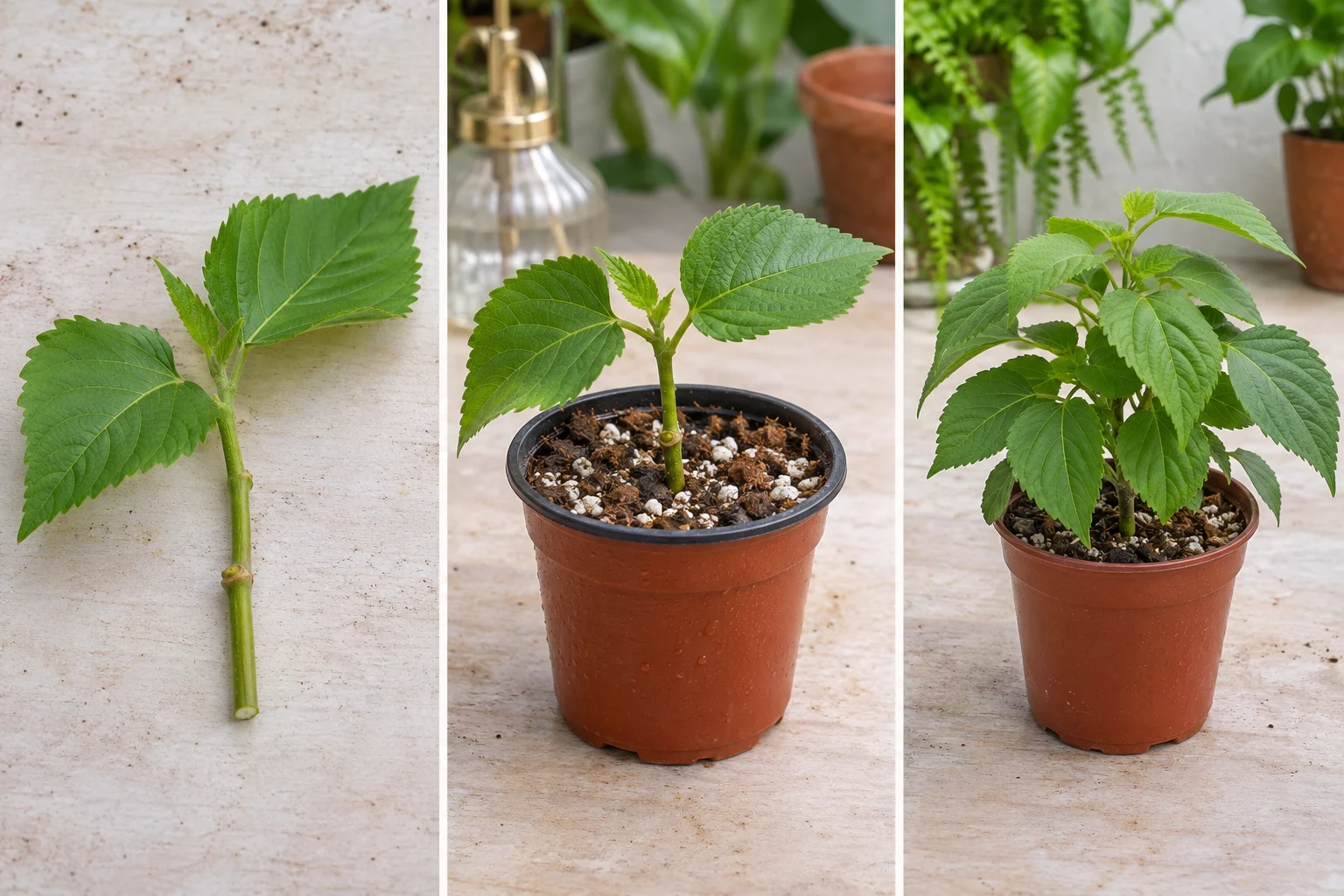
Panels, from left to right
- Choose a clean, healthy shoot from an identified flowering chenille shrub and prepare a basal stem section.
- Place it in airy cutting compost with controlled bottom warmth, gentle light and ventilated humidity.
- Pot on after roots and continuing growth support the cutting, retaining the parent plant’s identity on its label.
Inspect under the leaves as well as among the tassels
Mealybugs, scale, spider mites and glasshouse whitefly are listed problems. The dramatic red flowers can draw attention away from the leaf undersides and stem junctions where pests may first become apparent. Check new purchases and plants returning from a summer outside before they join other houseplants. White cottony deposits, moving specks, fine webbing or sticky surfaces justify a closer look, but the sign should be matched to an organism before treatment.
Isolate an affected shrub and use an approach appropriate to the identified pest and indoor ornamental plants. Avoid coating the fuzzy flowers repeatedly with untested household solutions. Leaves may also decline from root or environmental problems that an insecticide cannot solve. If a treatment label requires a test area, follow it, and reassess fresh growth rather than expecting existing scars to disappear. Severe unexplained decline is a reason to seek diagnosis before distributing cuttings.
[2][3]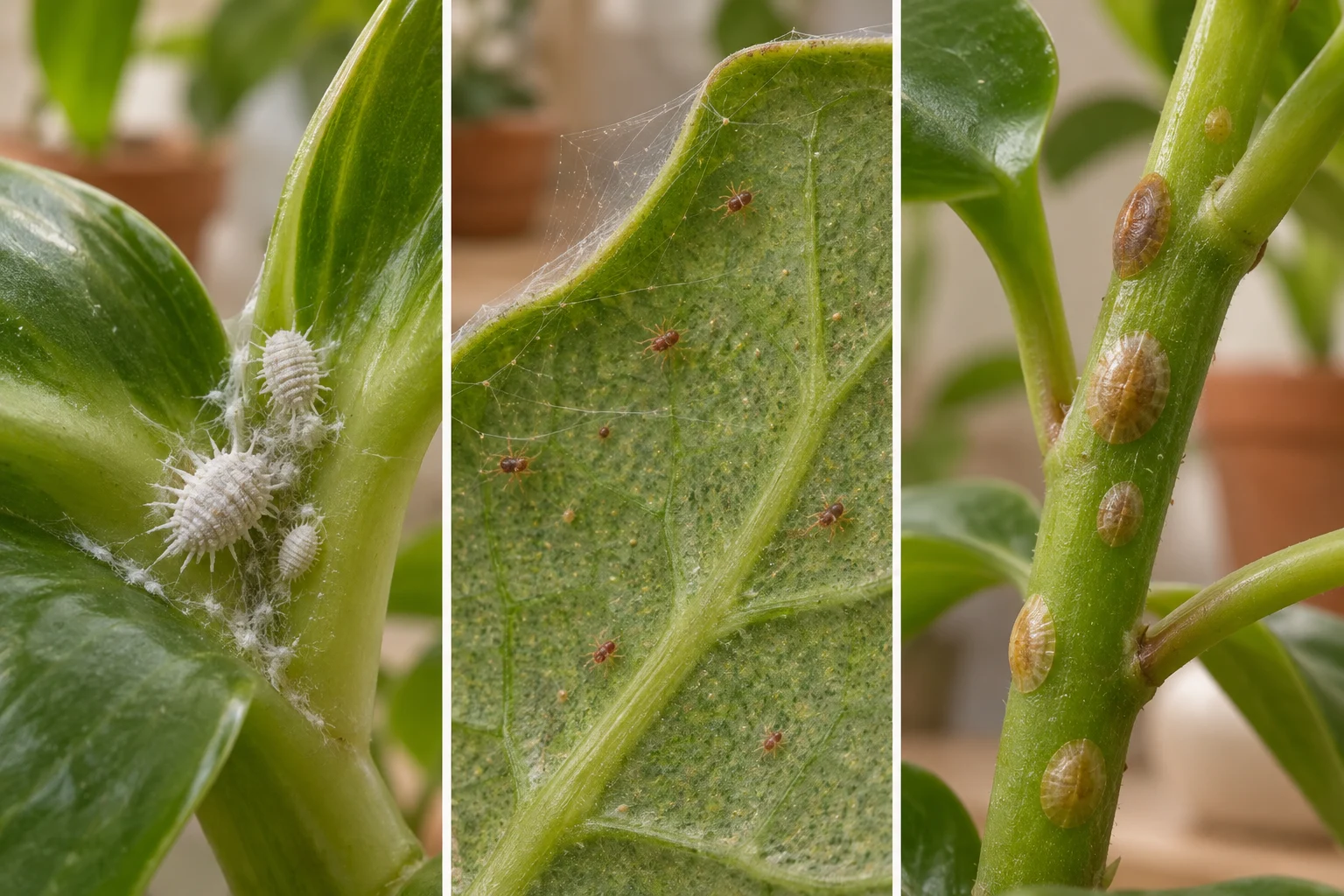
Panels, from left to right
- Mealybugs
- Spider mites
- Scale insects
Read old tassels and new shoots differently
A tassel that gradually fades and browns while the surrounding plant remains vigorous is often simply finishing. Remove the spent display and look for developing growth. A widespread sudden wilt is different: compare root moisture, heat exposure and recent cold before choosing an action. Flowers are conspicuous but can be less useful than the condition of shoot tips and roots for understanding a whole-plant problem.
A leafy shrub producing few tassels may have insufficient light, may be recovering from repeated pruning, or may be adjusting after a move. Check that it is actually A. hispida rather than another plant with a similar common name. Increasing feed without resolving light or root problems is not a dependable flowering strategy. Keep notes on pruning and location changes, then give new growth time to show the effect of one adjustment.
[3][2][4]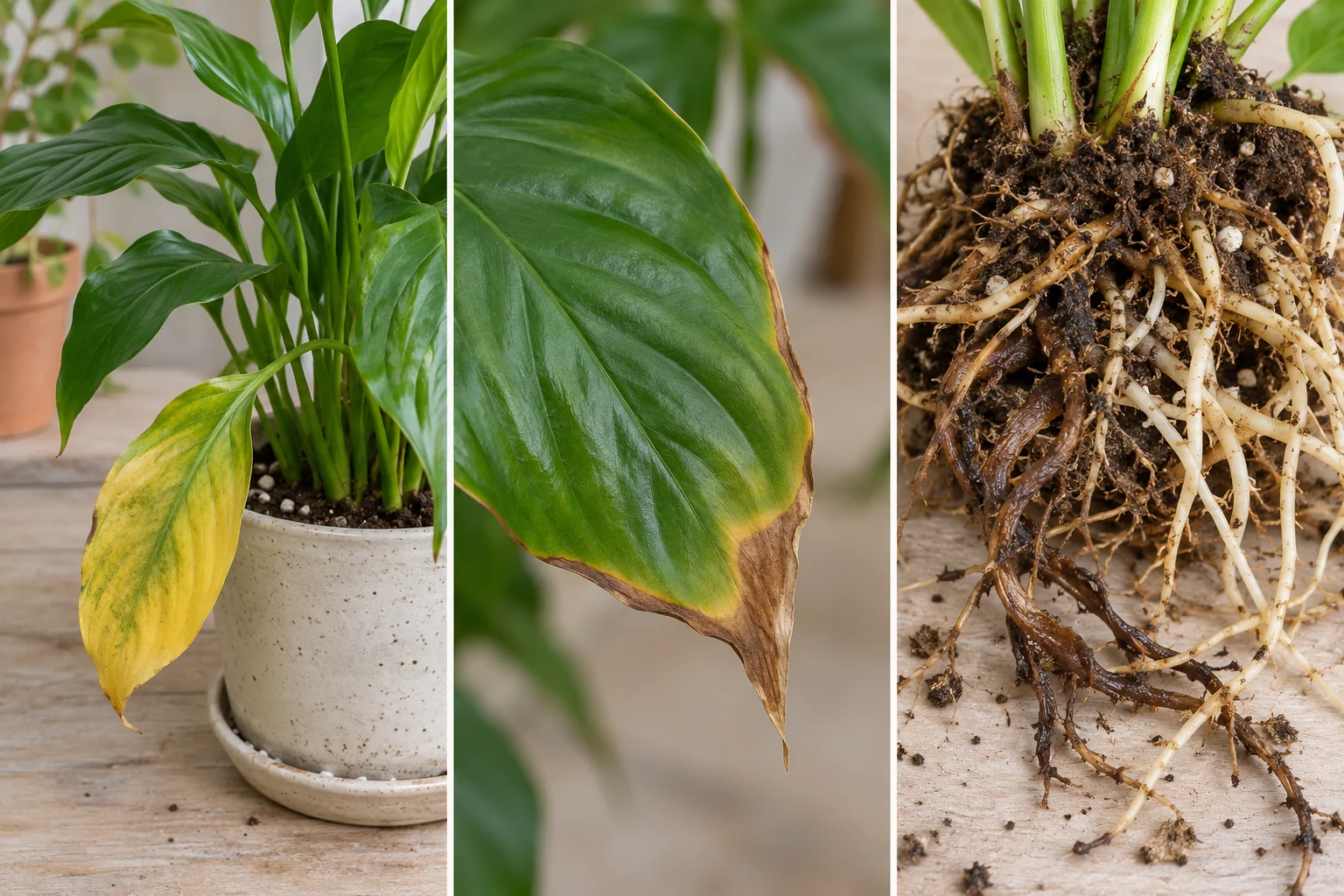
Panels, from left to right
- Yellowing foliage
- Brown leaf edges
- Damaged roots
Brown tassels on a vigorous shrub
- Possible causes
- Individual flower clusters naturally fade, particularly when the foliage and shoot tips remain healthy.
- What to check
- Compare finished tassels with the condition of new shoots and any developing inflorescences.
- Next step
- Remove spent clusters and assess the ongoing display before altering fertilizer or watering.
A wet pot beneath limp foliage
- Possible causes
- Impaired roots, blocked drainage or temperature stress may prevent a leafy chenille shrub from using available water.
- What to check
- Inspect the root zone and recent location changes instead of assuming that every wilt means drought.
- Next step
- Correct the identified drainage or environmental problem and avoid another automatic soak.
Long leafy shoots with few red tails
- Possible causes
- Insufficient canopy light, repeated pruning or recovery after a move can reduce the flower display.
- What to check
- Review actual window exposure, recent cuts and the botanical label.
- Next step
- Improve the limiting condition and observe a new growth cycle before adding extra feed.
Plan the winter position before summer ends
Where frost occurs, chenille plant needs indoor protection or treatment as a seasonal outdoor container. A bright warm overwintering position should be chosen before the shrub grows too large to fit there. Move it before cold stress becomes an emergency, inspect leaves and stems for pests, and expect the new indoor conditions to alter water use. A flowering summer basket is not proof that the same plant will flower in a dim hall all winter.
During a quieter period, reduce watering and feeding in line with growth while avoiding complete root-ball desiccation. As strong light and new shoots return, reassess pot condition and shaping. Healthy rooted cuttings can be easier to accommodate than an oversized old shrub, but they still need a warm bright place. Seasonal renewal is a space-management option, not evidence that the species has a naturally one-year lifespan.
[2][3]The cultivated display is made by female flowers
Chenille plant is described as dioecious, and UF/IFAS notes that plants in the horticultural trade are female. The conspicuous hanging clusters are made of many small female flowers. This explains why a spectacular display does not necessarily lead to useful seed. A single tassel can remain decorative for a considerable period before its texture and colour decline.
Flowering may recur in favourable tropical or protected conditions, but indoor light, pruning and plant health influence the result. Do not promise a particular month or a constant number of tassels. Keep the inflorescences clear of surfaces and avoid pulling them as if they were handles. To preserve a favourite flowering specimen, label a healthy vegetative cutting rather than assuming that seed from a spent cluster will be available.
[4][3][2]The soft tassels are not pet toys
Queensland Poisons Information Centre warns that chenille plants, including Acalypha hispida, may cause digestive illness if swallowed and severe skin inflammation after sap contact. This is human exposure guidance, not a species-specific veterinary assessment. Keep the tassels and fallen flowers beyond chewing animals; their soft appearance does not make them suitable toys.
The fluffy appearance and cat-tail common names are not evidence of safe contact or ingestion. Avoid using the plant as food or a home remedy, and wear gloves for messy pruning work. If a pet eats it or develops symptoms after exposure, contact a veterinarian with the botanical identity and an estimate of the exposure. For a child or adult exposure, seek appropriate medical advice rather than transferring animal toxicity thresholds to people.
[5]Improve the flowering environment before changing systems
For a demanding indoor display, first map the actual light at the canopy, the temperature beside the pot and the rate at which the medium dries. These observations are more useful than adding several devices at once. A grow light may help a suitable warm room, while a carefully managed humidity change may address very dry air. Keep a record so that fewer flowers or weaker shoots can be related to a specific change.
The cited references support conventional container culture and warm cutting propagation, not a validated permanent hydroponic recipe for this species. If experimenting with an alternative medium, use a spare healthy cutting and retain a conventional plant. Do not place a mature woody shrub into standing water simply because it likes moisture. New roots, stem firmness and ongoing growth are the useful checkpoints during any transition.
[2][3]Do not confuse a common name with a cultivar identity
A. hispida is the tall shrub with long red or pink hanging clusters described here. White-flowered material and smaller plants may appear in specialist trade, but a colour word or the name chenille alone does not establish species or cultivar identity. Some compact trailing chenille plants are sold under other Acalypha names and should be checked against their own documented parentage.
Keep the botanical name and any verified cultivar label with the plant rather than assigning an identity from a photograph of a flower. Green leaves are normal on this species; the richly mottled foliage of copperleaf belongs to a different profile. When sharing cuttings, explain the size and flowering habit of the parent, plus any uncertainty on its label. This is more useful than promising that every chenille-named purchase behaves alike.
[3][1][4][2]Frequently asked questions
Are the red chenille tassels flowers or leaves?
They are hanging clusters of tiny female flowers. The velvety appearance comes from the many coloured flower parts along the axis, while the broad toothed green leaves perform the usual foliage role.
[4][3][2]Why does my flowering chenille plant never give usable seed?
Plants sold in horticulture are described as female. A display of female inflorescences does not guarantee pollination or viable seed; stem cuttings are the practical way to retain a known plant.
[4][2]Is a small trailing chenille basket necessarily Acalypha hispida?
No. Similar common names are used for other Acalypha material. Check the botanical label and growth habit before applying the mature size and pruning expectations of this upright shrub.
[3][1]Why have old chenille tassels turned brown while the leaves look healthy?
Individual inflorescences fade as they finish. Remove the spent clusters and inspect new shoots; ageing flowers alone are not a reason to increase water or fertilizer.
[4][3][2]Can repeated tip pinching explain a chenille plant with few tassels?
It can affect the flowering display because the plant must rebuild shoots after shaping. Review pruning dates along with light and root health before concluding that the shrub lacks nutrients.
[3][2]Does chenille plant need a winter dry rest like a desert cactus?
No. RHS describes reduced winter watering with the medium kept only slightly moist when growth is quiet. Prolonged complete drying is not the prescribed rest for this tropical evergreen shrub.
[2]Can I use a chenille tassel as propagation material?
The documented method uses a healthy stem cutting, not the flower cluster itself. Choose a sound shoot from an identified plant and prepare its basal stem for rooting.
[2][3]What does bottom heat mean for chenille cuttings?
It means controlled warmth around the rooting medium, as recommended by RHS. It does not mean placing a pot on a dangerously hot radiator or overheating a closed propagation cover.
[2]Can chenille plant remain a tiny tabletop specimen permanently?
This is a vigorous woody shrub whose natural scale is much larger. Pruning or renewal cuttings can manage its size, but the canopy still needs enough light and space for its hanging flowers.
[3][4][2]Is chenille plant safe for a cat that plays with the hanging tails?
Do not let a cat play with or chew the hanging flowers. The Queensland poison centre describes ingestion and sap hazards for people; that does not establish a safe exposure for cats. Ask a veterinarian about suspected chewing.
[5]Why does my copper-coloured “chenille” plant look unlike this profile?
It may be copperleaf, Acalypha wilkesiana, or another labelled selection. A. hispida normally combines green foliage with long showy flower tassels; check the botanical identity before changing care.
[3][1]Compare related plants
- Copperleaf: Copperleaf displays mottled leaves, whereas chenille plant has green foliage and much showier hanging red flower clusters.
- Chinese hibiscus: Chinese hibiscus produces large individual petalled flowers; chenille plant creates its display from many tiny flowers packed into hanging tassels.
Care reminders with PlantPal
Add your chenille shrub to PlantPal to remember canopy checks, pruning dates and moisture inspections as the flower display changes.
Follow the tassel display