 Plant
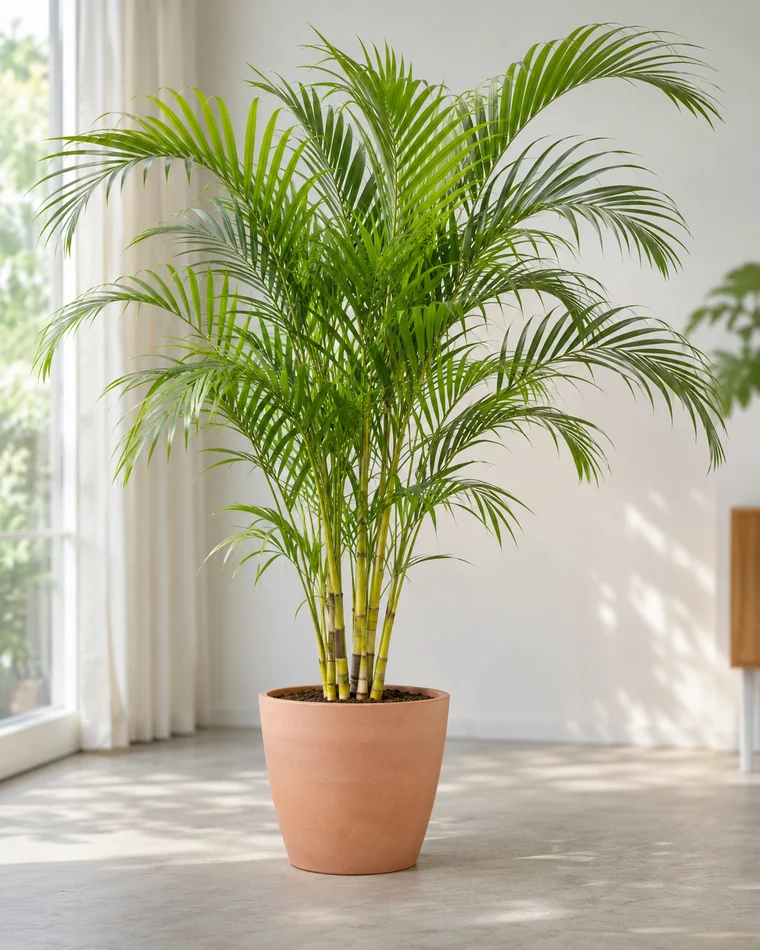
Areca palm.
Chrysalidocarpus lutescens
Areca palm brings a canopy of fine arching fronds above golden-green canes. This clumping Madagascar species needs space for its leaves and attention to the moisture hidden inside a crowded pot. Learn which yellow tones are normal, why each cane’s growing point matters and how to judge a division before separating it.
How to help it thrive.
Checked:
Quick care reference
- Identity: Chrysalidocarpus lutescens; Dypsis lutescens is the same palm.
- Display: leave room for fronds to arch beyond the pot.
- Light: illuminate the rear of the clump as well as the window side.
- Roots: check the inner root ball before adding more water.
- Climate: protect new spears from cold glass and heating vents.
- Pruning: preserve the growing point at the top of each cane.
- Propagation: use seed or a rooted side portion, never a loose frond.
- Safety: NC State warns that the terminal bud is toxic; do not eat ornamental areca.
A Madagascar palm with a growing colony
Chrysalidocarpus lutescens is the golden-caned palm commonly sold as areca or butterfly palm. Dypsis lutescens, the name in the encyclopedia record, is a botanical synonym rather than a second plant. This member of Arecaceae comes from eastern Madagascar. Its connected stems form an expanding clump, giving a container a layered canopy instead of the single trunk of many other palms. Allow room around the plant for the fronds to arch naturally.
A tropical landscape specimen can become a substantial tree, but a pot and indoor light restrict its development. Choose by the present spread and the space available for future fronds, not by outdoor height figures on a label. It is a perennial that can be kept for years; survival depends on root health, usable light and intact growing points. The crowded appearance of a young nursery pot does not mean it should immediately be divided.
[1][2]Golden canes and feather-shaped fronds
The yellow-green stalks and ringed canes are valuable identification clues. Each frond has many slender leaflets arranged along one central axis, with the two rows often making a shallow V. New growth rises as a folded spear before opening. A whole frond is one leaf, not a branch bearing replaceable individual leaves; this distinction matters when deciding what to cut.
Yellow colouring on firm stems is characteristic and differs from widespread paling of the leaflets. Examine the newest frond and the oldest outer fronds separately. Do not identify a palm from the word bamboo alone: unrelated plants and other palms share that common name. Areca catechu, the betel-nut palm, is also a different species. Retain the scientific name with the care record.
[2][4]Light must reach the entire arching canopy
An indoor areca benefits from a bright position with filtered daylight. A deep room corner may leave the window-facing fronds growing while those behind them decline. Place the whole clump near useful light and assess the far side as well as the most attractive face. Introduce any stronger direct exposure gradually; plants raised indoors are not instantly adapted to the sunshine tolerated by outdoor specimens.
A grow light can support the canopy when winter daylight is weak, but a small lamp aimed only at the crown leaves lower fronds shaded. Check the illuminated area at leaf level and keep the lamp far enough away to avoid heat or bleaching. A broad, even arrangement is more relevant than choosing a bulb because its packaging says tropical. Longer leaf stalks and thinning growth warrant a light review before extra feeding.
[2][3]Moist roots without a permanently wet core
During active growth, keep the root ball moderately moist while allowing the surface to start drying. The dense canopy can hide a wet centre beneath a dry-looking rim, especially in a large nursery pot. Check more than one accessible spot and consider the weight of the container. Water reaching the saucer should be removed rather than left around the roots inside a decorative cover.
A palm that repeatedly dries hard may develop brittle leaflet tips, but the same appearance can accompany damaged roots or accumulated salts. Check the recent watering pattern before increasing frequency. When light and growth decrease, the interval normally lengthens. If local water is highly mineralized and deposits keep forming, consider low-mineral water and review fertilizer use; water quality cannot compensate for blocked drainage.
[2][4]Repot the clump without burying its canes
Use a container substrate that holds some moisture but remains open around the palm roots. A pot only modestly larger than the occupied root ball is easier to manage than a large tub filled with unused wet compost. Keep the original planting depth: burying the bases of the canes does not stabilize the palm safely. A heavy outer container can provide stability while the inner pot retains drainage holes.
Repot when roots and watering behaviour show that space or substrate condition has become limiting. NC State suggests roughly every two or three years, but that is a review point rather than a deadline. Preserve healthy roots and avoid dismantling the entire clump merely to remove old soil. After repotting, follow moisture in the new mix, which may dry differently from the original nursery core.
[2][3]Protect young spears from cold and dry airflow
This Madagascar palm prefers warm rooms and humid air. RHS advises a winter minimum around 13°C; a warmer stable position is usually simpler for a young indoor plant. Measure conditions near the foliage rather than relying on a thermostat across the room. Window glass, exterior doors and cold floors can expose roots or young spears to conditions different from the room average.
Heating outlets can dry the fine leaflets rapidly. Moving the pot out of that airflow is more useful than repeatedly wetting the fronds while leaving the same cause in place. If the room remains very dry, a monitored humidifier can improve conditions across the canopy. Retain gentle air movement, and avoid enclosing a large palm where leaves remain wet against a cold surface.
[3][2]Feed the growing clump, not every yellow tip
Use a complete fertilizer suitable for container palms during visible growth, following the product rate for pots. Outdoor palm fertilizer schedules are not automatically appropriate for a small houseplant. The pale older leaflet tip that prompted feeding may be old physical damage or a water problem, so confirm that the root zone and light are reasonable before adding nutrients.
An expanding clump uses nutrients, but excess feed also adds salts to a confined root ball. Record the product and application rather than combining several supplements. Reduced growth in a dim season calls for reduced feeding. Persistent distorted or unusually pale new fronds deserve a closer diagnosis; applying separate iron, magnesium and manganese products by guesswork can obscure the original issue.
[2][4][3]Each cane has a growing point to preserve
Remove fully dead fronds carefully near their attachment without injuring the cane. Retain green foliage where possible, since it supplies the clump even when a few leaflet tips look imperfect. A dry tip can be tidied conservatively, but cutting into living tissue creates another wound. Cleaning the fine leaflets is best done gently, with support beneath the frond rather than pulling along its length.
Do not shorten a tall cane by cutting through its crown. That cane cannot resume normal growth from the removed growing point. The plant may produce other basal shoots, but this does not repair the severed stem. If the palm has outgrown its position, relocation or selective removal of an entire unwanted cane is a different decision from topping all stems to the same height.
[3][2]Divide a rooted side clump, never a detached frond
Areca palms can be raised from seed or by dividing suitable rooted portions of a clump. For a home grower, the key question is whether the side portion has its own roots and a viable growing point. A loose frond, a cut cane without roots or a handful of leaflets is not an equivalent propagation unit. Leave a small or tightly entangled plant intact if separation would sacrifice most roots.
When division is justified, work during warm active growth and preserve a workable root system on both pieces. Pot the division at its existing depth in a container matched to those roots. Keep it bright but protected while it recovers. New spear growth is a better sign of establishment than the continued greenness of old fronds. Seed propagation takes patience and fresh seed; germination time is variable.
[2][4]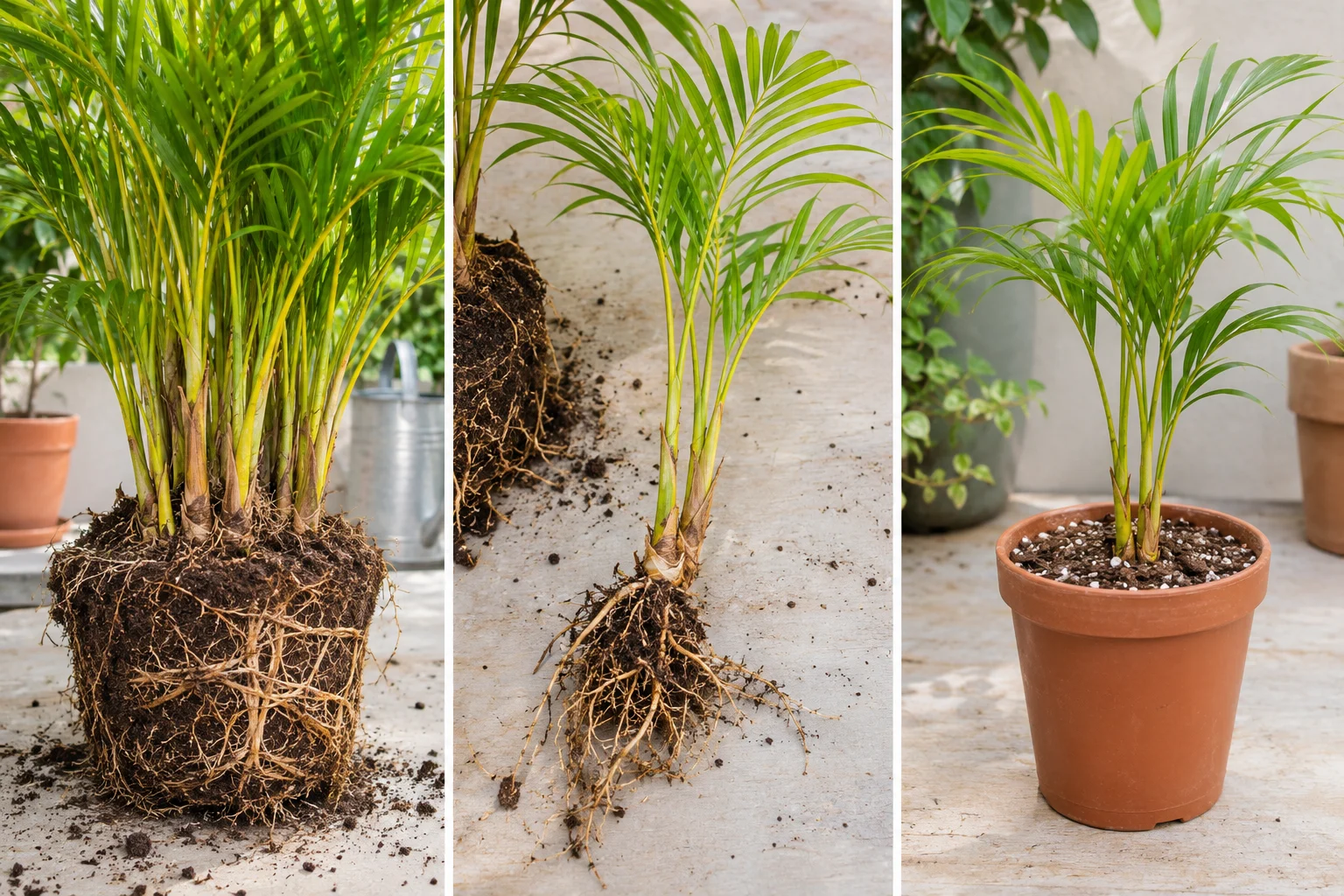
Panels, from left to right
- Locate a side portion with its own roots and a firm emerging spear; leave unrooted canes attached.
- Separate only where both portions can retain useful roots, keeping the crown and cane bases intact.
- Pot the division at its previous depth, protect it from harsh sun and watch for new spear growth.
Inspect the leaflet bases inside the clump
Fine leaflets provide many sheltered surfaces for spider mites, while scale and mealybugs can hide along stalks and stem junctions. Inspect the inner canopy and undersides, not only the outer tips. Webbing with fine pale stippling suggests a different problem from isolated dry ends. Sticky deposits deserve a search for sap-feeding insects rather than automatic treatment as a leaf disease.
Separate an affected palm from nearby plants and identify the pest before choosing a response. Support delicate fronds during cleaning. If a labelled treatment is needed, verify that it is suitable for indoor ornamental palms and try a small area first. Repeated blanket spraying without checking sheltered insects or new growth can damage foliage while leaving the infestation unresolved.
[2][4]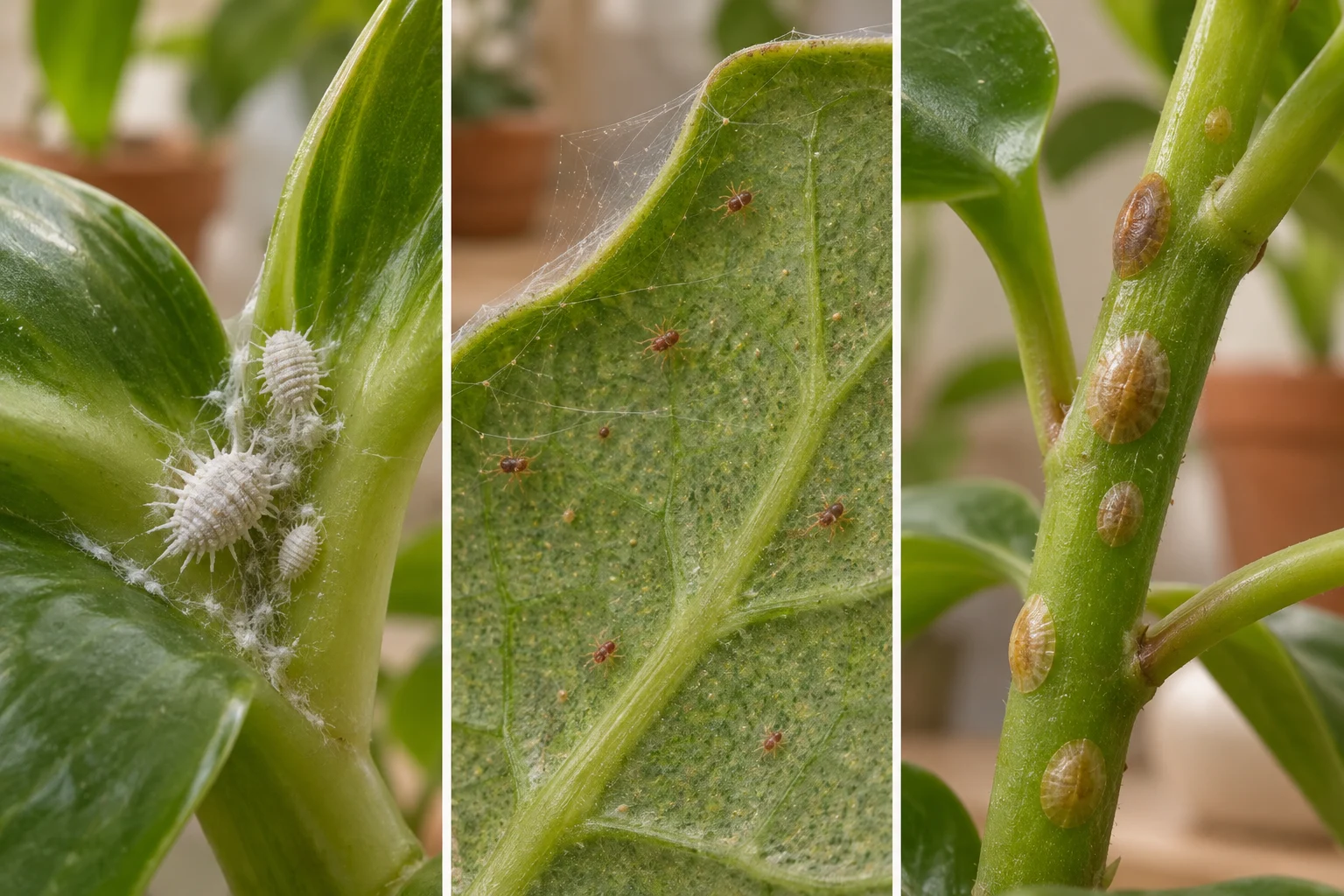
Panels, from left to right
- Mealybugs
- Spider mites
- Scale insects
Read the pattern across old and new fronds
One aging outer frond turning brown does not tell the same story as several new spears collapsing. Map the change: outer versus inner canopy, window side versus room side, tips versus whole leaflets. That simple record helps distinguish gradual ageing, light imbalance, drying and possible root trouble. A photograph taken from the same angle is more useful than repeatedly trimming away all evidence.
Widespread limpness above persistently wet substrate calls for checking roots and drainage. Dry crisp tips with an otherwise firm crown suggest reviewing moisture fluctuations, airflow and mineral inputs first. A spear that loosens, smells unpleasant or becomes soft needs prompt attention; do not force it open or pour water into the crown. These observations narrow possibilities but do not establish a pathogen diagnosis.
[2][3]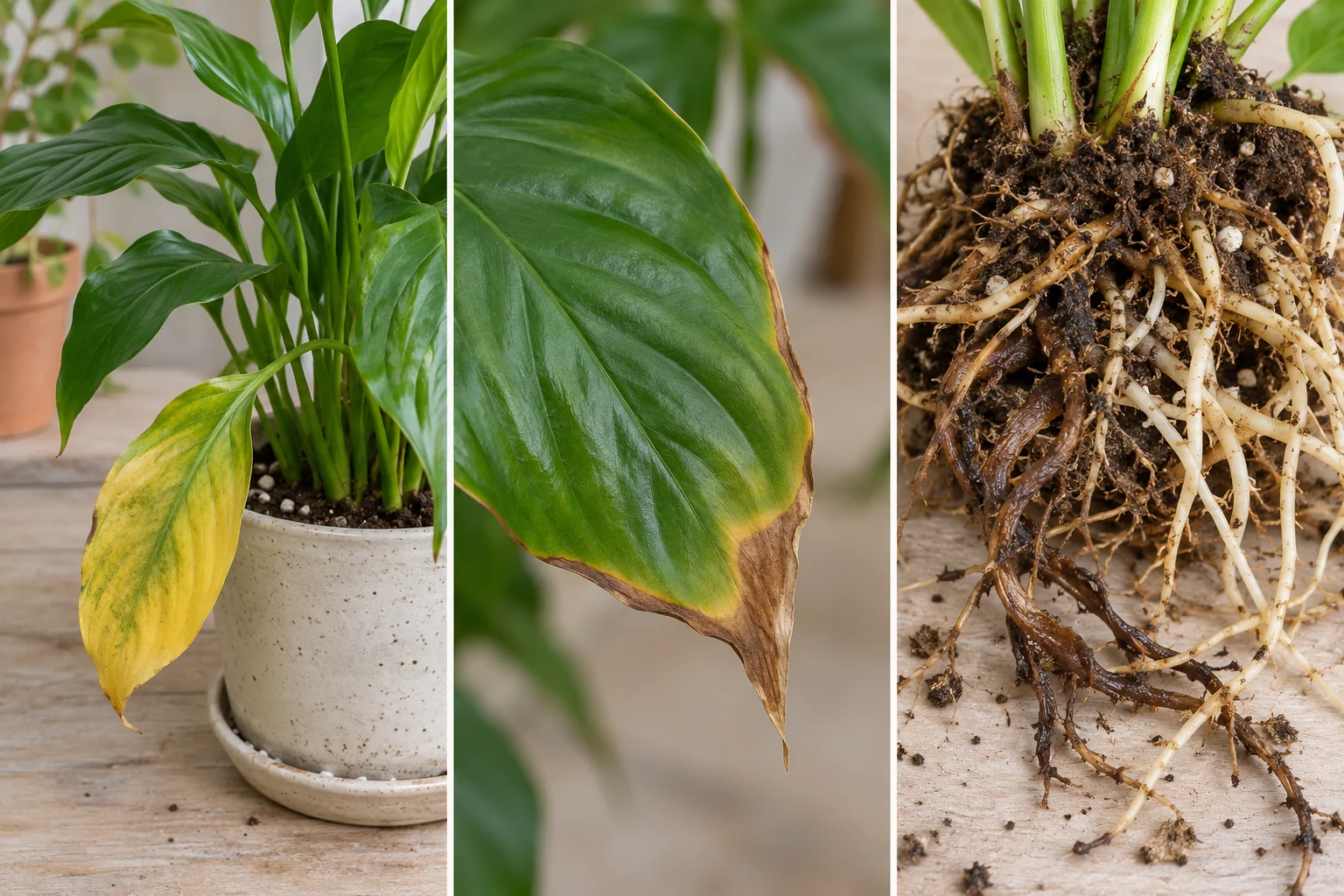
Panels, from left to right
- Yellowing foliage
- Brown leaf edges
- Damaged roots
Dry tips on otherwise green fronds
- Possible causes
- Uneven root moisture, dry heater airflow or accumulated fertilizer salts can damage the ends of areca leaflets.
- What to check
- Compare the inner pot’s moisture with the dry-looking rim and review recent feeding and room airflow.
- Next step
- Correct the identified condition and judge new leaflets; old dry tissue will remain brown.
A new spear softens or loosens
- Possible causes
- Cold injury or crown and root problems are possible when the central emerging leaf loses firmness.
- What to check
- Inspect spear texture, odour and the duration of wetness around the cane bases without pulling the spear apart.
- Next step
- Keep water out of the crown, check drainage and seek a plant-health diagnosis if softness spreads.
Sparse growth at the back of the clump
- Possible causes
- Fronds facing away from the window may be shaded by the rest of the palm.
- What to check
- Compare daylight reaching the rear foliage with the bright front and note which fronds decline first.
- Next step
- Improve coverage of the canopy rather than feeding the whole pot to compensate for shade.
Change the care rhythm when daylight changes
In a bright warm growing season, inspect the root ball more often as new fronds and basal shoots develop. A seasonal move outdoors requires gradual exposure and protection from strong wind, which can shred leaflets. Consider the practical weight of the watered container before placing it where it cannot be moved safely. Outdoor climate tolerances do not guarantee that an indoor-grown specimen is acclimated.
Before cool nights arrive, inspect the clump for pests and return it to a suitable indoor position. During darker months, preserve the best available light and allow moisture checks to determine the longer watering interval. A heated room may keep the air warm while the roots use less water. Keep the fronds clear of curtains and radiators so that the winter arrangement does not trap them in cold or hot pockets.
[3][2]Flowers are possible, but not an indoor target
Mature plants can produce branched yellow inflorescences followed by small fruits. Flowering and fruiting are uncommon in ordinary indoor conditions, where space and light limit maturity. A healthy foliage specimen does not need a bloom to demonstrate successful care. Avoid flower-boosting fertilizer or deliberate drought solely to force reproduction in a crowded living-room pot.
Seeds are a separate propagation route from clump division and require properly identified material. Do not assume that any fruit sold as an areca nut comes from this palm; the common name overlaps with a different genus. If a mature specimen produces fruit where children or pets can reach it, remove access rather than treating decorative fruit as food.
[2][4]Pet classification does not make palm parts edible
NC State warns that the terminal bud of Chrysalidocarpus lutescens is toxic and must not be eaten. This is the growing tip sometimes called a heart of palm, not a recommendation to harvest an ornamental areca. A general palm label does not settle ingestion safety for people or animals. Preserve the scientific identity, prevent chewing and keep removed growing material out of reach.
Keep cut material, fertilizer and treatment residues away from children and animals. The arching leaves can invite play, and a heavy floor pot should be stable against pulling. If an animal becomes unwell after chewing the plant, contact a veterinarian with the scientific name and details of any products used. Do not substitute a generic palm identification when seeking advice.
[2]Plan for a broad canopy and an accessible pot
The most useful advanced setup is one that permits inspection of the centre of the clump, drainage and both sides of the foliage. Leave access behind the container and record where a new spear emerges. A fixed watering reminder can prompt that inspection, but should not automatically trigger watering. A large pot may contain zones that dry at different speeds.
Converting an established palm to a reservoir or inert medium changes root aeration and nutrition at the same time. It is not a necessary upgrade, especially for a plant already stressed by browning. If experimenting, use a small healthy plant and a complete system designed for that medium. Retain a stable soil-grown specimen while evaluating the result rather than risking a long-established clump.
[2][3]Names that describe colour, not separate species
Golden cane palm, butterfly palm and areca palm commonly refer to this same species. The yellowish stems are not proof of a special golden cultivar, and a compact nursery specimen may simply be young. Chrysalidocarpus lutescens and Dypsis lutescens should be kept together in records so that a label change does not create a duplicate plant identity.
Special dwarf or narrow-growing selections exist, but they are not the default identity of an unnamed shop plant. Choose a specimen by healthy spears, sound roots and the mature space it can occupy. If a retailer supplies a cultivar name, preserve that provenance rather than assigning it from a photograph. Growth conditions can change the density and colour of the same genetic plant.
[1][2]Frequently asked questions
Are Chrysalidocarpus lutescens and Dypsis lutescens two palms?
They are names for the same species. Kew accepts Chrysalidocarpus lutescens, while many nursery labels and the UF/IFAS entry use Dypsis lutescens. Keep both names in one record so that care history is not split between duplicate identities.
[1]Why are the areca canes yellow when the fronds are green?
Yellow-green canes and leaf stalks are characteristic of this species. Judge a firm golden stem separately from widespread leaflet yellowing, softness or a declining new spear. The stem colour alone does not justify adding fertilizer.
[2][3][4]Can an areca cane be topped to fit below my ceiling?
Removing the crown removes that cane’s growing point. It will not branch like a woody shrub to replace the lost top. Allow room, relocate the clump or consider removing an entire unwanted cane while preserving the others.
[2][3][4]Must I separate every stem in a dense nursery areca pot?
No. The dense pot can remain intact if its roots and watering are manageable. Only divide when rooted portions can be retained without destructive tearing. Separating every cane merely to make the arrangement look tidy can set back the whole plant.
[2][3][4]Why is only the room-facing side of my areca thinning?
The rear canopy may receive much less useful light than the window-facing side. Compare the two sides before assuming a nutrient deficiency. Adjust placement or lighting so that more of the arching canopy receives daylight.
[2][3][4]Does an unopened areca spear need help unfolding?
A firm spear normally opens as it develops. Pulling apart the folded leaflets can tear them. Review warmth, light and root moisture if progress stalls; softness, an unpleasant smell or a loosening spear warrants closer inspection.
[2][3][4]Why does my areca look thirsty while its inner pot is still heavy?
The core may still be wet, and stressed roots may not supply water effectively. Check drainage and moisture within the root ball before watering again. A dry surface at the edge is not enough evidence that the whole large pot is dry.
[2][3][4]Is this areca the palm that produces edible betel nuts?
No. Betel nuts are associated with Areca catechu, a different species. The common houseplant name areca is misleading in that context. Do not use fruits, buds or other parts of Chrysalidocarpus lutescens as food.
[2][3][4]What should remain attached to an areca division?
Choose a portion with roots and an intact growing point, not an unrooted cane cut above the soil. Retaining several functioning roots and some foliage gives the division a workable starting point. Leave unsuitable shoots on the parent clump.
[2][3][4]Do I need landscape palm fertilizer for a small indoor areca?
Use a product and rate appropriate for container palms. Landscape schedules are designed for different root volumes and conditions. Avoid stacking mineral supplements in response to a single old brown tip.
[2][3][4]Why should I avoid eating the growing tip of an areca palm?
NC State identifies the terminal bud as a poisonous part of this palm. Do not use ornamental areca as a source of heart of palm; retain its name and ask an appropriate professional about any ingestion rather than treating its decorative use as evidence of edibility.
[2]Compare related plants
- Parlor palm: Parlor palm usually makes a smaller indoor display; a full pot often contains separate seedlings. Areca develops a true clump with golden canes and a broader arching canopy.
- Lady palm: Lady palm carries divided fan leaves on fibrous canes. Areca has feather-shaped fronds and smoother golden-green stems, so its silhouette needs more lateral room.
Care reminders with PlantPal
Add your areca to PlantPal and use reminders to inspect the centre of the pot and emerging spears before changing its care.
Track my areca palm