 Plant
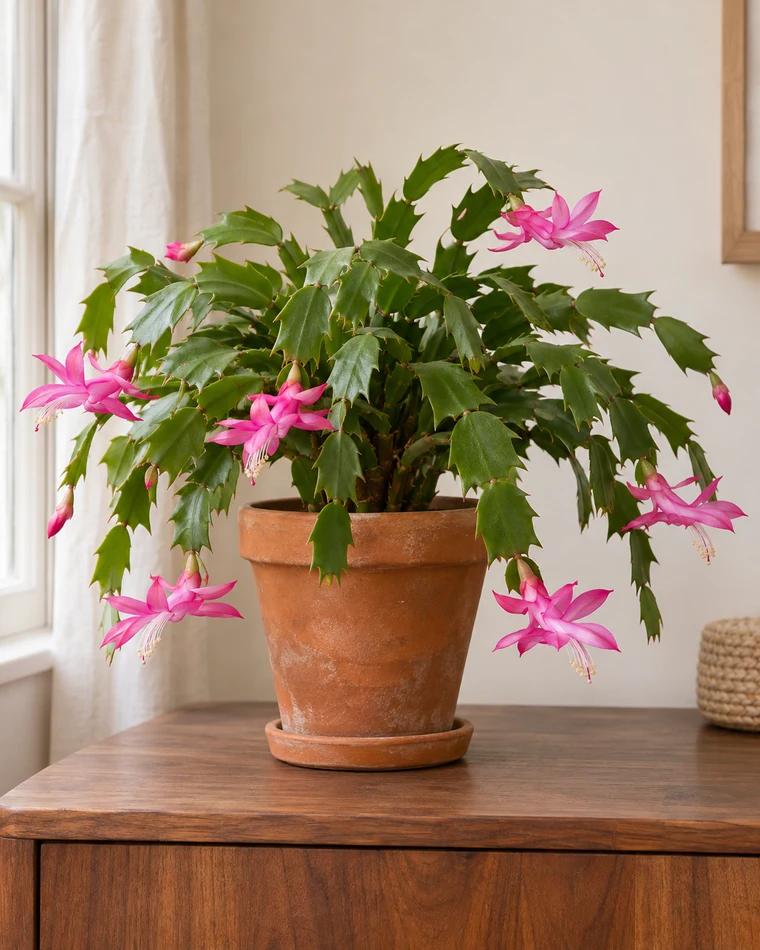
Thanksgiving cactus.
Schlumbergera truncata
Thanksgiving cactus is a forest cactus with flattened green stem segments and colorful flowers at their tips. Schlumbergera truncata often appears in shops under the broader name Christmas cactus, which can make identification confusing. It needs bright filtered light, an airy root zone and more consistent moisture than a desert cactus. Once those basics are stable, seasonal light and temperature changes can encourage buds without forcing the plant through severe drought.
How to help it thrive.
Checked:
Quick care reference
- Light: bright indirect light; avoid abrupt intense sun.
- Water: let the upper mix dry somewhat, then water and drain.
- Mix: airy organic substrate with reliable drainage.
- Temperature: moderate and frost-free; avoid cold drafts.
- Flowering: consistent long nights and stable conditions support buds.
- Propagation: dry healthy stem-segment cut ends before rooting.
- Pests: check joints for mealybugs, scale and mites.
- Safety: generally classed as non-toxic, but chewing can upset the stomach.
Meet a forest cactus
Schlumbergera truncata belongs to the cactus family, Cactaceae, but its natural setting is the mountainous forest of southeastern Brazil. It grows on trees or rocky sites where roots receive moisture and air without sitting in dense wet soil. That background explains why a hot, dry desert-cactus routine is a poor starting point indoors.
Young plants are relatively upright; older branches arch and trail, making a stable raised pot or hanging container useful. The base can become woody with age. Well-kept holiday cacti can live for many years, even decades, but there is no guaranteed lifespan. A healthy long-lived plant may be renewed by taking cuttings from sound growth.
[1][2]Identify stems, teeth and flowers
The flat green pieces often called leaves are stem segments. Thanksgiving cactus usually has conspicuous pointed projections along their edges, giving a claw-like outline. The Christmas cactus hybrid Schlumbergera × buckleyi typically has more rounded, scalloped margins. Shop names are inconsistent and hybrids can be intermediate, so use several features and keep the original botanical label.
Flowers develop at the segment tips and are tubular and asymmetrical, unlike the more open star-like flowers associated with Easter cactus. Bloom timing alone is not a secure identification because growers can manipulate conditions and seasons differ between hemispheres. Inspect the segment outline and overall plant rather than assigning a name solely from the month of purchase.
[1][2]Bright filtered light, not desert sun
Provide bright indirect light near a suitable window. Some gentle morning sun may be tolerated, but prolonged strong direct exposure can damage a plant accustomed to filtered conditions. Acclimate gradually after purchase or when moving outdoors. A sheltered porch or lightly shaded summer position can work where temperatures remain suitable; deep shade can reduce growth and flowering.
Reddish or pale segments may signal an exposure change, but color alone is not a diagnosis. Review recent sun, cold and root conditions together. If using a grow light, follow the fixture guidance and preserve a regular dark period. Extra evening light becomes particularly relevant when trying to establish the long uninterrupted nights that support seasonal bud development.
[1][2]Water a forest root system
Water thoroughly when the upper part of the substrate has dried somewhat, then let excess drain away. The exact interval depends on the mix, pot, temperature and stage of growth. An airy substrate can be watered more readily than a heavy mix that stays wet. Empty standing water from the outer pot or saucer.
Do not leave the whole root ball bone-dry for extended periods as though this were a desert cactus. Conversely, repeatedly watering a damp pot can suffocate roots. Limp segments can result from either severe dryness or failing wet roots, so check before adding water. Keep moisture relatively steady while buds expand; abrupt drying can contribute to losing them.
[1][2]An airy mix and a suitable container
Choose a well-drained organic potting medium with enough structure to remain airy after watering. A suitable houseplant mix amended with a coarse drainage component is more useful than dense garden soil. The objective is both moisture availability and oxygen around the roots. A container with drainage holes is essential, even when displayed inside a decorative pot.
Repot when roots need room or the old medium has broken down and remains poorly aerated. A somewhat snug pot is acceptable, but severe crowding is not a flowering requirement. Choose only a modestly larger container and keep the plant at its existing depth. Avoid unnecessary root disturbance while the plant is covered in developing buds or open flowers.
[1][2]Temperature, humidity and ventilation
Moderate indoor warmth suits active growth. Protect the plant from frost, cold glass and sudden drafts. Wisconsin Extension uses roughly 13–16°C as a conservative lower range for holiday-cactus care; this is not a target to push below. Some flowering instructions elsewhere recommend colder conditions, but such advice is unsuitable as a universal rule for an indoor plant of uncertain cultivar.
The plant appreciates a less arid atmosphere than many desert cacti, but roots and stems still need air. Avoid a sealed, persistently wet enclosure around an established specimen. Keep it away from direct heater airflow and observe how quickly the pot dries. Stable conditions are especially useful once buds are forming, when repeated relocation can add stress.
[1][2]Feed during active growth
Use a suitable houseplant fertilizer according to its label while the plant is producing healthy new segments. Feeding is less useful when growth slows or roots are damaged. Account for nutrients in fresh potting mix, and avoid stacking several products because flowers have not appeared on the date you expected.
Reduce or pause feeding as the plant enters a quieter period and the focus shifts toward seasonal bud development. The calendar depends on your climate and hemisphere. A pale or limp plant first needs a light, moisture and root check. Extra fertilizer cannot replace uninterrupted darkness, correct drainage or a stable environment, and there is no universal flowering potion.
[2][1]Growth, shaping and aging stems
With age, the stems arch and the base becomes firmer and woody. This can be normal structural development rather than a disease. Compare a dry firm base with soft, deteriorating tissue before deciding that it is rot. Support a mature trailing plant securely and avoid repeatedly handling or bending its jointed stems.
If shaping is needed, remove selected segments after flowering and during a suitable growing period. Healthy removed pieces may be used for propagation. Avoid excessive pruning just before the plant is expected to set buds, because flowers form at the tips. Remove fallen flowers and debris so that the surface remains easy to inspect and does not stay unnecessarily damp.
[1][2]Propagate stem-segment cuttings
Detach a healthy cutting of two or three connected segments at a joint. Choose firm, unblemished growth rather than a soft collapsing branch. Let the cut end dry in a shaded place for two or three days, following Wisconsin Extension guidance, before placing it shallowly into an airy rooting medium. The lowest segment should remain upright without being deeply buried.
Keep the medium lightly moist rather than saturated, and provide bright indirect light. A cutting without roots cannot use water like an established plant, so repeated soaking is unhelpful. Watch for sustained new growth and gentle resistance as roots establish; do not keep pulling it out. Rooting often takes weeks, but temperature and cutting condition affect the outcome.
[1][2]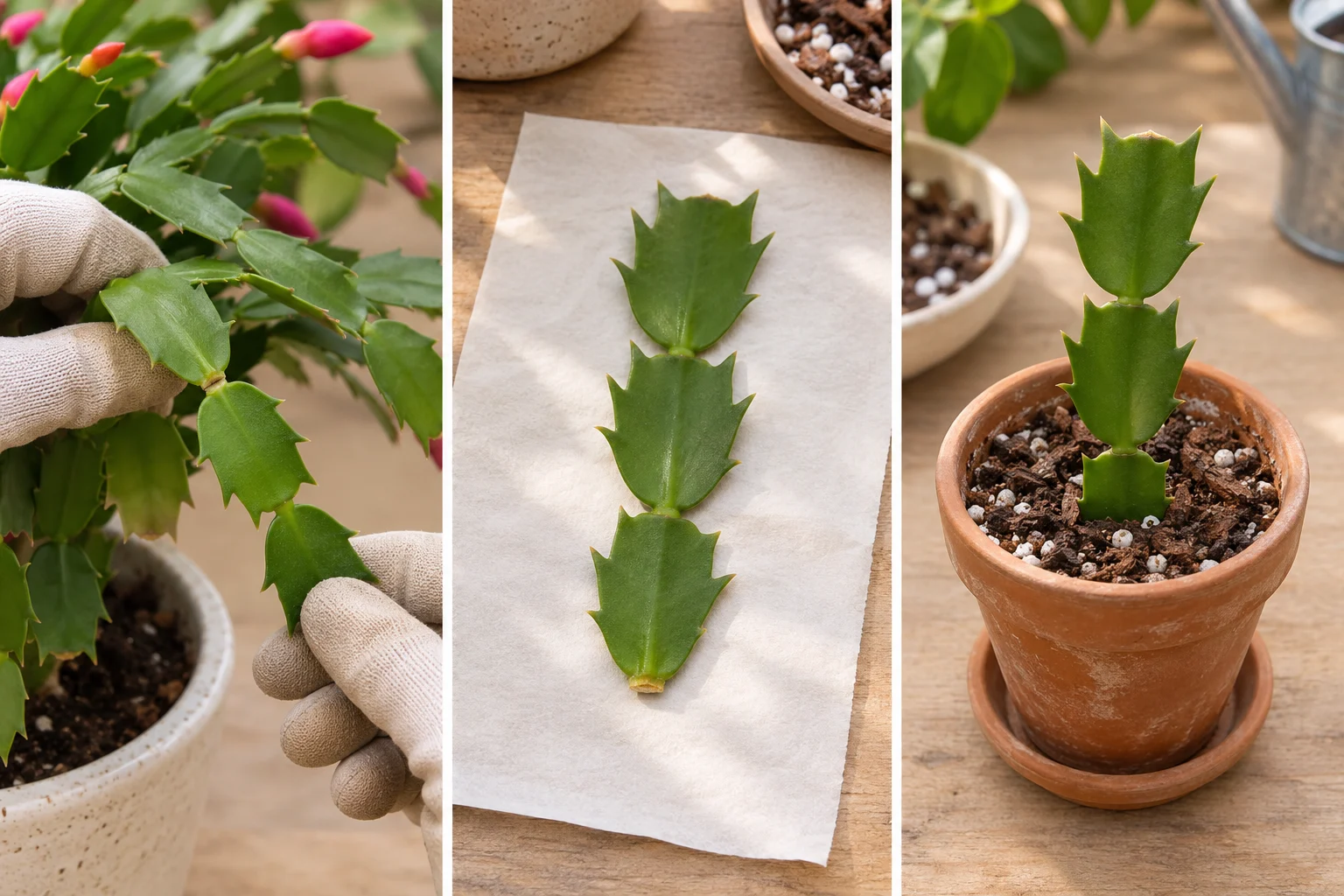
Panels, from left to right
- Detach a healthy stem cutting with two or three connected segments at a joint.
- Let the cut end dry in a shaded place for two or three days.
- Set the basal segment shallowly in airy lightly moist medium and provide bright indirect light.
Pests and disease prevention
Mealybugs, scale insects and spider mites can occur, even though holiday cacti are often relatively trouble-free. Inspect stem joints, sheltered branch bases and the pot rim. Cottony material, persistent bumps or fine webbing deserve a closer look. If the plant spent time outside, also inspect for slugs or snails before returning it among indoor plants.
Separate a suspected infestation and identify it before treating. Physical removal may be practical for a small localized problem. Any pesticide should be locally approved and labeled for the pest and indoor ornamental use; follow its instructions rather than improvised recipes. Poorly drained substrate increases root-rot risk, so routine prevention includes drainage and appropriate watering as well as insect inspection.
[1][2]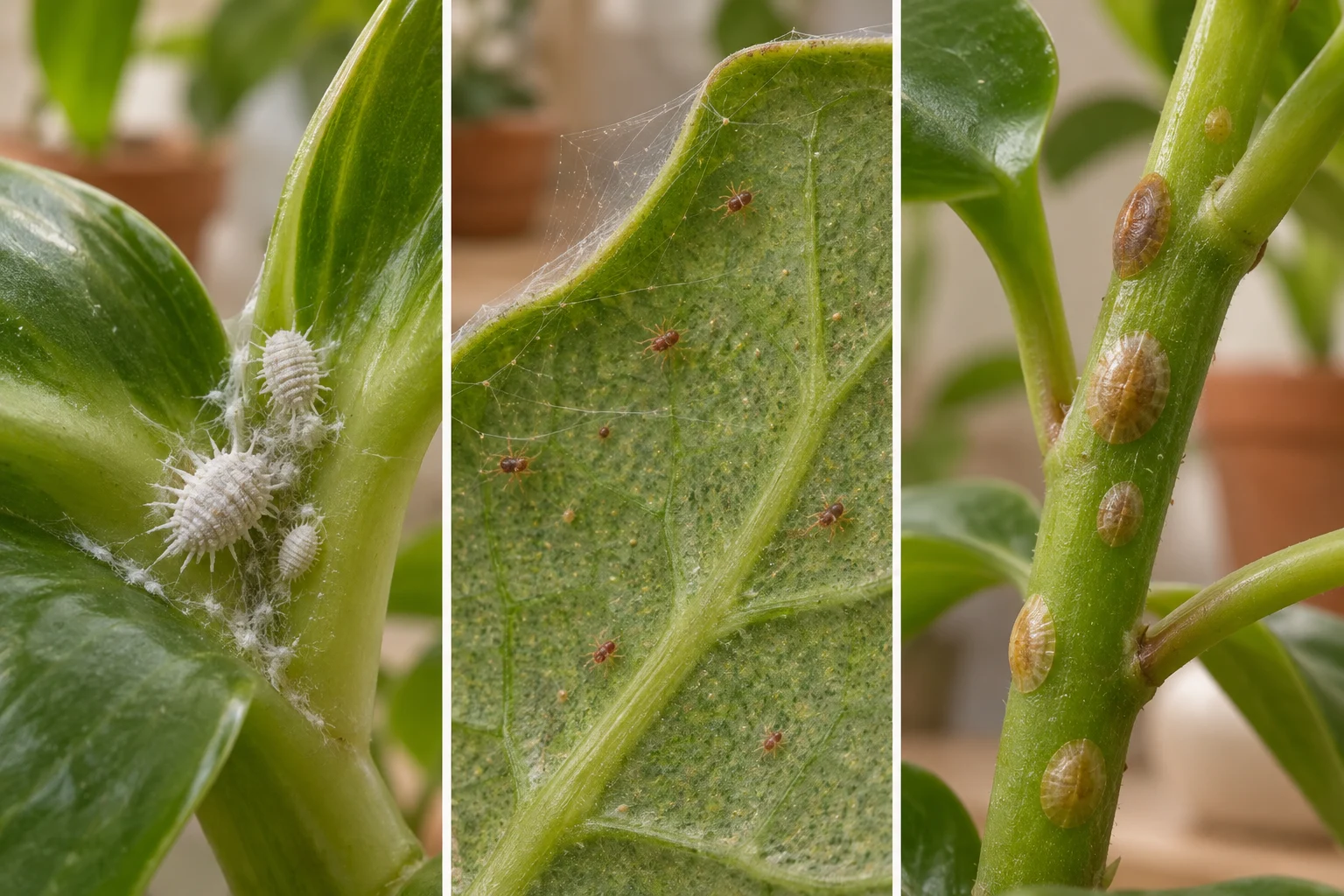
Panels, from left to right
- Mealybugs
- Spider mites
- Scale insects
Troubleshoot limp stems and falling buds
Limp, wrinkled segments do not automatically call for more water. Check whether the mix is dry or persistently wet, and inspect roots if the plant remains weak despite damp substrate. A plant with deteriorating roots may need healthy cuttings taken for renewal. Do not try to rescue a failing root system by adding stronger fertilizer.
Bud drop can follow drying, environmental changes or other stress. Lack of buds is a different problem: review plant maturity, light and the seasonal day-night pattern. Keep a short record of moves and watering so that the sequence is clear. Existing scars will remain, while the firmness of new growth and retention of new buds provide better evidence of recovery.
[1][2]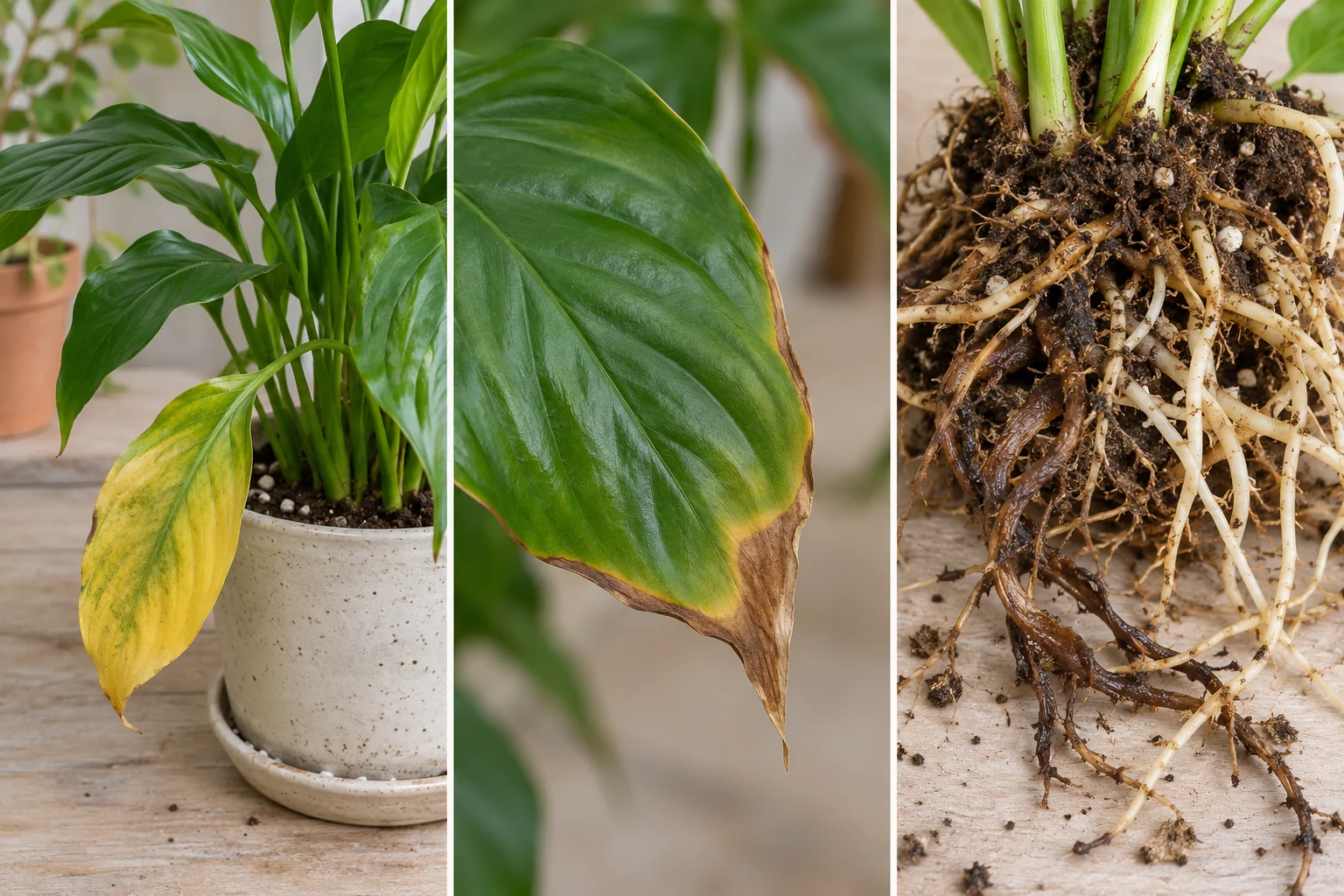
Panels, from left to right
- Yellowing foliage
- Brown leaf edges
- Damaged roots
Limp, wrinkled segments
- Possible causes
- Possible causes include prolonged dryness or roots impaired by wet poorly drained substrate.
- What to check
- Check moisture below the surface and inspect roots if the plant stays limp in a damp pot.
- Next step
- Water a genuinely dry healthy root ball, or correct the drainage problem; preserve healthy cuttings if roots are failing.
Buds dropping
- Possible causes
- Possible causes include drying and abrupt changes in light or temperature.
- What to check
- Review recent moves, heater drafts and the moisture history while buds developed.
- Next step
- Restore stable suitable conditions and steady moisture rather than forcing more feed or repeated relocation.
Red or pale segments
- Possible causes
- Possible causes include excessive exposure or environmental stress; color alone is not diagnostic.
- What to check
- Compare the changed area with recent sun, cold exposure and root-zone conditions.
- Next step
- Correct the clear stress gradually and assess healthy new growth; old discolored tissue may not recover its appearance.
Follow the growth cycle, not a holiday date
After flowering, continue observing moisture and allow the plant a quieter period if growth slows. As new segments develop, increase care according to demand and resume appropriate feeding. This is a useful period for propagation or necessary repotting. A summer move outside should be gradual, shaded and protected from unsuitable nights.
Later, shorter days and suitable cooler conditions can encourage flower buds. The names Thanksgiving and Christmas describe common Northern Hemisphere display seasons, not a universal calendar. Once buds enlarge, keep conditions steady and avoid letting the plant dry severely. Bring an outdoor specimen inside ahead of cold weather, inspecting both the foliage and container for pests.
[1][2]Encourage buds with a consistent night
Holiday cacti respond to the interaction of night length and temperature. To encourage seasonal buds, provide a consistent period of uninterrupted darkness at night while keeping the plant in suitable bright conditions by day. Evening room lights can interfere with that pattern. Choose a location that supports a natural long night rather than repeatedly moving the pot into a hot cupboard.
Do not use frost, severe drought or excessive feeding to force a result. Cultivars and home conditions vary, so no exact bloom date is guaranteed. Once buds are visible, maintain steady moisture and avoid abrupt temperature or light changes. Flowers are produced at segment tips, making recent severe pruning another possible reason for a limited display.
[1][2]Pet and household safety
Clemson Extension includes Schlumbergera species in its pet-safe houseplant guidance and specifically illustrates S. truncata. That supports a low poisoning concern for a correctly identified Thanksgiving cactus, not a promise that chewing is harmless. Keep the jointed stems ornamental and distinguish this epiphytic plant from unrelated succulents sharing a seasonal label.
Prevent pets and young children from eating stems, flowers or potting mix. Fertilizers and pesticide products create separate risks. Common names are unreliable, so confirm the botanical identity rather than relying on a label saying Christmas cactus. If symptoms occur after chewing, contact an appropriate professional with the plant name and treatment history. Older treatment instructions in historical references are not reproduced here.
[3][1]Advanced care: observe the root zone and night cycle
Two useful refinements are tracking how the pot dries and checking nighttime light exposure. A plant may receive good daylight yet remain beside a lamp late into the evening. Likewise, a substrate that worked well when fresh may become dense over time. These observations can explain changing performance without immediately adding a new fertilizer or device.
A moss pole is unnecessary for a naturally trailing epiphytic cactus. Semi-hydroponic conversion is not the default method described in the reviewed references and changes moisture and nutrition management. Stabilize ordinary pot culture first. If experimenting, use a spare cutting and change one factor at a time so that the original plant remains a reliable comparison.
[1][2]Cultivars, hybrids and labels
Cultivars and hybrids offer pink, red, white, yellow and other flower colors, including bicolors. Their flowering time and growth habit can differ. A photograph of one bloom is not sufficient to name a cultivar, and some plants sold as Christmas cactus have substantial Schlumbergera truncata ancestry. Keep the supplier label when the exact identity matters.
Choose a firm, healthy plant with intact segments and a root zone that is neither waterlogged nor badly dried. Inspect branch joints for pests. Compare pointed and rounded segment margins when distinguishing common holiday-cactus groups, while allowing for hybrids. The guidance here is centered on Thanksgiving cactus; it should not automatically replace the different seasonal instructions used for Easter cactus.
[1][2]Frequently asked questions
Is Thanksgiving cactus a desert cactus?
No. It is a forest cactus from southeastern Brazil. Its roots need air and drainage, but it should not be kept through prolonged severe drought like a desert-adapted cactus.
[1][2]Are the flat green pieces leaves?
They are flattened stem segments that carry out photosynthesis. Flowers form at their tips, and the pointed margins help distinguish Thanksgiving cactus from some other holiday cacti.
[1]How can I distinguish it from Christmas cactus?
Thanksgiving cactus usually has pointed claw-like segment margins; the Christmas cactus hybrid commonly has rounded scallops. Hybrid forms and inconsistent shop labels can make identification less clear.
[1]Does it have to be root-bound to flower?
No. A somewhat snug container is acceptable, but severe crowding is not a requirement. Seasonal light and temperature conditions matter, and old poorly draining mix may need replacement.
[1][2]Why are there no buds?
Review maturity, recent pruning, daylight and uninterrupted nighttime darkness. Flowering responds to seasonal conditions, so extra fertilizer alone is unlikely to solve the problem.
[1][2]Why do the buds drop?
Possible causes include severe drying and abrupt environmental changes. Keep moisture steady as buds expand and review recent moves, drafts and temperature changes.
[2]How do I root a cutting?
Detach two or three healthy segments, dry the cut end in shade for two or three days, then set it shallowly in airy lightly moist medium.
[1]Is Thanksgiving cactus poisonous to pets?
Clemson Extension’s pet-safe guide includes S. truncata. Treat that as a plant classification, not permission for a pet to eat stem joints; remove access after chewing and seek veterinary advice about symptoms or uncertain identification.
[3]Does a woody base mean rot?
Not necessarily. Older stems naturally become woody. Firm dry tissue differs from soft deteriorating tissue, so inspect condition and root-zone moisture before deciding that the base is diseased.
[1]Will it bloom on Thanksgiving everywhere?
No. The name reflects a common Northern Hemisphere season. Hemisphere, cultivar and controlled growing conditions affect flowering, so local day length and growth are more useful than a holiday date.
[1]Compare related plants
- Lace aloe: Lace aloe is also succulent, but its root zone should dry more thoroughly. Comparing the two shows why succulent leaves or stems do not imply identical watering routines.
- Spider plant: Spider plant also suits a raised pot with arching growth, but it makes leafy offsets rather than jointed cactus cuttings. Choose the propagation method that matches the plant.
Care reminders with PlantPal
Use PlantPal reminders to check moisture, inspect stem joints and note seasonal changes before adjusting care.
Set care reminders