 Plant
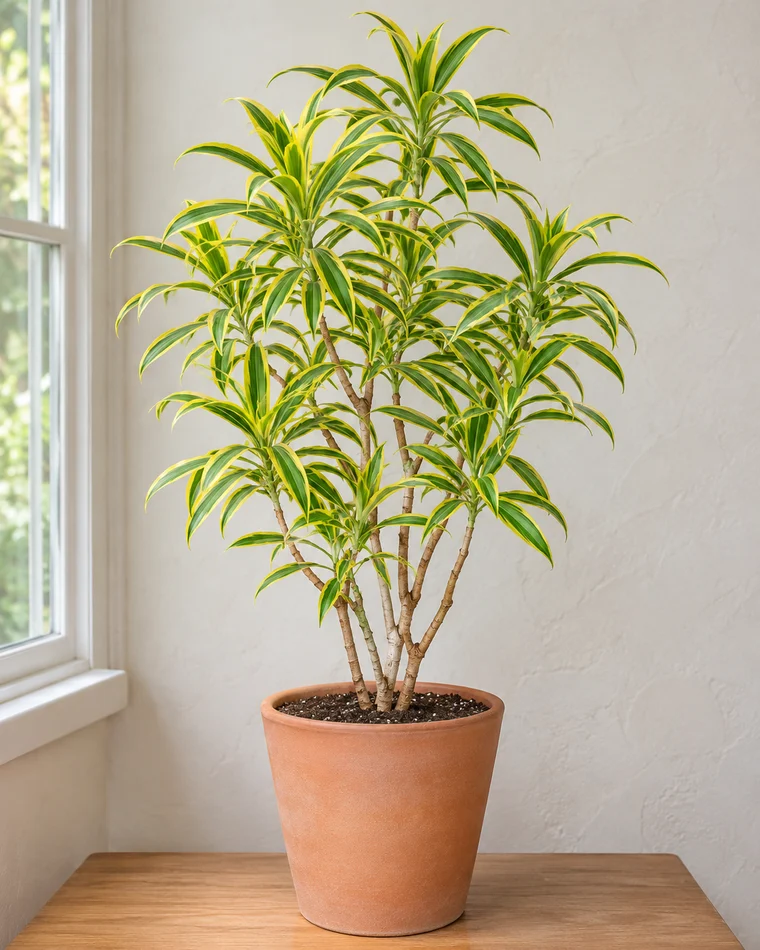
Song of India.
Dracaena reflexa 'Variegata'
Song of India is Dracaena reflexa 'Variegata', a branching evergreen shrub with narrow green leaves and broad pale margins. It brings a small-tree silhouette to a bright room without requiring desert-succulent conditions. This profile follows the named cultivar, explaining its woody growth, careful watering and stem propagation, while distinguishing normal leaf aging from root trouble and making its pet-safety limits clear.
How to help it thrive.
Checked:
Quick care reference
- Identity: Dracaena reflexa 'Variegata', family Asparagaceae.
- Green leaf centers have broad pale margins.
- Provide bright light protected from intense hot sun.
- Allow upper medium to dry without prolonged wetness below.
- Review water quality and fertilizer when tips brown.
- Keep warm; RHS woody-dracaena guidance is 18–30°C.
- Use stem cuttings to preserve the cultivar.
- Toxic to cats and dogs; secure fallen leaves and cuttings.
A striped shrub with a woody framework
Song of India is Dracaena reflexa 'Variegata', an evergreen cultivar in Asparagaceae. The species comes from northeastern Mozambique and the western Indian Ocean; its common name does not establish Indian origin. Foliage gathers at the ends of branching woody stems. As older leaves disappear, the plant develops an open, small-tree outline rather than remaining a compact nursery rosette forever.
RHS lists an eventual cultivar height of 1.5–2.5 m, but this is not a guaranteed indoor size. Light, root space and pruning influence the result. Plan for the spreading crown as well as the container's footprint. A pot containing several cuttings can look much fuller than a single stem without being a healthier plant. Choose firm stems and sound growing tips instead of judging quality by density alone.
[1][2][3]Recognize the pale margins and curved leaves
The narrow, pointed leaves have green centers and broad cream to pale-yellow margins. They cluster near shoot ends and curve outward. An even pale border is normal variegation, whereas irregular brown tissue or translucent patches signal damage. Older stems become woody and retain traces of former leaf attachments. The combination of branch structure and leaf pattern is more informative than any single yellow leaf.
Keep the name Dracaena reflexa 'Variegata' with the plant. Pleomele reflexa 'Variegata' is an older synonym, not another species. Retail names can be loose, and other striped dracaenas have different proportions or patterns. If identification is uncertain, photograph a complete shoot and both leaf surfaces. Do not taste foliage or deliberately damage stems to identify a houseplant.
[1][2]Light the whole striped crown
Provide bright indoor light with protection from intense hot sun. This cultivar tolerates lower light, but tolerance does not promise dense growth. Check the light at the leafy crown, especially when the pot stands below the window. Shoots stretching toward glass while inner branches become sparse justify reviewing placement before adding fertilizer. Nursery-grown foliage should be introduced gradually to stronger exposure.
If dry, bleached patches develop on the exposed side after a move, soften the sunlight with a curtain or adjust the position. A plant lamp can supplement a dim window, provided its light reaches the whole crown. Follow the equipment's distance guidance and retain a daily dark period. Evaluate the next growth rather than expecting old scorched areas to become green again.
[1][2]Check moisture beneath the dense foliage
Let the upper potting medium dry before watering, while checking that the deeper root zone is not staying wet. Dense leaves can conceal both the surface and water trapped in an outer pot. Water evenly, allow complete drainage and remove runoff. Repeated surface sprinkles may wet the stem base without reaching all roots; a dry-looking surface also does not prove that the bottom of a deep pot is dry.
Brown tips cannot by themselves tell you to water more. Moisture swings, fluoride, fertilizer salts and dry heat are possible contributors. Review the local water supply if injury persists despite sensible watering, and consider rainwater or a verified low-fluoride alternative. Standing tap water overnight does not reliably remove dissolved fluoride. Change one plausible cause at a time and watch new foliage for evidence of improvement.
[1][2]Balance a stable pot with an airy root zone
Use a structured potting medium that retains some moisture while allowing drainage and air. The woody crown needs stability, but an oversized container of wet compost is a poor solution to top-heaviness. A suitable outer pot can stabilize the nursery container while keeping its drain holes accessible. Check beneath the inner pot after watering, particularly when foliage hides the opening.
Repot when crowded roots, degraded medium or a damaged container justify it, preferably during active growth. Enlarge the root space modestly and maintain the existing stem depth. Slow drying may call for a different container or medium rather than additional material on the surface. Avoid repeatedly disturbing roots to investigate isolated brown tips; first examine light, water quality and the recent moisture pattern.
[1][2]Warmth without hot drafts
RHS guidance for woody dracaenas recommends 18–30°C for good growth. Treat that as an indoor horticultural range, not a promise of perfect leaves or a cold-tolerance limit. Shoots beside winter glass can be much colder than the room thermostat suggests. Check the position at night and protect it from abrupt drafts when doors or windows open.
Moderate humidity and distance from heating outlets help protect the leaf edges. Raising humidity does not repair a saturated root ball, and misting is not a replacement for appropriate watering. If healthy roots and suitable water still accompany dry tips, examine nearby hot airflow. Outdoor summer placement needs sheltered light and warmth; bring the plant inside before cold weather rather than testing its minimum hardiness category.
[1][2]Feed growth, not the cream border
The pale leaf margin is a cultivar trait, not evidence of nutrient deficiency. A balanced houseplant fertilizer can support active growth; the cultivar's RHS guidance suggests monthly liquid feeding in its growing season. Follow the product's concentration and account for fertilizer already present in fresh medium. Extra fertilizer cannot turn an underlit, sparse crown into strong growth and may damage the roots.
Pause feeding when stems soften, medium remains wet or leaf loss accelerates. Compare developing leaves with older ones before assigning a deficiency. Recent heavy fertilization, deposits around the pot rim and worsening tip damage are reasons to reconsider the feeding routine. Resume cautiously after growing conditions recover. In darker periods, reduced growth usually means reduced nutrient demand, regardless of the date on a calendar.
[1][2]Shape the woody crown selectively
Gradual loss of the oldest leaves can accompany healthy woody growth, particularly while branch tips remain active. A suddenly bare shoot or yellowing across several branches is different. Decide whether you want an open tree-like outline or a fuller shrub before pruning. A healthy cut stem can produce shoots below the cut, but neither the number nor their direction is guaranteed.
Use clean tools for selective pruning during active growth and retain enough foliage for recovery. Correct one-sided light before cutting a leaning crown. Support narrow blades while wiping dust away and avoid tearing attached leaves from the stem. Pruning can improve the outline, but cannot cure failing roots. Collect every cutting and fallen leaf so pets cannot reach discarded material.
[1][2]Use stems to preserve ‘Variegata’
RHS documents semi-ripe cuttings and leafless stem sections for this cultivar. Select a healthy shoot with the desired pale margins and include stem nodes. A detached leaf alone is not the documented method for producing a complete new plant. Take material from a vigorous parent when possible; a cutting from a collapsing plant is a less predictable rescue attempt.
Set prepared stem material in an airy propagation medium, keeping its original growing direction clear. Provide warmth and protected light without saturating the base. A covered propagator needs monitoring and ventilation rather than permanent heavy condensation. Wait for root establishment before potting into more medium: an early leaf can draw on stored stem reserves. Seedlings may vary and are not a reliable way to reproduce the named cultivar.
[1][2]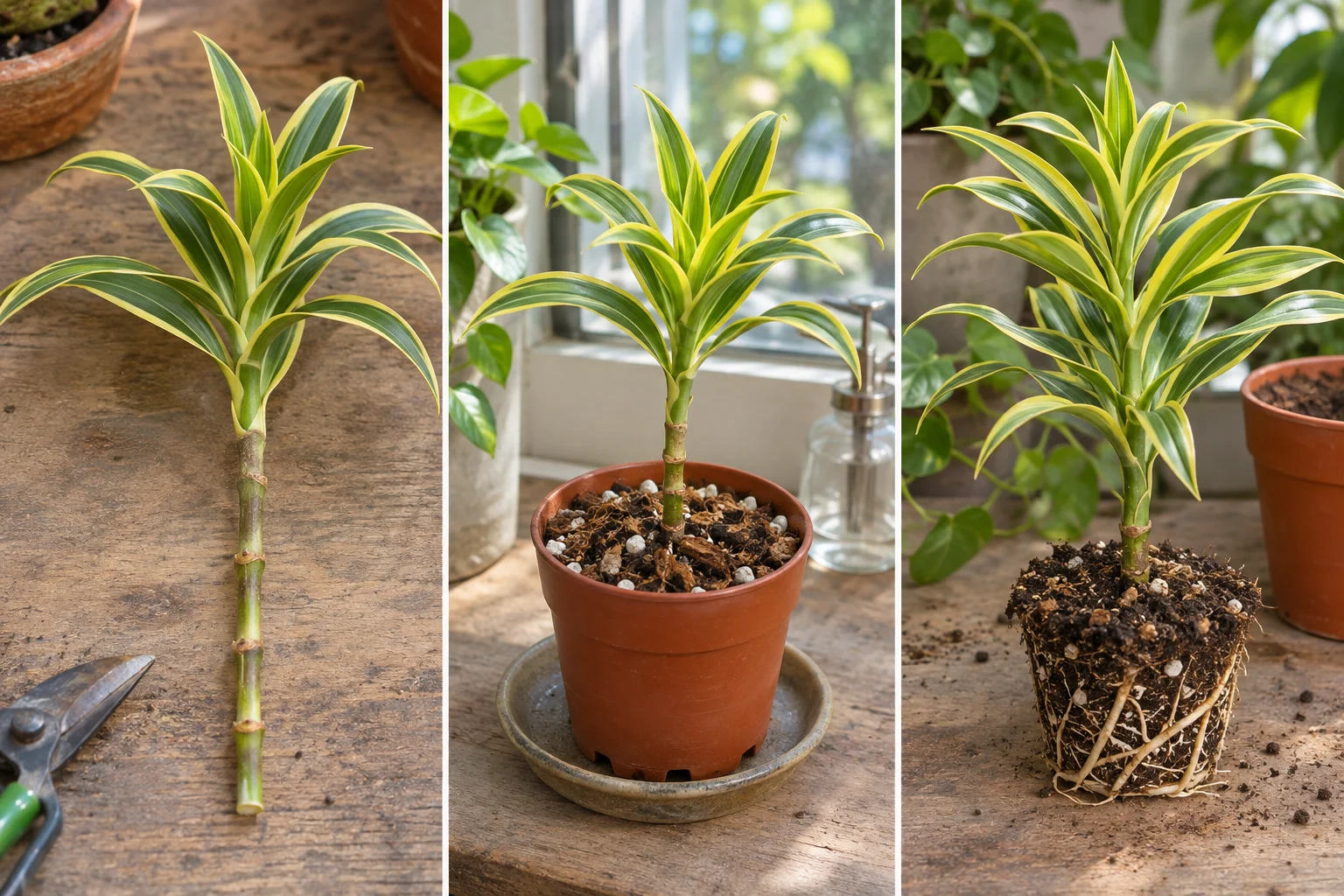
Panels, from left to right
- Choose a healthy patterned shoot and prepare a stem cutting with nodes using clean tools.
- Set its prepared lower stem in airy medium and provide warmth and protected light without saturation.
- Wait for established roots and sustained growth before moving the young cultivar to its growing pot.
Inspect the sheltered leaf bases
Scale insects, mealybugs and spider mites can hide among the crowded leaves. Inspect undersides, leaf bases and branch junctions when bringing home a new Song of India. Fine stippling or webbing suggests mites; attached bumps or sticky residues may indicate other sap-feeding pests. These are clues rather than a certain identification. Use magnification and a clear photograph before selecting a treatment.
Separate a suspect specimen from nearby foliage while identifying the problem. Use only an appropriate locally approved treatment for the confirmed pest and indoor ornamental setting, following its label. Test any permitted application on a small area first. Reinspect sheltered bases as well as exposed leaves. Continuing decline may involve roots or growing conditions, so avoid responding with an unending sequence of unrelated sprays.
[1][2]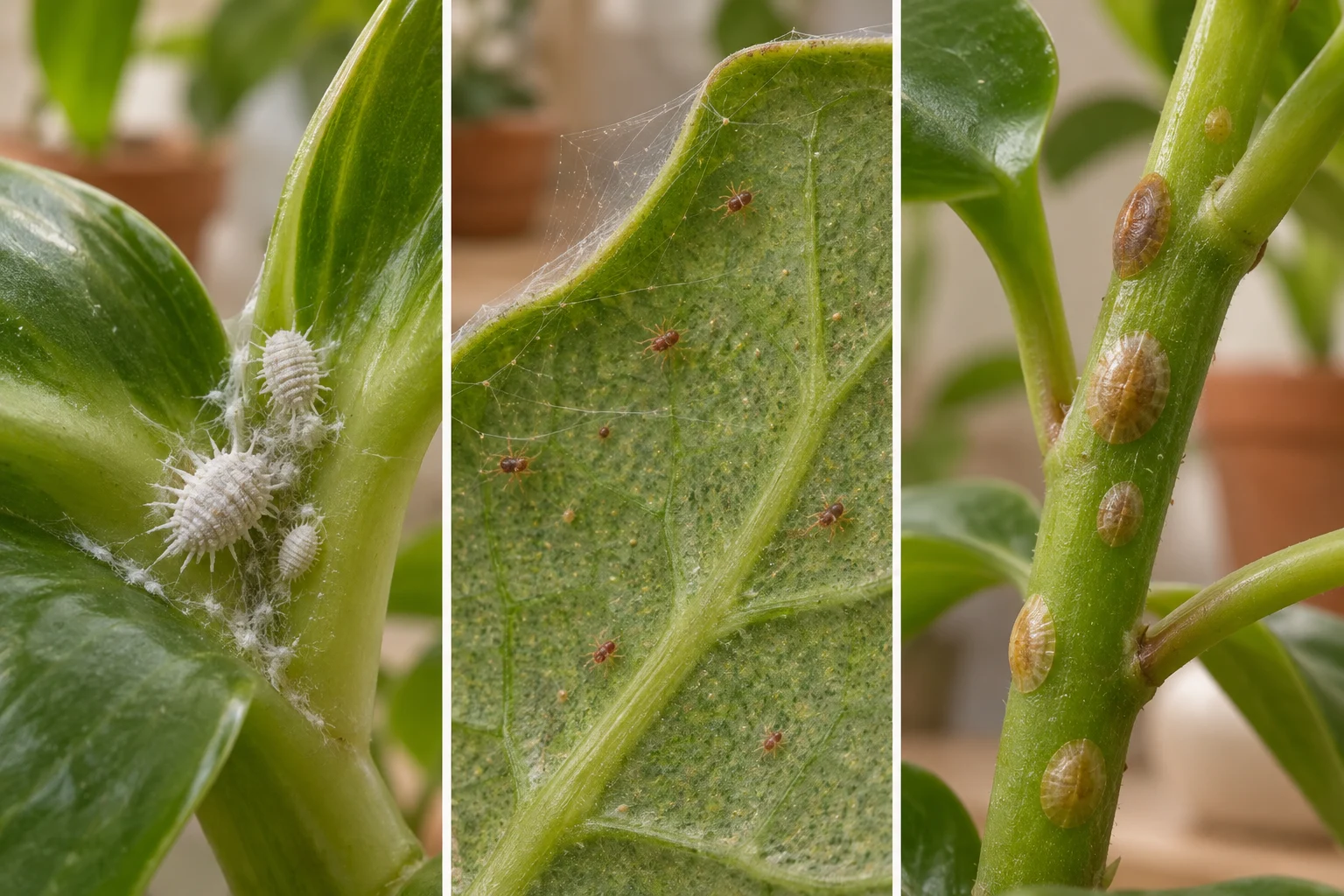
Panels, from left to right
- Mealybugs
- Spider mites
- Scale insects
Distinguish variegation from damage
A regular pale border on firm leaves fits 'Variegata'. Crispy tips suggest several possible moisture, water-quality or environmental causes. Broad bleaching confined to the exposed side after a move makes excessive sun plausible. Yellowing on several shoots while the pot stays wet raises concern about roots. No one photograph establishes which explanation is correct.
Keep a dated photograph of the whole crown and compare a few representative leaves. Review changes in position, pot size, fertilizer and water source before making another adjustment. Correct the strongest explanation and watch new growth; old brown tissue remains brown. A softening stem, unpleasant root-zone odor or rapid widespread collapse calls for prompt investigation and horticultural advice rather than another feeding.
[1][2]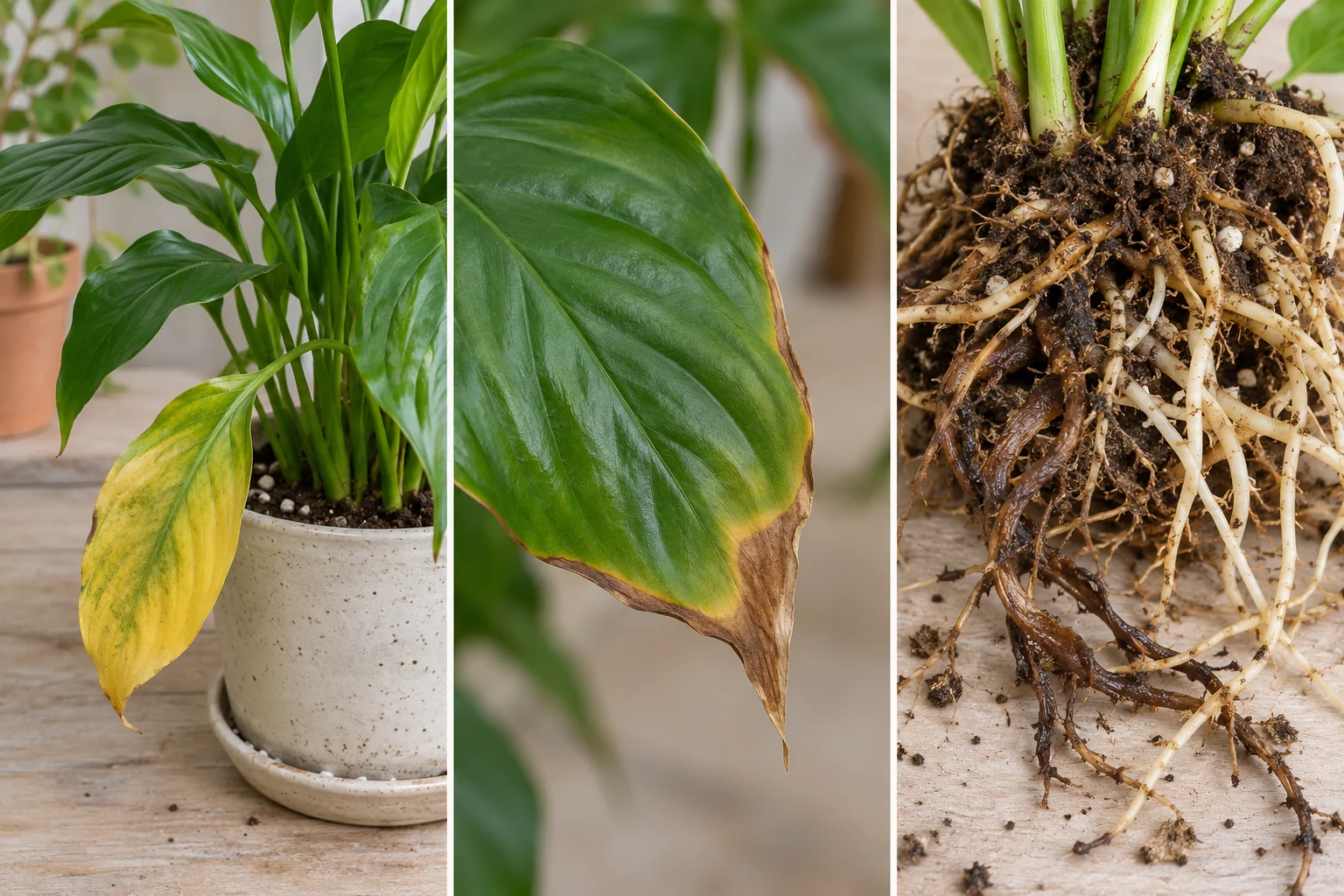
Panels, from left to right
- Yellowing foliage
- Brown leaf edges
- Damaged roots
Brown tips on cream-edged leaves
- Possible causes
- Fluoride, fertilizer salts, uneven moisture or hot dry airflow are possible contributors.
- What to check
- Compare water and fertilizer history with deeper pot moisture and nearby heating.
- Next step
- Correct the strongest explanation and judge new leaves rather than expecting old tips to recover.
Several leafy shoots yellow together
- Possible causes
- Prolonged root-zone wetness or root disturbance may contribute; widespread pests are another possibility.
- What to check
- Check drying time, trapped runoff and stem firmness beneath the yellowing crown.
- Next step
- Remove standing water and reassess drainage; seek help for soft stems or rapid collapse.
Sparse crown reaching toward the window
- Possible causes
- Uneven light may stretch shoots, while gradual lower-leaf aging can add to the open outline.
- What to check
- Compare exposed and shaded branches and inspect their leaf bases for hidden pests.
- Next step
- Improve illumination across the crown gradually and shape only once growth is healthy.
Follow changes in indoor light
Brighter days and active shoots are useful prompts to review shape, root space and propagation plans. A window that provided gentle winter light may deliver damaging heat later. Adjust shading before the pale leaf edges scorch. As the crown expands, check that new branches have useful light and are not pressed against glass or furniture.
During darker periods, the root ball may dry slowly even while heating dries the leaf tips. Those observations can occur together, so check the pot instead of watering to treat dry air. Reduce feeding when growth slows. Inspect plants returning from outdoor summer placement before rejoining the collection. Base seasonal adjustments on actual light and growth, not a northern-hemisphere calendar copied into every climate.
[1][2]Flowers are an occasional bonus
Mature dracaenas can produce small pale flowers, but Song of India is primarily a foliage plant. Absence of indoor flowers does not establish poor care. Firm stems, healthy tips and an appropriate moisture cycle are more useful everyday goals. A young nursery specimen should not be purchased with the expectation of blooming in a particular month.
Avoid forcing drought or adding excessive fertilizer to chase flowers. A flower cluster does not guarantee fruit or viable seed indoors, and seedlings would not reliably preserve the parent's margin pattern. Keep any flowers and fallen material inaccessible to pets just like the leaves. If removing spent clusters, collect the scraps rather than leaving them on the pot surface.
[1][2]A variegated dracaena is still toxic to pets
NC State lists Dracaena species as toxic to cats and dogs because of saponins; RHS also flags this exact cultivar as harmful to pets if eaten. Possible signs include vomiting, excessive salivation, poor appetite and lethargy, with dilated pupils in cats. Contact a veterinarian or animal poison service promptly after suspected chewing rather than waiting for signs to appear.
Choose a genuinely inaccessible location, allowing for climbing cats and fallen leaves. Keep young children from putting plant material in their mouths and seek local poison or medical advice after suspected ingestion. The common name and records of traditional uses do not make this an edible or medicinal household herb. Give an adviser the botanical name and a description of the exposure, and keep pruning scraps contained.
[1][2][4]Improve canopy conditions before changing systems
For a larger specimen, more even illumination can be more useful than another feeding. A small lamp aimed at one shoot may leave the other branches underlit. Match supplementary light to the spreading crown and compare new growth on its different sides. A baseline photograph helps distinguish real improvement from ordinary variation among leaves produced in different conditions.
Song of India is a self-supporting shrub, so it does not need a climbing moss pole. Investigate light direction and container stability if it leans. Converting a healthy pot-grown plant into a water-based system creates a separate root-management project, not an assured upgrade. Avoid combining a major prune, root-system conversion and drastic light change, which would make any subsequent decline difficult to interpret.
[1][2]Keep the cultivar name with the plant
This profile concerns the broad pale margins of Dracaena reflexa 'Variegata'. It does not assign every Dracaena leaf pattern to this plant. Green-leaved reflexa and other striped cultivars can share a woody framework without sharing the same appearance. Compare the actual growing tips with the label before selecting material to propagate.
If an entire shoot becomes consistently green while neighboring shoots remain patterned, document the difference. A stable shoot-level change is not the same observation as dull foliage throughout an underlit plant or isolated damaged patches. Choose patterned healthy stems to preserve the cultivar. Retain its botanical name across languages; a useful translated common name does not replace the identity.
[1][2][3]Frequently asked questions
Are the yellowish edges of Song of India a nutrient deficiency?
Even broad pale margins are the defining pattern of 'Variegata'. Investigate new brown tissue, irregular patches or sudden change across the crown instead. Fertilizer will not erase healthy variegation and excessive application may harm roots.
[1][2]Does Song of India mean the plant is native to India?
No. Kew places Dracaena reflexa in northeastern Mozambique and the western Indian Ocean. The variegated cultivar is a horticultural selection; its common name is not evidence of a separate native range.
[3]Is Pleomele reflexa ‘Variegata’ a different purchase?
RHS treats it as a synonym of Dracaena reflexa ‘Variegata’. Confirm the cultivar and leaf pattern; an older genus name does not by itself justify a separate collection entry or a different care routine.
[1][2]Why is the bottom of my Song of India becoming bare?
Gradual aging can expose older stems while healthy tips continue growing. Rapid loss, several yellowing shoots or soft wood warrants investigation. Compare the pace of change with root-zone moisture before deciding that the plant simply needs pruning.
[1][2]Can the cream-edged dracaena go straight into a hot south window?
Introduce stronger exposure gradually and protect it from intense hot sun. The recommendation for full glasshouse light includes shade from hot sunlight. Bleached window-facing tissue after an abrupt move is a reason to soften exposure.
[1][2]Why do Song of India tips stay brown after more watering?
Extra water may miss the cause or worsen wet roots. Fluoride, salts, moisture swings and dry heat can all contribute. Review root moisture and recent changes; damaged tips do not turn green when the underlying problem is corrected.
[1][2]Will standing tap water overnight solve Dracaena fluoride injury?
It is not a reliable way to remove dissolved fluoride. Check the supply and consider a verified suitable alternative if fluoride is plausible. Continue reviewing other causes instead of attributing every brown tip to the same chemical.
[1][2]Will seedlings keep the cream border of ‘Variegata’?
Not reliably: seedlings may differ from the parent. Stem propagation is the practical route to retain the named cultivar. Indoor flowers also do not guarantee that viable seed will develop.
[1][2]Should I cut a tall Song of India to encourage branches?
A healthy stem can produce shoots below a pruning cut during active growth. Plan the framework and retain enough foliage. Pruning alone will not correct a lean caused by one-sided light or a declining root system.
[1][2]Why are only the inner Song of India shoots becoming sparse?
Outer foliage or nearby furniture may shade them even beside a bright window. Compare the light on different branches and inspect sheltered leaf bases for pests. More fertilizer is not the first answer to a poorly lit interior crown.
[1][2]Can a cream-edged Song of India still poison my cat?
Yes. Variegation does not exempt it from Dracaena toxicity. Contact a veterinarian promptly after chewing and provide the full botanical name. Relocate the plant and remove accessible fallen leaves and cuttings.
[4][1]Does a solid-green shoot prove my Song of India was mislabeled?
Not necessarily. Compare several shoots and distinguish a consistent shoot-level pattern from damaged or generally dull foliage. Keep the original label and photographs. For cultivar-preserving cuttings, select a stem showing healthy pale margins.
[1][2]Why is a large Song of India unstable in its nursery pot?
The crown can become top-heavy before the roots need much more space. A suitable outer container can improve balance while maintaining drainage. Automatically adding a large mass of damp medium may create a root problem.
[1][2]Should an indoor Song of India flower every summer?
No predictable annual indoor schedule is established here. Mature dracaenas may flower, but healthy foliage is the principal goal. Avoid extra fertilizer or forced drought solely to provoke blooms.
[1][2]Compare related plants
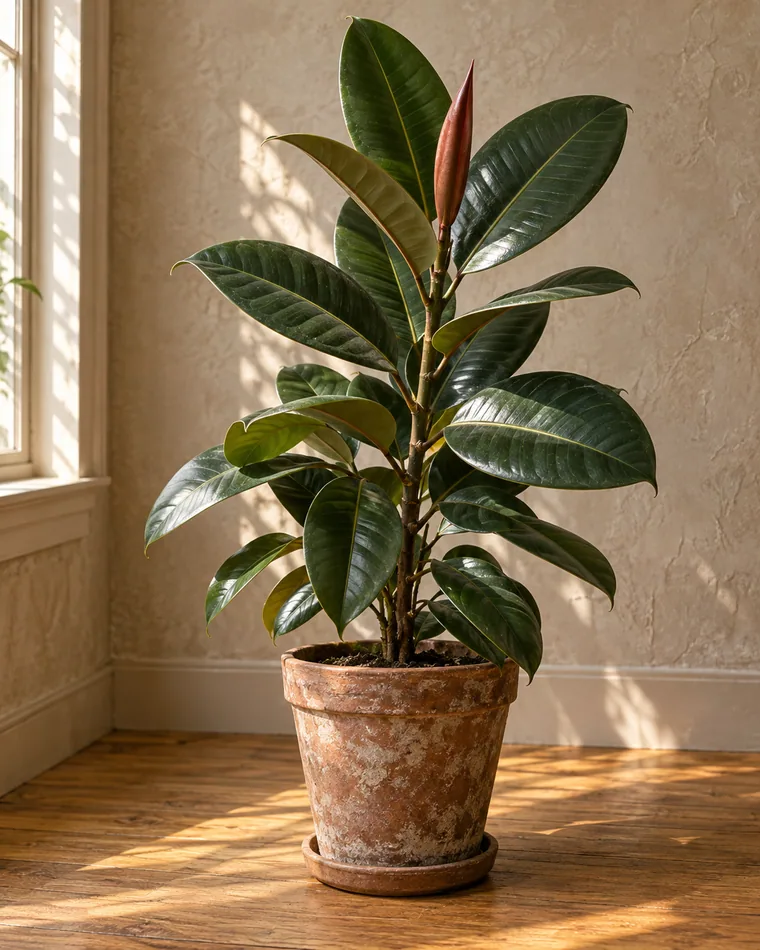
- Rubber plant: Rubber plant also develops a woody indoor framework, but its broad leaves and latex handling differ from Song of India's narrow striped foliage.
- Parlor palm: Parlor palm offers fine foliage with a different pet-safety classification, and its palm growing points cannot be pruned like branching dracaena stems.
Care reminders with PlantPal
Add Song of India to PlantPal for reminders to check pot moisture and growing tips before deciding on care.
Add Song of India