 Plant
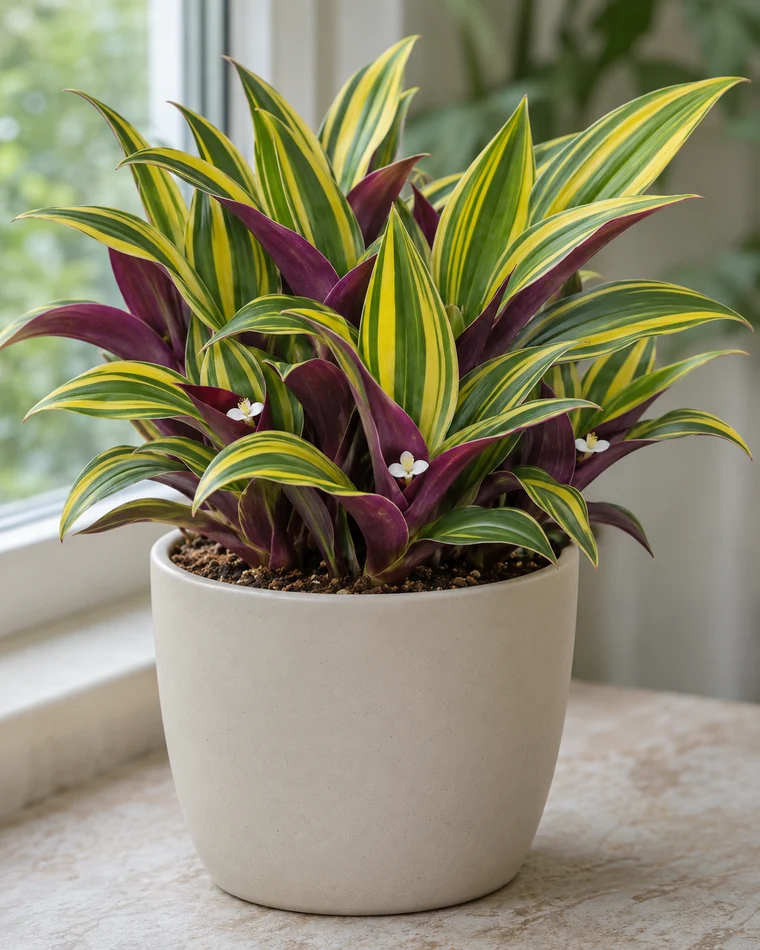
Oyster plant 'Vittata'.
Tradescantia spathacea 'Vittata'
Gold-striped upper leaves and purple undersides make Tradescantia spathacea 'Vittata' a distinctive compact houseplant. Its upright rosettes widen through offsets, while tiny white flowers shelter in purple boats. Give the crown bright filtered light, an aerated root zone and space away from chewing pets; the colourful foliage does not make its sap harmless.
How to help it thrive.
Checked:
Quick care reference
- Identity: gold-green stripes above, purple beneath.
- Habit: upright rosettes that expand into a clump.
- Light: bright filtered exposure, increased gradually.
- Moisture: inspect the upper layer before watering.
- Container: drainage and stability around the short crown.
- Feeding: modest balanced feed during active growth.
- Renewal: rooted offsets or healthy stem tips.
- Handling: gloves for sap; prevent chewing.
A striped rosette with a short, upright frame
Tradescantia spathacea 'Vittata' is an evergreen selection of the oyster plant in Commelinaceae. Its species comes from southern Mexico to Guatemala, while the striped cultivar is a cultivated selection rather than a separate wild species. Overlapping, fleshy leaves build a compact upright rosette on a short stout stem. Mature clumps are often around 30 cm high, although light, age and crowding alter their proportions. Give the plant room to widen through offsets rather than expecting long trailing vines.
The contrast comes from two surfaces: yellow-green stripes above and purple beneath. A low shelf near a bright window shows both as the leaves angle outwards. This is a perennial that can be maintained or renewed by vegetative propagation; there is no fixed replacement birthday. A progressively exposed stem may simply reflect ageing, but an increasingly stretched new crown points to a different issue. Observe the newest leaves before deciding that an established plant needs either drastic pruning or a larger container.
[1][2]Gold stripes distinguish Vittata from pink selections
Check mature leaves in neutral daylight. 'Vittata' carries lengthwise yellow or gold lines among green areas, with a rich purple lower surface. Leaves are narrow, pointed and held in a tight spiral. The short stem is often concealed by overlapping leaf bases. Purple undersides alone identify neither this cultivar nor even a healthy light level: several oyster-plant forms share that feature.
Small white flowers emerge within purple, boat-like bracts tucked into leaf axils. These explain names such as boat lily and Moses-in-the-cradle. Plants marketed as 'Tricolor' often show pink, cream and green striping and should not automatically be relabelled 'Vittata'. Rhoeo spathacea is an older botanical name still used by sellers. Preserve the original label and take a photograph of both leaf surfaces when identification matters, especially before sharing cuttings.
[1][2][3]Keep the newest rosette compact and well striped
Bright filtered light is the indoor starting point for this cultivar. Position the crown where it actually receives window light, not below an opaque shelf edge. A gradual increase in exposure is safer than moving a shaded specimen straight into hot afternoon sun. Watch newly developing leaves: wider gaps, an elongated centre and a lean towards the window can indicate that the site provides too little useful light.
Yellow stripes are a cultivar feature, not a deficiency that must be corrected with fertilizer. Conversely, pale dry patches concentrated on the exposed side can follow scorching. A grow light can support a window that is too dim, but select its distance according to the fixture and the plant's response rather than a universal centimetre rule. Keep a normal dark interval. A photograph taken at each rotation helps distinguish normal leaf movement from a continued stretch towards one light source.
[1][2]Let the surface dry without soaking the leaf bases
NC State recommends allowing roughly the upper 2.5–5 cm of container medium to dry before the next watering. Treat that as an inspection guide, adjusted for a small shallow pot, rather than a demand to dry the entire root ball. Water the medium and let excess escape; do not leave the short stem standing in a filled decorative outer pot. The fleshy leaves offer some reserve, but repeated severe drought spoils their edges.
A dense rosette can hide wet material at its centre and around its base. Check the substrate itself instead of using the purple leaf colour as a moisture indicator. When winter light slows growth, extend the interval between checks that actually lead to watering. Soft basal tissue with persistently wet compost deserves a root and drainage inspection; a dry, light pot with firm but slightly folded leaves suggests a different starting point. Neither symptom alone provides a certain diagnosis.
[2][1]A stable pot for a widening clump
Use a freely draining container mix that can hold moderate moisture without collapsing into a dense wet mass. RHS describes a peat-free, loam-based potting compost for this plant. A drainage hole and a container matched to the current roots matter more than a decorative layer on the surface. The short rosettes can become broad and top-heavy, so assess stability before choosing a very tall narrow pot.
Repot when the roots or deteriorating medium justify it, preferably when growth is active. Keep leaf bases near their previous planting level and avoid burying the crown to hide an old bare stem. A crowded clump may be divided instead of continually moving into larger pots. Support individual rosettes during the operation because leaves bruise and snap when used as handles. The linked repotting guide covers the shared mechanics; the important choice here is whether to retain one clump or separate it.
[1][2]Protect the crown from cold glass and wet chills
Maintain an ordinary warm indoor position, protected from frost and abrupt cold drafts. RHS assigns 'Vittata' a tender H1C rating; that is not an invitation to hold a wet houseplant close to its lower survival limit. Leaves touching winter glass can experience colder conditions than the room thermometer suggests. Move the pot far enough from the pane that its longest blades do not rest against it overnight.
The cultivar does not require a sealed humid terrarium. Its tightly packed leaf bases benefit from sensible air movement, especially after accidental wetting. Dry heated air can contribute to damaged tips, but constant misting does not solve a cold, saturated root ball. If you change humidity, keep temperature, drainage and light in view as well. Outdoor summer placement needs gradual acclimation and a plan to bring the plant back before chilling nights arrive.
[1][2]Feed living growth, not the yellow bands
During active growth, RHS suggests a balanced liquid fertilizer about monthly. Follow the product strength and account for fertilizer already present in fresh compost. The aim is steady rosette development, not to turn the yellow parts green. A pale stripe repeated neatly along many leaves belongs to the cultivar pattern; irregular overall decline needs investigation before extra nutrients are added.
Reduce or suspend feeding when growth slows under winter light or while damaged roots recover. Fertilizer cannot repair a scorched blade or make an elongated old stem shorten. If salt deposits, browning margins and recent heavy feeding occur together, review the fertilizer concentration and drainage history. Keep records of applications so that different household members do not each add a dose. General dilution and product selection are explained in the shared feeding guide.
[1][2]Renew an old rosette without treating it as a trailing vine
Unlike trailing Tradescantia species, oyster plant builds upright crowns. Lower leaves gradually age, leaving a more visible short stem, while new offsets can thicken the base. Remove completely dead leaves gently and avoid stripping healthy lower blades merely to create a tidy trunk. Turn the container when light comes from one direction, checking that the crown stays securely rooted.
A long weak stem may be renewed with a healthy stem-tip cutting or by separating suitable offsets. Plan this during active growth and preserve enough sound material for recovery. Do not shear across every sword-shaped leaf: the cut ends remain visible and the plant's natural outline is lost. Before cutting an old specimen, decide whether the problem is age, inadequate light or a damaged root system, because propagating without changing the cause can reproduce the same poor form.
[1][2]Retain the striped selection through vegetative material
Choose a healthy striped offset or stem tip with a usable stem base. For division, gently separate a rooted side rosette from the clump; for a cutting, remove only the lower leaves needed to expose the part inserted into the rooting medium. Wear gloves because freshly cut tissue releases irritating sap. A leaf blade alone is not the same thing as a stem-tip cutting and should not be sold as a dependable way to recreate the plant.
RHS allows stem-tip cuttings in water or cutting compost during spring or summer. A small, ventilated, bright position out of harsh sun is practical while roots develop. Keep the crown above the medium or waterline. Pot up after a usable root system forms, then check that new growth retains the expected gold-green striping. Although the species can produce seed, seed-grown seedlings cannot be assumed to preserve the identity of 'Vittata'.
[1][2]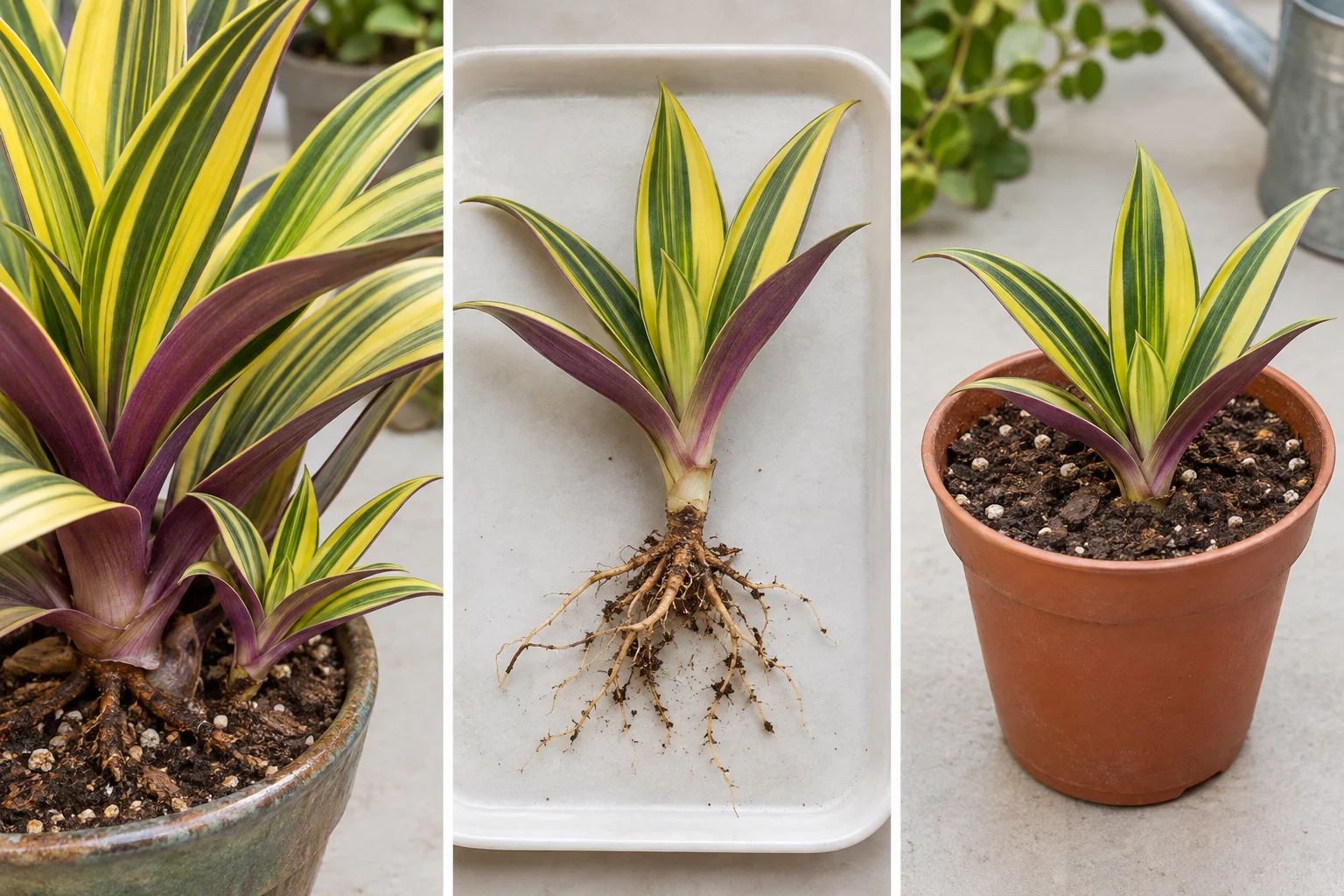
Panels, from left to right
- Select a healthy striped offset with roots or a stem tip with usable basal stem tissue.
- Separate or cut with gloves, keeping the crown above lightly moist rooting medium or the waterline.
- Pot once useful roots form and check that subsequent leaves retain the Vittata stripe pattern.
Look inside the protected leaf axils
Mealybugs can hide where stiff leaves overlap, and mites or other small pests may affect the foliage. Inspect the crown, undersides and outer pot before introducing a new clump among other plants. White cottony material should be examined closely rather than dismissed as a dried flower. Fine stippling and webbing also deserve inspection, especially if several nearby plants are affected.
Isolate a suspect plant and identify the problem before applying a treatment suitable for indoor ornamentals. Repeatedly pouring household mixtures into the rosette risks injury to the same protected tissues pests occupy. Root rot, leaf spots and physical bruising do not respond to an insecticide simply because the damage looks unattractive. If leaves detach from a soft base or lesions spread quickly, investigate the growing conditions and seek an informed diagnosis before taking propagation material.
[1][2]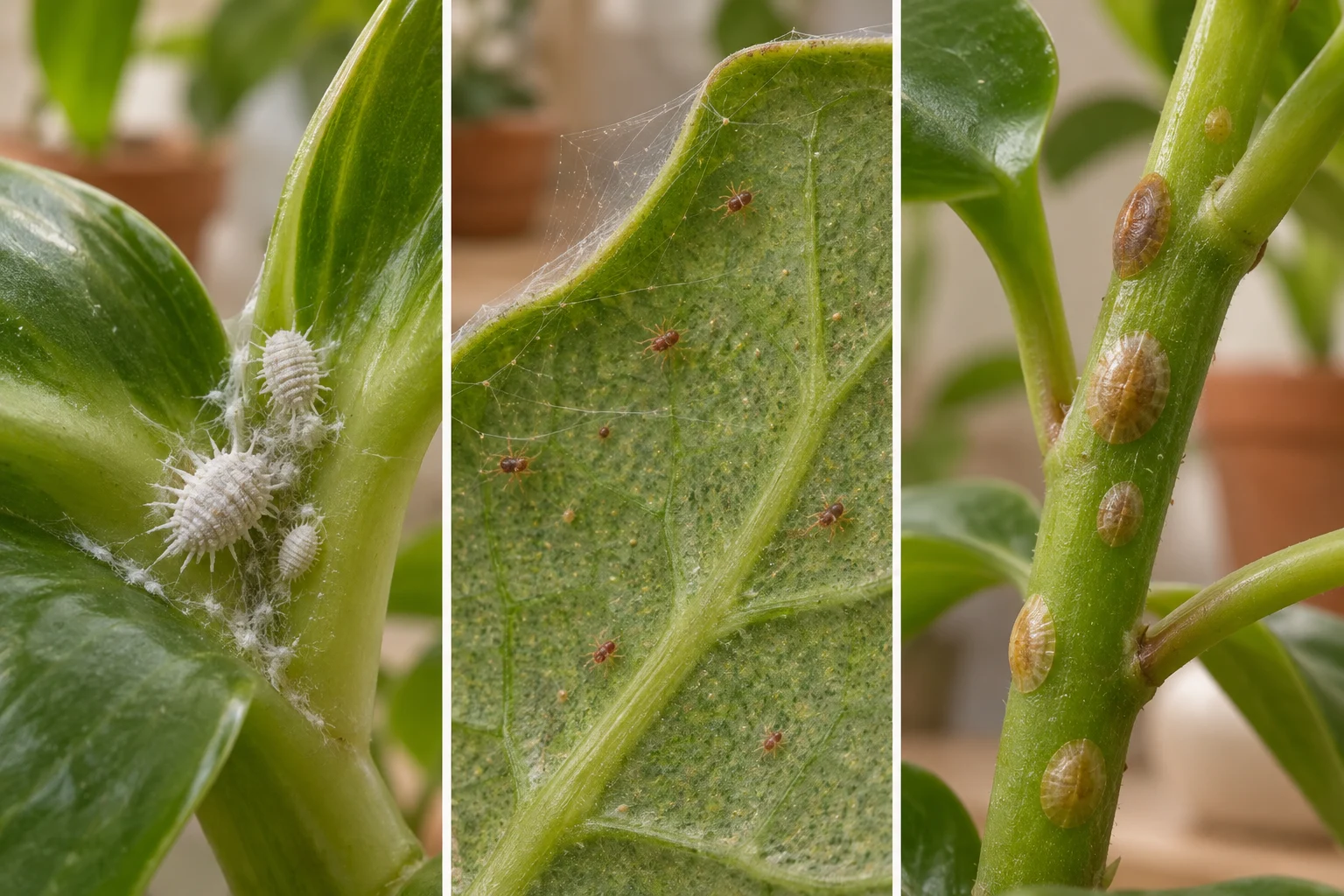
Panels, from left to right
- Mealybugs
- Spider mites
- Scale insects
Separate missing stripes, scars and basal collapse
A green shoot among consistently striped rosettes can represent reversion; weak light can also alter the overall appearance and compactness. First compare newly formed leaves under adequate light and check the cultivar label. Remove a clearly reverted shoot only after confirming that healthy variegated growth remains. Feeding more heavily is not a reliable method for restoring a lost cultivar pattern.
Dry tip scars will not become intact again, so judge corrective care by subsequent blades. A collapsing centre is more urgent than one old outer leaf turning brown: inspect the stem base and moisture history. A rosette leaning because it has outgrown a small pot differs from one whose base is soft. Support a mechanically unstable plant while examining it, and do not bury failing tissue in fresh mix to make it appear upright.
[1][2]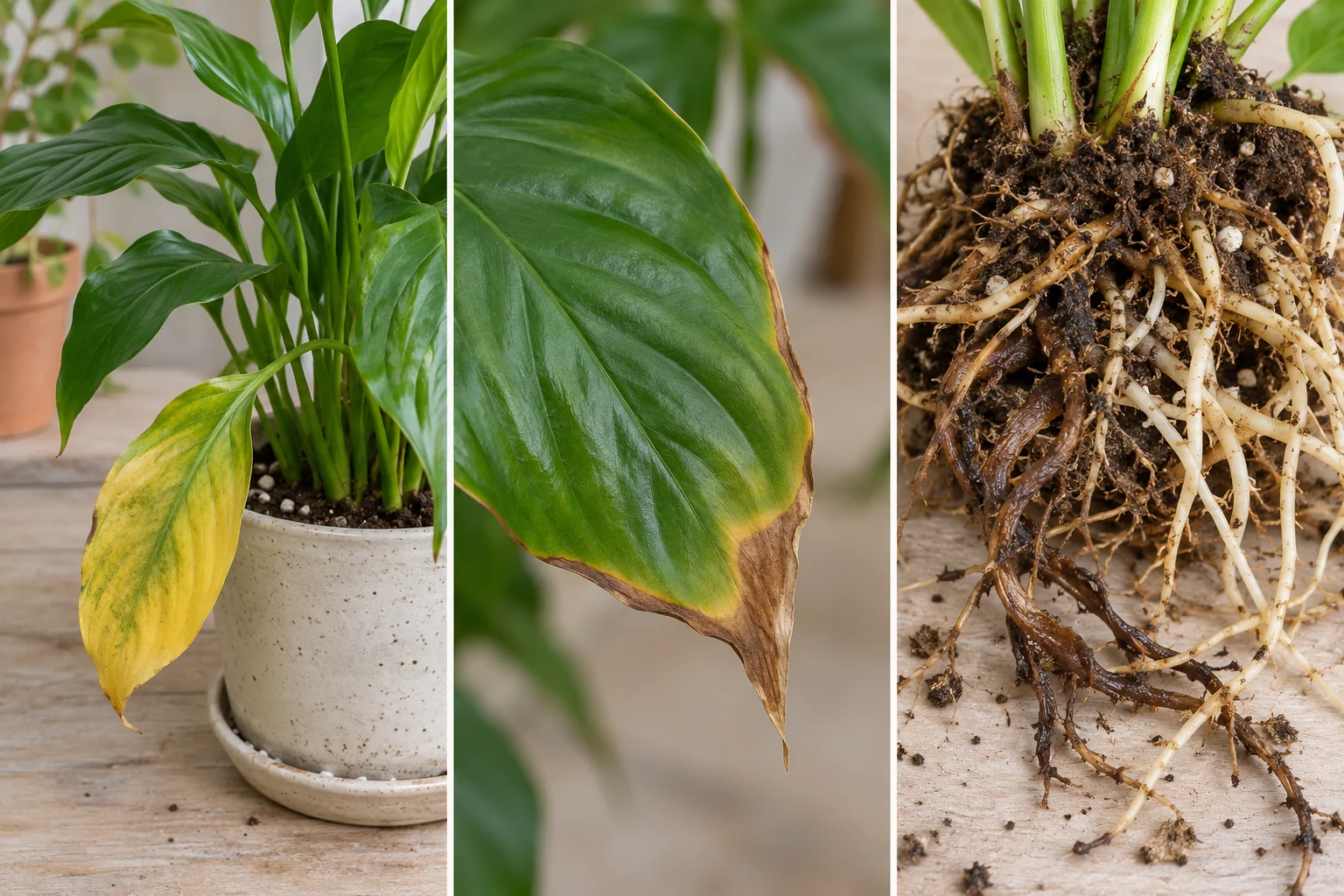
Panels, from left to right
- Yellowing foliage
- Brown leaf edges
- Damaged roots
A stretched central crown
- Possible causes
- Insufficient useful light can widen spacing between new leaves; an old exposed stem alone can also reflect age.
- What to check
- Compare the newest leaves and the light actually reaching the crown, rather than the brightness elsewhere in the room.
- Next step
- Increase useful exposure gradually and plan renewal only after distinguishing stretch from normal ageing.
A soft rosette base
- Possible causes
- Trapped moisture and poorly aerated roots can contribute to basal decay even while outer blades remain thick.
- What to check
- Inspect drainage, the hidden leaf bases and how long the medium stays wet.
- Next step
- Stop automatic watering, isolate spreading damage and retain propagation material only if the stem is sound.
A uniformly green side shoot
- Possible causes
- A shoot may have lost variegation; low light or an incorrect cultivar label can also explain an unexpected appearance.
- What to check
- Compare several new leaves under suitable light with the verified striped rosettes.
- Next step
- Keep healthy variegated material labelled and remove a confirmed reverted shoot only when the remaining clump can support recovery.
Let indoor growth set the seasonal pace
Spring and summer often bring enough light for offsets, repotting and stem-tip propagation. In a climate with cold winters, a summer patio stay should end before frost threatens. A sheltered bright position with afternoon protection is easier to adapt to than an exposed hot terrace. Inspect the leaf axils before moving the container back beside other houseplants.
In darker months the same clump may use water more slowly and need little fertilizer. Keep it bright and protected rather than forcing a dry dormant season that this evergreen does not require. In a consistently warm, well-lit room, growth may continue; the calendar alone does not prove that every winter watering must stop. Track actual new leaves and pot drying so that seasonal care follows the plant's circumstances.
[1][2]The small white flowers sit inside a purple boat
The purple structures at the leaf axils are bracts surrounding small white, three-petalled flowers. They are not damaged leaves or a pest cocoon. Flowering may occur at different times of year in suitable conditions, but foliage remains the main reason to grow 'Vittata'. A young offset can be healthy without immediately producing these little boats.
Do not keep increasing fertilizer in pursuit of conspicuous blooms: this plant's flowers are naturally modest. The species can form dry seed capsules after flowering. If retaining the named striped selection is your goal, keep vegetatively propagated material with its label rather than relying on seedlings. Remove spent material carefully where it traps debris, without levering apart healthy leaf bases just to search for flowers.
[2][1]Treat exposed sap and chewing as separate risks
RHS identifies this cultivar as a skin allergen, and NC State warns that the species is unsafe to ingest for people and pets. Wear gloves when dividing or cutting, avoid rubbing eyes during the work, and clear away fallen cuttings. Keep the pot where children and animals cannot chew its attractive pointed leaves.
Purple colouring does not indicate edibility, and common names involving a cradle or lily do not establish a safe household use. If ingestion or a significant exposure occurs, obtain appropriate medical or veterinary advice with the botanical name and a photograph available. Do not use the plant for homemade remedies. Correct identification is particularly useful because a retailer may still call the same plant Rhoeo.
[1][2]Test new growing systems on an offset first
A compact rooted offset is a more manageable starting point for a controlled grow-light or alternative-substrate experiment than a large old clump. Keep the plant identity and starting condition documented. Change one major variable at a time so that colour loss or root problems can be traced to a plausible cause. A bright lamp cannot compensate for a crown sitting in stagnant water.
These sources provide conventional container guidance, not a validated nutrient recipe for permanently submerged roots. Rooting a cutting in water does not prove that an established soil-grown clump can be transferred without stress into a reservoir. If experimenting, retain a healthy conventional plant and follow root development closely. Keep the leaf bases above any standing water and be prepared to return a struggling offset to a suitable aerated medium.
[1][2]Keep Vittata and the species name together
'Vittata' is the striped cultivar covered here. RHS also lists 'Variegata' under its synonyms, while Rhoeo names remain common in trade. The essential identifying pattern is gold or yellow striping on green upper surfaces with purple beneath. A photograph may change colour with lighting and processing, so it should support rather than replace a reliable label.
Plain green-topped oyster plants and pinker selections are related but are not interchangeable cultivar records. Leaf size, clump density and colour can differ among selections and growing conditions. Avoid promising that every seedling or unlabeled division will match a purchased specimen. When sharing a healthy division, pass on the name, the actual light conditions and any uncertainty about its origin rather than a more fashionable label.
[1][3][2]Frequently asked questions
What identifies 'Vittata' rather than a pink Tricolor oyster plant?
Look for longitudinal gold or yellow stripes over green upper surfaces and a purple underside. Pink-and-cream retail selections should not automatically receive the Vittata name; a reliable label and mature leaves are better evidence than one edited photograph.
[1][3]Are the purple boats on my Vittata oyster plant damaged leaves?
They are normal bracts surrounding small white flowers. Look in the leaf axils without pulling the crown apart. Browning after a flower display can be ordinary ageing, whereas wet spreading damage needs investigation.
[2][1]Why is a Vittata rosette climbing above a bare stem?
Old lower leaves can be shed as the short stem ages. A sudden increase in gaps between new leaves suggests insufficient light instead. Compare recent growth before deciding whether to renew the crown with a stem-tip cutting.
[2][1]Will seedlings keep the gold stripes of Vittata?
Do not assume so. Seed propagation reproduces the species but is not a dependable guarantee of a named variegated selection. A correctly labelled vegetative division or cutting is the more appropriate route.
[1][2]Is Rhoeo spathacea a different plant from this oyster plant?
Rhoeo spathacea is an older name for Tradescantia spathacea. A Rhoeo label still needs a cultivar check: it may describe a plain form rather than the gold-striped Vittata selection.
[2][1]Should I bury an exposed oyster-plant stem to hide it?
Do not bury the crown or failing leaf bases simply to improve appearance. Keep the established planting level, assess the roots and consider division or a healthy tip cutting when an old clump needs renewal.
[2][1]Why does my striped oyster plant flop in a hanging basket?
This species forms upright rosettes rather than long trailing stems. A leaning crown may need better light or a more stable container. Do not mistake mechanical imbalance or basal softness for a natural trailing habit.
[2]Can I restore a green shoot on Vittata with extra fertilizer?
Fertilizer cannot reliably restore cultivar striping that a shoot has lost. Assess the new growth in appropriate light and compare it with the rest of the clump before removing confirmed reverted material.
[1][2]Does the purple underside prove that my oyster plant receives enough light?
No. Purple is part of its normal pigmentation. Judge the newest rosette's spacing, strength and overall colour alongside the actual light reaching the leaves, rather than using one colour as a light meter.
[2][1]Where should the waterline be when rooting a Vittata stem tip?
Keep the rooting stem base in contact with water while the rosette and its leaf bases remain above it. Once useful roots develop, pot the cutting carefully; water rooting is a propagation stage, not proof of a permanent reservoir requirement.
[1]Why is the centre of my oyster-plant clump soft while outer leaves still look firm?
The fleshy outer blades can remain substantial even when the base is deteriorating. Examine trapped moisture, drainage and stem condition promptly. Do not add water merely because some leaves begin to lean.
[2][1]Are yellow lines on Vittata a sign that it needs iron?
Regular lengthwise yellow bands are the defining variegation. Irregular paling, weak growth or new damage requires a broader assessment, but treating the expected stripe pattern as a deficiency can lead to unnecessary feeding.
[1][3]Can I leave a divided Vittata crown inside a sealed humid box?
An enclosed box can overheat or retain moisture around the closely packed base. A rooted division generally needs protection from harsh sun and careful moisture management, with ventilation rather than permanently stagnant wet air.
[2][1]Compare related plants
- Spider plant: Spider plant sends plantlets along arching runners; Vittata expands through upright basal rosettes and has irritating sap.
- Song of India: Song of India develops woody branched stems, while the striped oyster plant stays a much lower clump with purple leaf undersides.
Care reminders with PlantPal
Save your Vittata oyster plant in PlantPal and set reminders to inspect rosette spacing and substrate moisture as the clump grows.
Track this striped rosette