 Plant
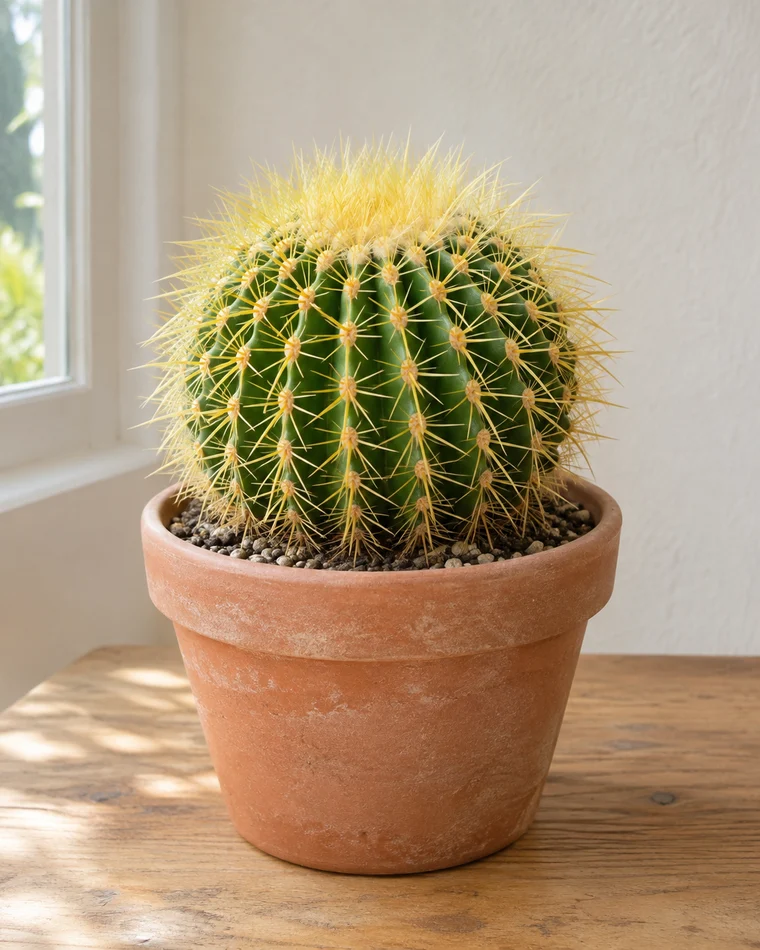
Golden barrel cactus.
Kroenleinia grusonii
Golden barrel cactus brings a rounded silhouette, deep ribs and golden spines to a genuinely sunny space. Its accepted name is Kroenleinia grusonii, although Echinocactus grusonii remains familiar in cultivation. This slow-growing Mexican desert cactus is a long-term specimen for bright conditions, not a low-light ornament. Successful indoor care depends on strong light, a draining pot and recognizing the difference between an active plant and a cool, resting one.
How to help it thrive.
Checked:
Quick care reference
- Accepted name: Kroenleinia grusonii; familiar synonym: Echinocactus grusonii.
- Adult plants need strong direct sun, introduced gradually after shade.
- Water actively growing plants after the root zone dries; drain completely.
- Keep a cool resting barrel essentially dry and always frost-free.
- Choose an open cactus substrate and a stable pot with a drainage hole.
- Growth is slow; mature yellow flowers are not guaranteed indoors.
- Start new plants from seed; seedlings need gentler light and controlled moisture.
- Keep sharp spines away from children and pets; pet ingestion safety is unconfirmed.
A living barrel, not a low-light ornament
Golden barrel cactus stores water in a rounded green stem protected by dense yellowish spines. Kew now accepts the name Kroenleinia grusonii; the older Echinocactus grusonii remains common on nursery labels. Both refer to this Mexican member of the cactus family, Cactaceae. Its desert and dry-shrubland origin helps explain the combination it needs at home: abundant light, aerated roots and intervals of dryness.
A small barrel can look unchanged for a long time, which makes a dark shelf deceptively convincing. Judge the placement by the quality of new growth, not simply by whether the plant remains green. Choose this species if you can provide a genuinely sunny position and safely accommodate its increasing width. A conservatory, suitable grow-light setup or seasonal outdoor position may work better than an ordinary interior shelf.
[1][2]Recognizing the right golden barrel
Look for a globose to barrel-shaped stem with prominent vertical ribs. Small felted pads, called areoles, carry the spine clusters along these ribs; mature plants develop a woollier crown. The yellow is chiefly in the spines, while the living stem beneath is green. Young plants may not yet show the pronounced rib pattern of a large specimen. Natural variation and age mean a photograph is useful evidence, not a substitute for a dependable botanical label.
A cactus is distinguished from other stem succulents by its areoles. Do not apply this guide to a yellow-stemmed Euphorbia or to every plant sold merely as a barrel cactus. Keep the nursery identification with a dated photograph of the plant when you buy it. That record makes changes in rib spacing, surface marks and silhouette easier to assess later, especially when growth is slow.
[3][4][2]Sun that supports a compact shape
An established golden barrel wants full sun. Indoors, select the brightest practical window with substantial direct sunshine and check what actually reaches the stem after nearby buildings, curtains and trees intervene. A room that seems bright to human eyes can still be inadequate. Weak, narrowing growth near the top or an increasingly pointed silhouette suggests that the present light may not sustain the characteristic barrel shape.
Introduce stronger sunshine gradually when a plant has come from a shaded shop, and do the same after moving it outdoors. Full sun is a destination, not permission for an abrupt move into intense heat behind glass. Keep air moving around a hot window and inspect the newly exposed side for pale, dry damage. If daylight remains poor, use a plant light appropriate for sun-loving cacti and evaluate subsequent growth rather than choosing a universal lamp distance.
[2][5][4]Let the root zone dry, then water purposefully
During active growth, check below the surface and wait until the potting mix has dried before watering thoroughly and allowing complete drainage. The golden barrel has stored reserves; a dry-looking gravel dressing alone does not tell you that the roots need water. Pot size, mix, sun and temperature alter drying speed, so a monthly reminder is best used for inspection rather than as an automatic instruction to irrigate.
Cool, resting plants use much less water. Keep an established dormant barrel essentially dry; a warm plant that is still growing under strong light needs a different assessment. Watch for significant loss of fullness, but examine root-zone moisture before responding: a shrinking plant in wet soil may have failing roots. Pour onto the substrate without leaving water lodged in the crown, and empty any decorative outer pot after drainage.
[3][5][2]A stable pot and an open root environment
Use a draining container and a cactus substrate with a durable mineral component, such as horticultural grit or pumice, so the root zone does not remain a dense wet mass. A commercial cactus label is only a starting point: assess how the material behaves in your own pot. Fine sand packed into a peat-heavy mix can behave very differently from a coarse, open blend. A sealed decorative bowl is a poor match for this species.
A broad barrel needs a stable base, but a very oversized pot also holds a larger volume of slowly drying substrate. Increase pot size only when the roots or stability justify it. Preserve the previous planting depth instead of burying green ribs to make the plant stand upright. Plan the handling before repotting: support the pot and root ball, protect hands from spines, and avoid levering the plant by its crown.
[4][2]Frost-free conditions with useful seasonal contrast
Warm, bright conditions support growth, while a cooler bright resting place can reduce winter stretching. Keep the plant frost-free and away from cold glass and outdoor rain during chilly weather. Published hardiness figures differ between greenhouse guidance and desert landscape observations. Neither should be treated as a guarantee that a small, recently watered container can safely experience a freezing night.
For household care, observe the temperature where the cactus actually stands rather than relying only on the room thermostat. A windowsill can cool sharply after sunset and become very hot in direct sun the next afternoon. Avoid trying to create a rest period by putting the barrel in a dark cupboard or refrigerator. Reduced growth still calls for light, and cooling must be paired with reduced watering, not a wet root ball.
[2][3][8]Modest nutrition for a slow-growing cactus
Feed only when there is active growth and the roots are functioning normally. Golden barrel is not a plant to push with frequent rich fertilizer in pursuit of a larger globe. The RHS species guidance uses a small number of balanced liquid feeds during the growing season. Product concentration and any fertilizer already present in the substrate matter more than copying an unrelated houseplant schedule.
Use the chosen cactus-compatible product according to its label, and skip feeding during a cool rest or while investigating root damage. A slow season does not by itself prove nutrient deficiency. First compare current light, temperature and moisture with the conditions during healthy growth. Photograph the crown at intervals: compact new ribs and spines are a more useful response measure than expecting visible enlargement immediately after each feed.
[2][7]Slow enlargement without routine pruning
This cactus gradually gains mass and width; it does not require the regular tip pruning used to make a leafy houseplant bushier. Its mature appearance develops over years, and ordinary indoor conditions may produce a smaller plant than a sunny landscape. Published heights and maturity estimates describe particular growing conditions, not a timetable you must meet. There is no reliable fixed household lifespan to promise.
Leave healthy spines and crown wool intact. They are parts of the plant, not clutter to tidy away, and cutting the top off a healthy barrel is not an appropriate way to maintain its shape. When the pot becomes awkward to lift, arrange help before moving it. Choose a display position with enough surrounding clearance that brushing past the plant will not become more hazardous as the barrel widens.
[2][3]Starting golden barrels from seed
Seed is the straightforward species-specific propagation route recommended by the RHS. Use responsibly supplied seed with a botanical label and sow into a fine, freely draining seed mix. Small cactus seeds are generally left at the surface rather than deeply buried. Moisten gently, place under a transparent cover in bright indirect light, and ventilate regularly. A general RHS cactus-sowing guideline is around 21°C; it is a cultivation guide, not a guaranteed germination threshold.
Seedlings need a more even supply of moisture and less harsh sun than established barrels. Keep the sowing mix moist without making it stagnant, then reduce cover gradually as seedlings establish. Move them individually only when robust enough to handle without crushing their small bodies or roots. Do not assume that a lone adult will produce detachable pups, and do not cut it into pieces merely because other cacti can be propagated by stem cuttings.
[2][4]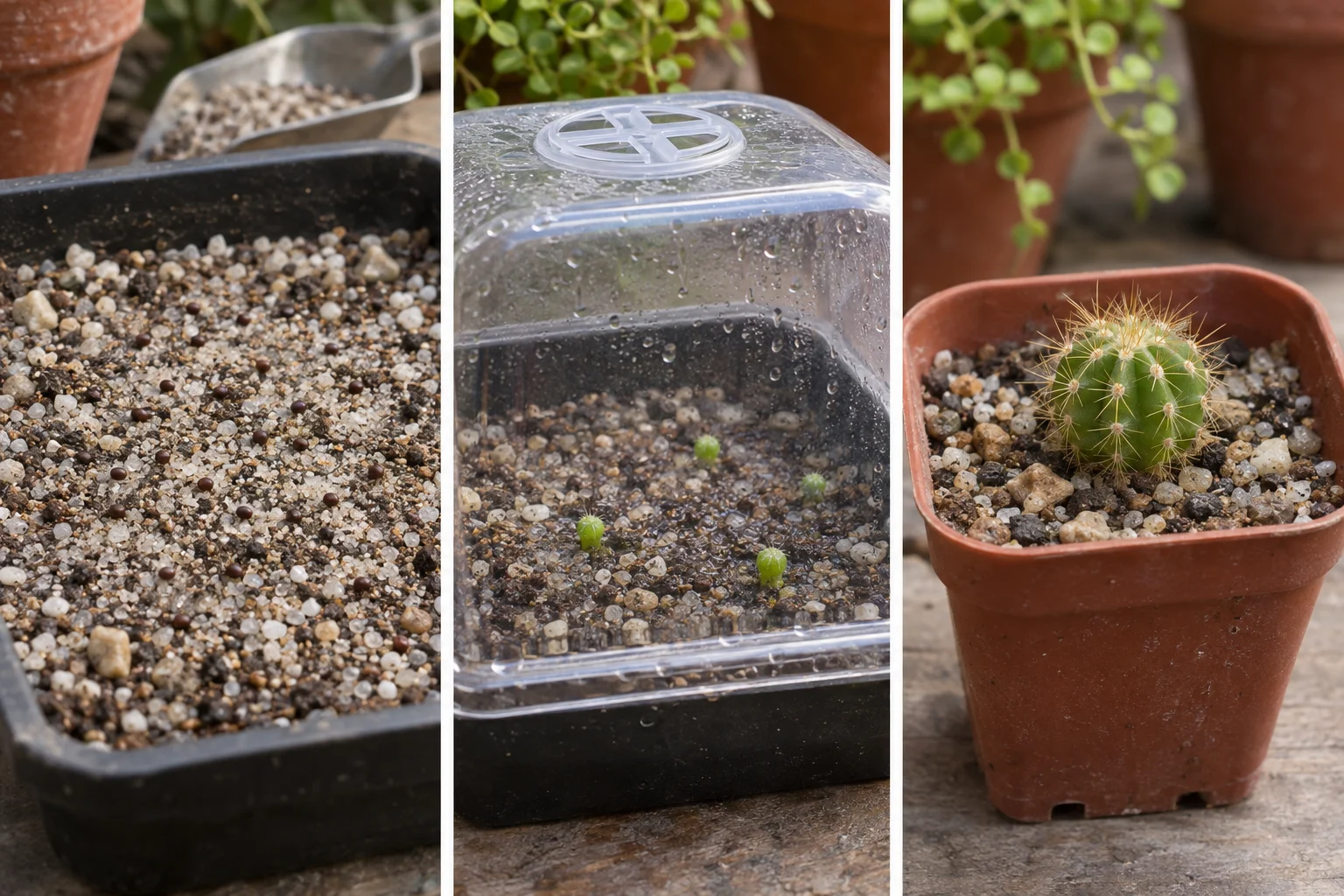
Panels, from left to right
- Sow labeled golden-barrel seeds on a fine, draining seed mix and moisten gently.
- Use a clear ventilated cover in bright indirect light; keep seedlings moist without saturation.
- Pot up established seedlings when sturdy enough to handle, then acclimatize gradually as they grow.
Inspecting between spines without damaging the crown
Mealybugs can hide where ribs meet and around the roots; scale insects may also occur on cacti. Inspect a newly acquired barrel under good light before placing it beside your collection. Compare suspicious white material with the plant’s orderly areole felt and crown wool. Natural hairs are not proof of an infestation, while irregular clusters, visible insects or spreading deposits justify a closer examination.
Separate a suspect plant while you identify the cause. Spines make rubbing and repeated handling difficult, and improvised sprays can mark the skin or collect around the crown. Use a treatment only after confirming the pest and checking that the product is labeled for the plant, pest and indoor setting. Persistent root problems or inaccessible colonies may warrant specialist help rather than repeated treatment based on appearance alone.
[2][5]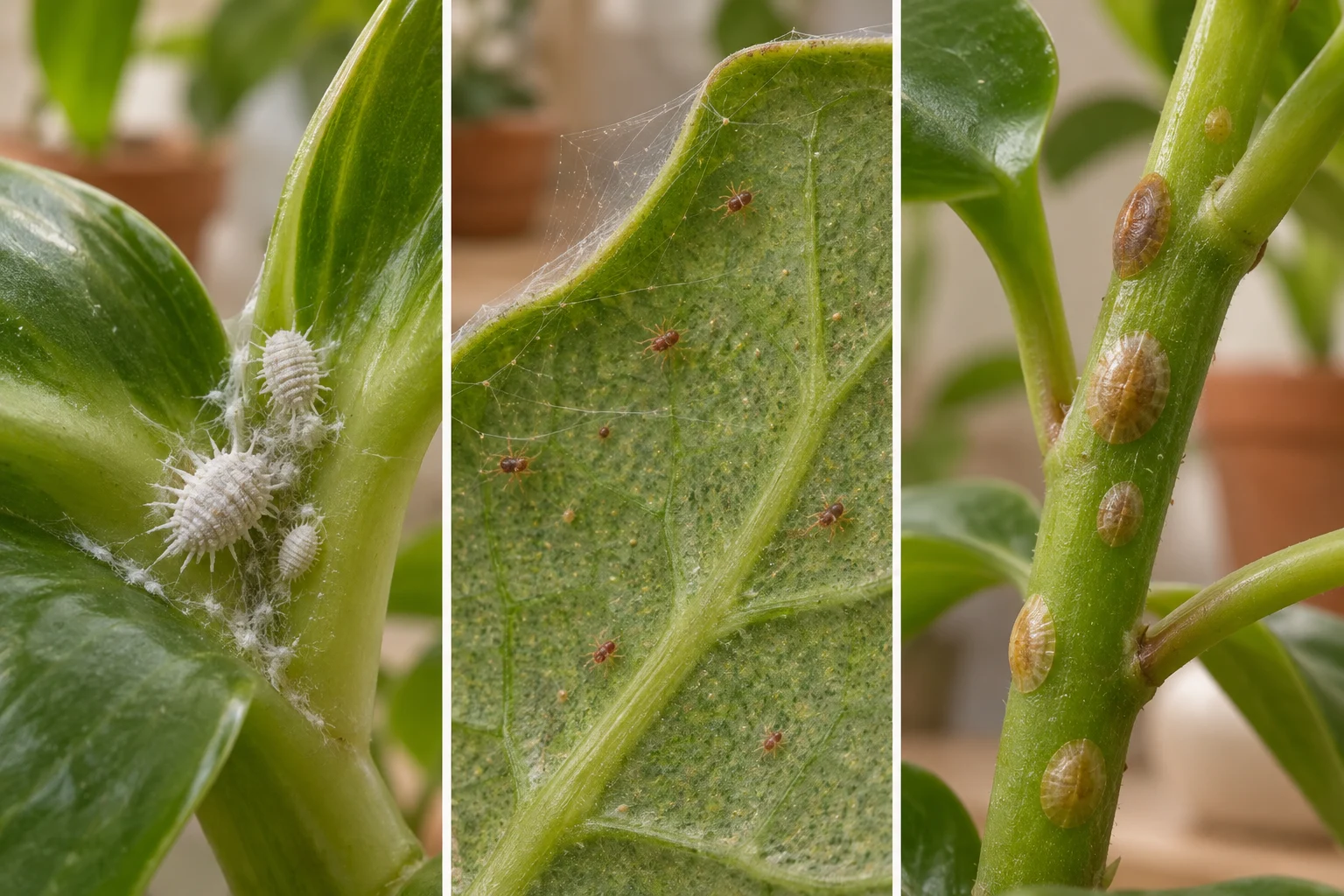
Panels, from left to right
- Mealybugs
- Spider mites
- Scale insects
Read the location and texture of a mark
A pale patch appearing on the side newly exposed to stronger sunshine suggests light or heat injury, while a soft spreading area near a persistently wet base raises concern about decay. Brown, firm surface marks may be old damage or a corky response to growing conditions. Color by itself cannot separate these possibilities. Photograph the same area over time and note whether it is dry and stable or expanding and soft.
When the crown becomes narrow, investigate light before adding water or fertilizer. When a plant loses fullness, inspect moisture and root health before deciding it is thirsty. Do not scrape the skin or remove sound tissue just to test a visual theory. A rapidly worsening soft area calls for prompt isolation and expert assessment; the general root-rot guide explains the broader investigation without claiming that every brown patch is rot.
[6][4][2]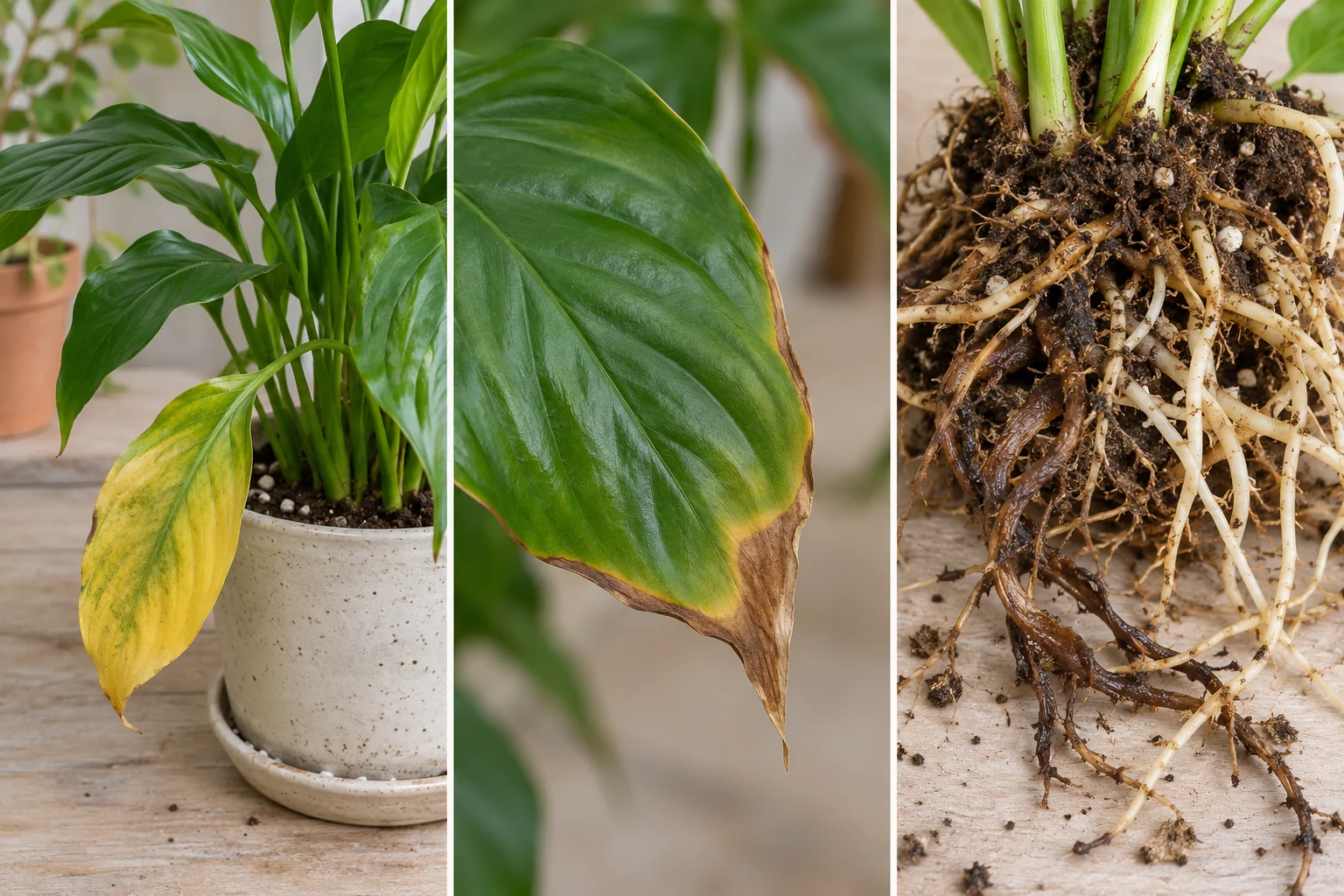
Panels, from left to right
- Yellowing foliage
- Brown leaf edges
- Damaged roots
A narrow pointed crown
- Possible causes
- Insufficient light may produce stretched growth; compare with the older rounded body.
- What to check
- Review actual sunlight reaching the stem and compare dated side-view photographs.
- Next step
- Increase light gradually and monitor the next growth; do not compensate with extra fertilizer.
A pale patch on one side
- Possible causes
- Abrupt stronger sun or trapped window heat may injure the exposed skin; other damage remains possible.
- What to check
- Match the patch to the side recently exposed and determine whether it stays dry or becomes soft.
- Next step
- Reduce the sudden exposure, improve ventilation and seek advice if the lesion expands or softens.
Shrinking while the pot stays wet
- Possible causes
- Roots may be unable to absorb water because of prolonged saturation or another root problem.
- What to check
- Assess root-zone moisture, drainage and the firmness of the base before watering again.
- Next step
- Pause irrigation, isolate if decay is suspected and investigate root health promptly.
Match the season to the plant’s actual activity
As light and warmth increase, look for healthy new growth and resume active-season care gradually. A plant moved outdoors must be acclimatized and protected from extended rain if its pot cannot dry readily. The useful sequence is stronger light, observed activity and an adjusted drying cycle, rather than a dramatic soak on the first date marked as spring.
Before cooler weather arrives, inspect the ribs, pot rim and drainage holes for pests and choose a bright frost-free winter position. Reduce watering as growth and evaporation decline. In a warm climate or under strong lamps, calendar months may not correspond to a complete rest. Keep notes about the plant’s response so the next seasonal move is based on your own conditions rather than on a Northern Hemisphere month list.
[5][2]Yellow flowers are a mature-plant achievement
On sufficiently mature golden barrels, yellow flowers appear around the upper part of the cactus; young supermarket-sized specimens should be valued for their form, not sold on a promise of imminent bloom. University and horticultural descriptions associate flowering with maturity, but a plant’s age alone does not establish readiness. Strong light and appropriate seasonal care are relevant, while indoor flowering remains uncertain.
Do not attempt to force flowers with heavy fertilizer or by stressing the plant with cold. If a tiny purchased cactus carries an unusually bright, papery flower, inspect without pulling: ornamental flowers are sometimes attached to commercial cacti and are not evidence of maturity. A photograph of a genuine flowering specimen can be a useful reference, but it should not turn a healthy nonflowering barrel into a perceived care failure.
[3][5]Spines require a clear household boundary
The immediate household hazard is the dense array of sharp spines. Place the plant where children and pets cannot brush against it, investigate it with their mouths or knock it from a ledge. A high shelf is not automatically secure if a cat can reach it or the heavy pot can fall. Use a stable container and deliberate handling protection when moving the plant; do not rely on a thin glove alone.
The University of Arizona lists general toxicity as benign, but that is not a specific veterinary clearance for cats or dogs. We have not confirmed a species-specific pet toxicity classification in the sources reviewed, so this guide does not label the golden barrel pet-safe or edible. For ingestion, an eye injury or a significant spine injury, seek advice from an appropriate medical or veterinary professional rather than trying a home remedy.
[3][8]Use a growth record to evaluate the setup
A top-view and side-view photograph taken from the same position can reveal changes that are hard to notice day to day. Track the crown’s width, the spacing of new spines and the time a watered pot takes to become light and dry again. These observations help distinguish a naturally slow cactus from one whose environment has changed. They also prevent reacting to every quiet week with another intervention.
If you use artificial lighting, treat the lamp and its heat as part of the growing environment: assess the plant’s response, ventilation and drying cycle together. Avoid switching simultaneously to a larger pot, stronger light and a much richer feeding program, because you will not know which change caused a response. For a badly misshapen older plant, improved care protects future growth but does not erase the existing stretched portion.
[4][2][7]Names and forms worth checking before purchase
Echinocactus grusonii and Kroenleinia grusonii are two botanical names for this same species in different taxonomic treatments, not two houseplants that need duplicate encyclopedia pages. Labels may also advertise unusual spine colors or reduced-spine forms. Verify the seller’s identification and do not infer a new botanical variety from a marketing adjective or from one photograph.
Choose a nursery-propagated specimen from a reliable seller and keep its label. A plant with fewer spines is not automatically safer to ingest, and a different-looking form still needs careful light acclimatization and drainage. This profile describes the typical golden-spined plant; specialized forms may need individual assessment. The tropical Christmas cactus is a particularly useful contrast: its forest adaptation means its moisture and light care should not be copied onto a desert barrel.
[1][3][4][2]Frequently asked questions
Is Kroenleinia grusonii a different plant from my Echinocactus grusonii?
No. Kew accepts Kroenleinia grusonii and treats Echinocactus grusonii as a synonym. Keep both names in your records so an older nursery label and a newer botanical reference remain connected. This naming change does not mean you need to replace a healthy plant or suddenly alter its care.
[1]Why is the top becoming pointed instead of round?
A narrower, stretched crown can indicate inadequate light, particularly after a move away from a sunny window. Compare new growth with older ribs and review actual direct sunlight reaching the plant. Increase light gradually; adding fertilizer does not correct stretching. Existing distorted tissue will not simply return to a perfect sphere.
[4][2][6]Can a small golden barrel live permanently on an office desk?
Only if that desk genuinely supplies the strong light this desert cactus needs, perhaps with a suitable plant lamp. Remaining green for several months is not proof that an ordinary dim desk is adequate. Check crown shape and new spine development, and choose another plant if meaningful sunlight or supplemental light is unavailable.
[2][4]Does a yellow spine color mean the stem is sunburned?
Golden-yellow spines are characteristic of this species. Evaluate the green stem beneath them separately. A newly pale or scorched-looking patch on the side exposed after a move deserves attention, especially if it is dry and appeared quickly. Do not mistake the normal spine color for a reason to move a healthy barrel into deep shade.
[3][6]Should I water when the gravel dressing looks dry?
Not on that evidence alone. A surface dressing can dry long before the substrate around the roots. Check the mix deeper in the pot and consider its weight and recent watering history. For an actively growing established barrel, let the root zone dry before the next thorough watering; cool dormant plants require much less.
[5][2]My barrel is slightly less plump during a cool rest. Is that an emergency?
A modest change in fullness is different from severe collapse. First confirm that the plant is cool, resting and dry, then watch its condition. If the substrate is wet while the body shrinks or softens, more water may worsen a root problem. Significant or progressive deterioration warrants a closer root and environmental assessment.
[5][2]Why is the white material at the crown not automatically mealybug?
Golden barrels naturally develop a woolly crown and felted areoles. Look for irregular spreading deposits and identifiable insects rather than treating all pale fibers. Compare older photographs and examine difficult spaces carefully without tearing out the normal wool. Isolate the plant if you find convincing pest evidence and identify it before choosing treatment.
[3][2]Can I cut the top off to get two smaller golden barrels?
That is not the propagation route recommended here. The RHS species account recommends seed, and a typical solitary barrel is not a convenient source of detachable shoots. Cutting a healthy stem creates a large wound and changes the original plant permanently. Use labeled seed or buy a nursery-grown young plant instead.
[2]Why are my golden-barrel seedlings kept out of the strongest sun?
Their small bodies and young roots do not have the resilience of an established barrel. Cactus sowing guidance uses bright indirect light and controlled moisture under a ventilated cover. Transition gradually as they establish. Adult instructions to dry the root zone thoroughly and provide full sun should not be imposed unchanged on newly germinated seedlings.
[4]Is a twenty-year-old golden barrel guaranteed to flower?
No. Published maturity estimates reflect growing conditions and do not create a flowering deadline. Size, sustained strong light and the plant’s development matter, and indoor specimens may remain smaller or never flower. A compact, sound cactus can be a successful long-term plant even when it produces no blooms.
[3][2]Should I remove a papery colored flower attached to a tiny cactus?
First determine whether it is a genuine flower or a decorative attachment; unusual vivid straw-like blooms on tiny commercial cacti can be artificial. Do not pull blindly, because an attachment may be glued or pinned into the plant. Seek the seller’s information and avoid tearing healthy skin or the crown in an attempt to tidy it.
[5]Can this barrel share a watered bowl with a Christmas cactus?
Their common family does not make their care interchangeable. Golden barrel is a desert cactus; Christmas cactus is a forest cactus with a different moisture and light pattern. Separate draining pots make those differences manageable and allow either plant’s watering to be adjusted without soaking the other’s root zone.
[4][2]Does a brown patch at the bottom prove the barrel is rotting?
No. Firm, stable discoloration and a soft, enlarging lesion need different investigations. Note the texture without puncturing the skin, compare photographs and check whether the mix stays wet. A spreading soft base is concerning and should be assessed promptly, but color alone is not sufficient to diagnose decay or justify cutting tissue away.
[6]Is a less-spiny golden barrel automatically safe around a curious cat?
No. Reduced spines do not establish ingestion safety, and some sharp structures may remain. The reviewed sources do not provide a confirmed species-specific veterinary toxicity clearance. Keep any form outside the cat’s reach and contact a veterinarian if it is eaten or causes an injury. A marketing label is not a safety assessment.
[3][8]Can I use an outdoor frost-tolerance figure for my indoor pot?
Treat it cautiously. Reports from dry desert landscapes do not describe every combination of wet substrate, small container, plant age and exposure duration. Keep a household golden barrel frost-free rather than testing a claimed survival minimum. A bright cool rest can be useful without deliberately exposing the plant to freezing conditions.
[3][2][8]Compare related plants
- Christmas cactus: Christmas cactus comes from a forest-growing group and needs a different moisture and light approach; shared cactus family membership does not justify sharing a watering routine.
- Coral aloe: Coral aloe creates a fleshy leaf rosette rather than a ribbed spiny barrel. Compare each plant’s light acclimatization and safety guidance before grouping their pots.
Care reminders with PlantPal
Record the barrel’s crown shape, position and drying time in PlantPal so slow changes become easier to notice.
Track this cactusSources and fact checking
- Kew Plants of the World Online: Kroenleinia grusonii (Royal Botanic Gardens, Kew; accessed 2026-11-19)
- RHS: Echinocactus grusonii
- University of Arizona Campus Arboretum: golden barrel
- RHS: growing cacti and succulents indoors
- University of Minnesota Extension: cacti and succulents
- RHS: hardy cacti and succulents, problems
- University of California: cacti and succulents indoors
- University of Florida Gardening Solutions: cactus