 Plant
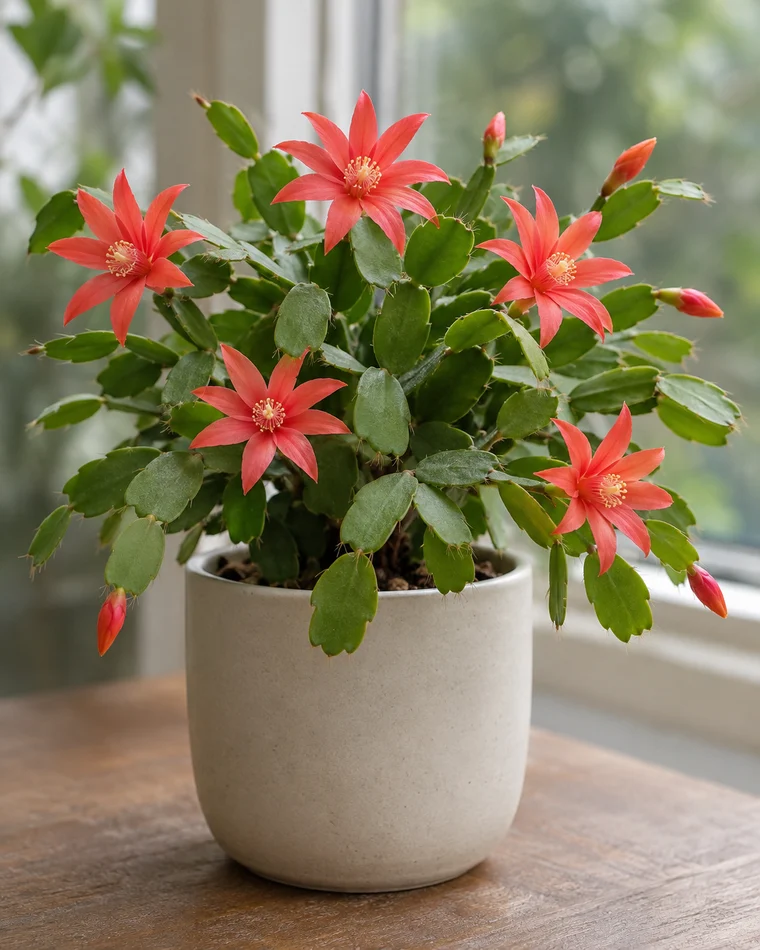
Easter cactus.
Rhipsalidopsis × graeseri
Easter cactus opens its flowers into bright stars above gently scalloped green stems. Rhipsalidopsis × graeseri follows a spring-flowering rhythm: healthy new joints, a cool resting phase and steady conditions as buds expand make more sense than treating it like a desert cactus.
How to help it thrive.
Checked:
Quick care reference
- Identity: R. gaertneri × R. rosea, also labelled Hatiora × graeseri.
- Flower clue: open radial stars above shallowly scalloped stem joints.
- Position: a bright crown protected from concentrated hot window sun.
- Root moisture: avoid both a desiccated chain of stems and a persistently wet root plug.
- Seasonal cue: a cool pause precedes the spring display; cultivar timing varies.
- Shaping window: renew selected branch tips after the flowers have finished.
- Clone preservation: label healthy stem cuttings with their parent’s identity.
- Safety scope: no separate veterinary assessment of Rhipsalidopsis × graeseri was verified in the reviewed references.
A spring-flowering hybrid with two parents
Rhipsalidopsis × graeseri brings a spring display of open, starry flowers to a modest indoor pot. It belongs to Cactaceae and combines R. gaertneri with R. rosea. Its ancestry comes from Brazilian forest cacti, but the cross itself was made in cultivation; it has no separate wild homeland. Young branches stand upward, then spread and arch as successive joints develop. Leave room around the rim rather than expecting the rigid silhouette of a desert cactus.
Kwantlen Polytechnic University describes compact flowering specimens roughly 10–20 cm high and 10–30 cm across. Older plants and particular cultivars may exceed those dimensions. Think of it as a long-term collection plant rather than a disposable seasonal decoration. Its eventual size depends on branch length, pruning and the pot, while successful repeat flowering depends on a yearly sequence of growth and rest. Neither a fixed lifespan nor an Easter-day display can be promised.
[1][2][6]Look for an open star above shallow scallops
The green flattened pieces are photosynthetic stems, not leaves. Their margins have shallow rounded scallops, and a few fine bristles may be visible near terminal joints. The most useful flowering clue is radial symmetry: the petals open around the centre like a star. Christmas and Thanksgiving cacti usually have more elongated, asymmetric flowers. A single rounded segment can resemble other holiday cacti, so keep a photograph of the flower together with the nursery label.
The name Hatiora × graeseri on an older label refers to the same hybrid under another classification. Do not turn a vague Easter-cactus sales name into a guaranteed cultivar identification. Flower colour, segment size and branching can vary within the hybrid group. A label for R. gaertneri instead names one parent species; retain that distinction when documenting a collection or exchanging cuttings. The multiplication sign records hybrid origin, not an extra care requirement.
[1][2][3]Give spring buds bright days without hot glass
A bright window with moderated midday sun provides a useful starting position for this forest-cactus hybrid. The whole crown should receive light: a plant displayed deep beneath a shelf may keep one illuminated branch while the others weaken. If an exposed segment develops a pale dry patch after a move, review the sun reaching that face. Increase exposure gradually, particularly when moving a shop-grown plant to a sunnier room.
During preparation for the spring display, the night environment matters alongside daytime brightness. A grow lamp used for vegetative growth should not automatically run late into the evening all year. Keep records of the timer and the room temperature before experimenting with a flowering schedule. Stronger illumination cannot by itself replace the cool resting phase. The shared light guide explains how to assess a window without assigning one universal distance from the glass.
[3][5][6]Avoid shedding joints through uneven root moisture
Easter cacti can drop segments after either excessive dryness or prolonged wetness. While new joints are expanding, inspect the upper medium and the pot weight together; water as the surface begins to dry, while the root zone still has some moisture. A decorative sleeve can hide standing drainage water beneath an apparently dry surface. Remove that water after irrigation and observe how quickly this particular pot becomes lighter.
During the cooler pause, check less often as consumption declines, but do not leave the segmented stems to collapse through complete dehydration. Resume a little more moisture as buds develop and growth returns. Where repeated feeding or mineral-rich water leaves deposits, review the inputs rather than continually adding fertilizer to a slow-growing plant. A limp stem above wet medium calls for a root assessment, not another automatic drink.
[3][4][8]An airy root zone for a compact epiphyte
The potting medium must hold enough moisture for fine forest-cactus roots while leaving air spaces after watering. A suitable commercial mix can be adjusted with fine bark or a porous mineral component; the actual drainage matters more than the word cactus on its bag. A dense, ageing plug in the centre can remain wet even when loose new material around it looks dry. Check that central root zone before deciding the plant needs a larger container.
Choose a pot only modestly larger when roots genuinely occupy the current one. Repot after the flower display and as fresh growth begins, unless urgent root damage requires earlier intervention. Keep the branching base at its previous depth and use a stable container that supports the spreading crown. A large reservoir of unused wet mix increases the difficulty of managing the winter rest. Detailed repotting technique belongs in the linked shared guide.
[8][7][4]A cool pause is different from frost exposure
Easter-cactus flowering responds to a seasonal cooling period. Guidance for R. gaertneri commonly uses nights near 10–13°C during preparation, followed by more comfortable growing conditions; treat this as context for the hybrid rather than a guaranteed recipe. A room thermometer beside the pot is more useful than the heating thermostat across the house. Keep the stems away from freezing glass, open winter doors and sudden blasts of hot air.
Moderate humidity and gentle air movement suit these forest-derived stems. A closed, wet display case is a poor substitute for a stable room: flower debris and continuously wet joints may develop mould. If a humidifier is needed, avoid directing mist onto the buds or saturating nearby surfaces. During a summer spell outdoors, use sheltered filtered light and bring the plant inside well before frost. Temperature changes should be deliberate, not accidental transport shocks.
[3][5][6]Support the next generation of flowering tips
The purpose of feeding is to support healthy stem growth after flowering, because those branches will carry later flower sites. Use a houseplant or cactus fertilizer according to its label at a conservative strength during active growth. Parent-species guidance describes light monthly feeding, but products differ in concentration. Do not combine a regular liquid feed with a pre-fertilized fresh mix without accounting for both nutrient supplies.
An Easter cactus resting in a cool room has little use for an intensified feeding programme. If new segments remain small, compare light, roots and recent growth before assuming a deficiency. Fertilizer cannot restore a rotted root system or manufacture flowers on demand. Record the product and dilution actually used; a change in new growth is more informative than repeatedly treating the same old scarred segments.
[4][6][5]Shape the spring display after the flowers finish
The hybrid builds its crown joint by joint. After flowering, shortening selected overlong branches at their joints can encourage a more balanced outline. It does not need the routine hard cutting used for a woody hedge. Retain enough healthy green stem to support recovery, and avoid removing the terminal joints just as the next flower cycle approaches. A recently acquired compact specimen may need no shaping at all.
Clear spent flowers that lodge between branches and remove detached damaged pieces from the pot surface. Handle the joints gently when moving the plant, especially where an older branch bends over the rim. The stem surface is not improved by oily leaf-shine products. An old branch becoming firmer or corkier is different from a newly spreading soft lesion; document changes before cutting away healthy mature framework.
[4][7][3]Preserve a named hybrid through healthy stem joints
A short chain of sound stem segments can preserve the exact plant more reliably than seed. Take material during active growth after flowering, keeping track of which end was nearest the parent. Let the basal wound dry before placing it shallowly in an airy rooting medium. The cutting still needs light and a little moisture, but it has no established root system to use a saturated pot.
Keep separate labels for different flower colours or cultivars rather than mixing cuttings in one tray. Gentle resistance and subsequent new growth are better evidence of establishment than repeatedly pulling a cutting out to inspect it. Do not propagate a piece with spreading soft rot merely because its upper tip remains green. For sanitation, rooting containers and general cutting technique, follow the shared propagation guide linked here.
[4][7][1]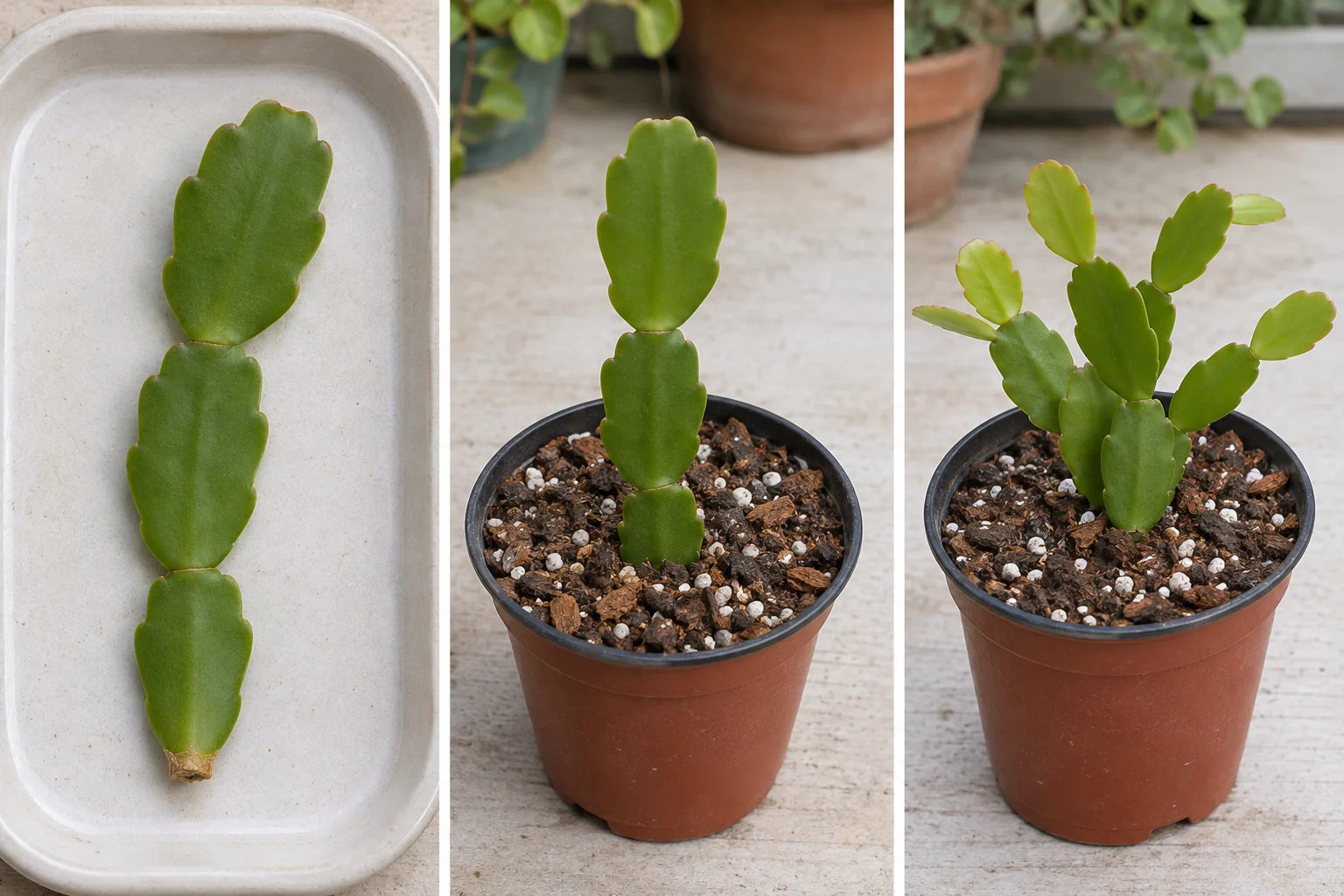
Panels, from left to right
- Select a healthy short chain after flowering, retain its basal orientation and let the cut joint dry.
- Set only the basal end shallowly into airy, lightly moist rooting mix with the upper joints exposed.
- Keep the young cutting stable until rooted and making fresh segments, then maintain its parent label.
Inspect protected joints and fading flowers
On Easter cacti, mealybugs and scale may hide where segmented branches join; aphids can gather on tender growth, and mites can damage the stem surface. Look closely at the organism or residue before deciding which problem is present. Normal terminal bristles are fixed botanical structures, whereas cottony masses that spread into joints warrant closer inspection. Isolate a newly purchased flowering pot while checking these sheltered areas.
Grey mould and root or stem rot become more plausible when flowers decay in a damp crown or roots stay wet without air. Remove fallen flower debris, improve the relevant growing condition and seek identification if damage advances. Choose any pest treatment only after checking its indoor-use label and suitability for cacti; test a small area first. A photograph cannot reliably identify every pathogen, and a routine pesticide spray is not a diagnosis.
[3][4][7]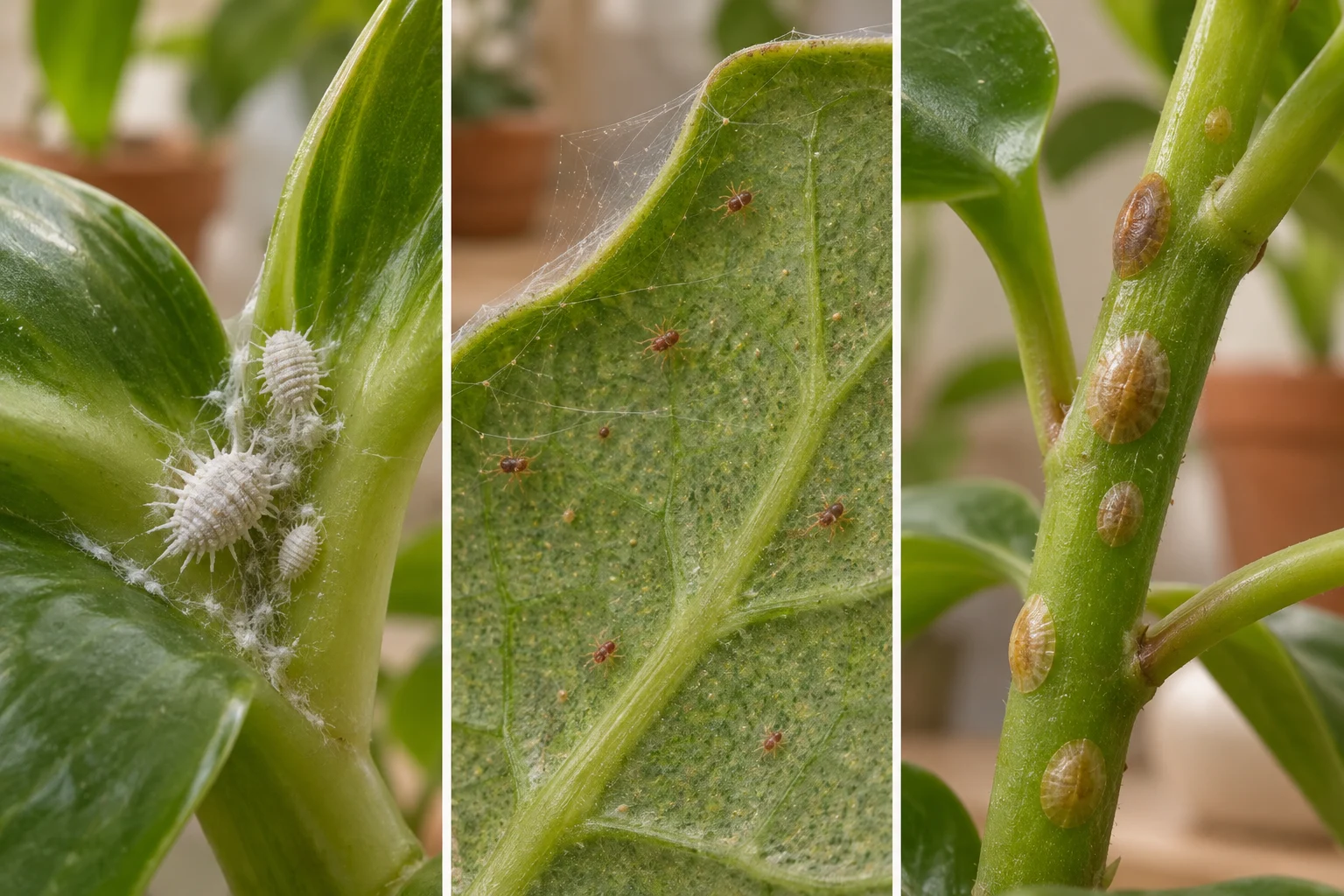
Panels, from left to right
- Mealybugs
- Spider mites
- Scale insects
Trace a failed spring display through the whole cycle
If the plant produces sound green joints but no spring buds, reconstruct the preceding months: warmth through the night, late room lighting, a very short rest or repeated tip removal may be more relevant than the current watering day. Compare one growing season with the next. Healthy stems make it possible to improve the following cycle; repeatedly moving an unbudded pot between radically different conditions makes that comparison harder.
Segment shedding needs a different investigation. Note whether the detached pieces are firm and green, dry and thin, or soft near their bases. Then inspect the medium, drainage and root condition. A pale patch restricted to the window-facing surface suggests another line of inquiry: exposure or heat rather than a whole-pot nutrient deficiency. The symptom cards below offer possibilities and checks, not a claim that one visual sign has only one cause.
[3][6][5]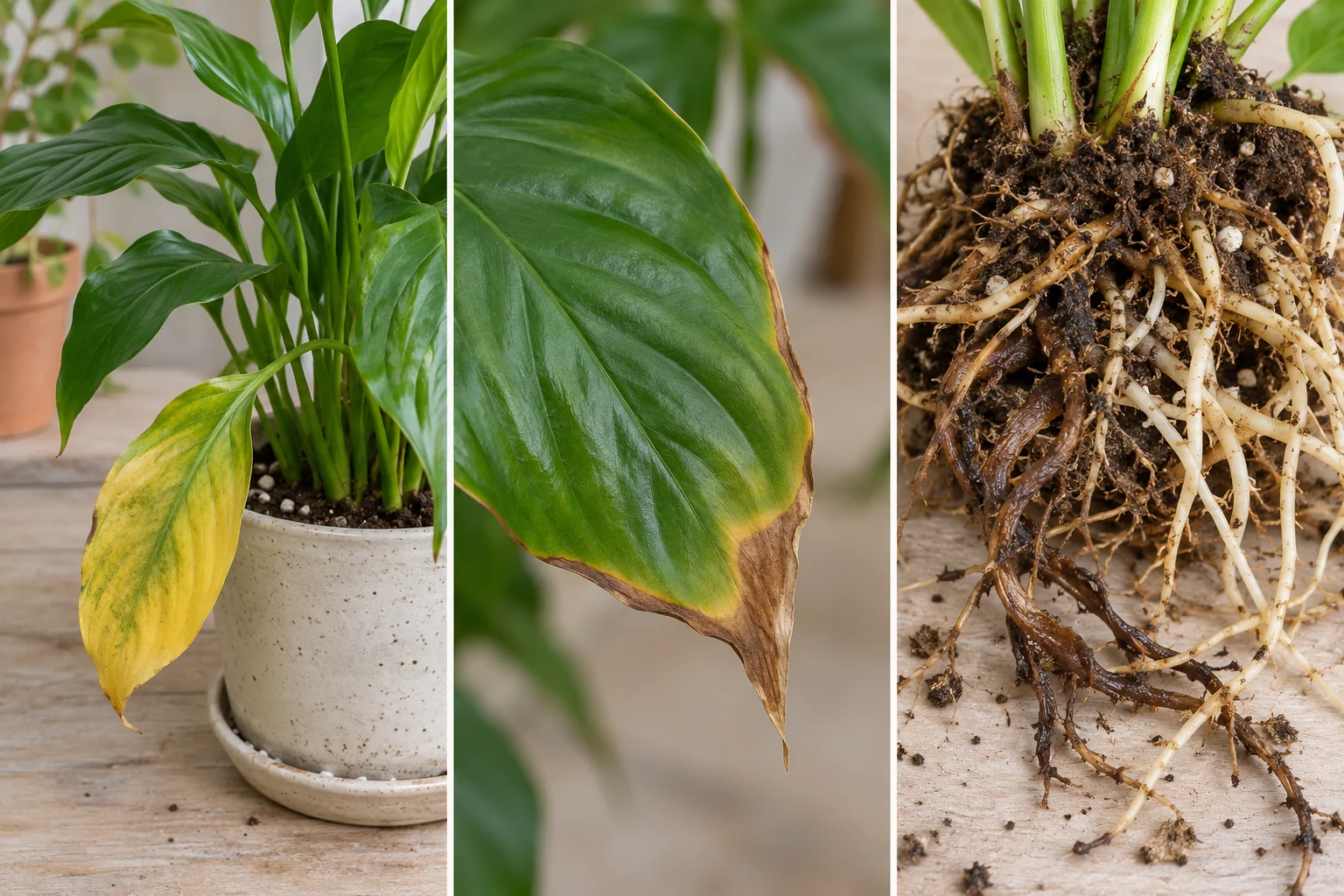
Panels, from left to right
- Yellowing foliage
- Brown leaf edges
- Damaged roots
A green crown but no spring stars
- Possible causes
- The Easter hybrid may have missed an adequate cool pause, experienced interrupted nights or lost its mature terminal flower sites.
- What to check
- Reconstruct the previous season’s temperature, lamp timing and pruning rather than judging only today’s location.
- Next step
- Keep sound growth, record the current cycle and adjust the next preparation period without forcing the pot with extra feed.
Firm green joints detach during the move home
- Possible causes
- A sudden change in the Easter cactus’s environment can coincide with dry stress or reduced root function in wet medium.
- What to check
- Feel the detached base, compare pot weight and inspect whether the central root plug is wet despite a dry surface.
- Next step
- Stabilize the room conditions and correct the confirmed moisture problem before taking cuttings from unaffected material.
Grey fuzz gathers around spent spring flowers
- Possible causes
- Decaying Easter-cactus flowers left among damp branches can support mould where air movement is limited.
- What to check
- Look for trapped flower remains and note whether the fuzz spreads onto soft living stem tissue.
- Next step
- Remove debris, separate the affected pot and improve airflow; obtain horticultural advice if stem damage continues.
Follow spring flowering rather than a holiday calendar
After the spring flowers fade, allow a period of branch development with useful daylight, measured feeding and attentive watering. Summer warmth may accelerate drying, while a sheltered outdoor stay changes the plant’s exposure to rain and insects. Inspect it before bringing it back indoors. In autumn and winter, prepare a cooler, quieter environment while monitoring the medium rather than maintaining the active-growth watering routine.
As the resting period ends and buds expand, keep conditions steady and adjust moisture to renewed demand. Northern Hemisphere month names are only examples; local seasons and controlled indoor conditions may shift the cycle. A nursery can also schedule flowering differently from a home. Save the actual dates of new joints, visible buds and open flowers so future adjustments are based on your plant rather than an annual festival date.
[6][5][8]Radial flowers and a longer preparation period
The hybrid’s open flowers are arranged around a central axis, with colours ranging through white, pink, orange and red among cultivated forms. They appear at branch tips and may open and close with the daily light cycle. A flower closing toward evening is therefore not automatically dying. Look at the following daylight period and at the condition of the bud or flower base before removing it.
Easter-cactus bloom preparation is often longer than the familiar short autumn treatment described for Thanksgiving cactus. Published recommendations differ because temperature, day length, cultivar and the stage of development interact. A cool rest followed by favourable spring growth is a sound framework; no exact number of dark nights guarantees every hybrid will bloom on schedule. Seed or berry production is variable and is unnecessary for enjoying the display.
[2][5][6]Keep the hybrid identity attached to safety advice
The reviewed botanical references distinguish Rhipsalidopsis × graeseri from its parent species. They do not provide a separate veterinary safety assessment for this exact cross, so we do not certify it as pet-safe or call its stems and flowers edible. Retain the hybrid name on the plant record instead of using Easter cactus alone when seeking advice about an exposure.
Keep dropped joints, potting mix and treatment products away from children and animals that chew plants. If an animal develops symptoms after eating any part, give a veterinarian the botanical name, a photograph and details of recent treatments. Do not infer that this plant shares the hazards of an Easter lily simply because both are sold at the same season. Identification and exposure details matter more than the holiday label.
[3][2][1]Test flowering conditions without risking the whole collection
For a collection grown under lights, record daytime illumination, nighttime interruption and the temperature at plant height as separate variables. A timer alone does not describe the complete environment. Compare a rooted spare cutting with the established plant before changing both the light regime and the rooting system. Keep the strongest plant in its successful setup while testing a measured adjustment on the spare.
A porous mineral-based mix can work, but a constant-water semi-hydro reservoir is not an automatic upgrade for an Easter cactus. Root aeration and moisture consumption still change during the cool pause. Conversion may alter root function just when a plant is preparing its next display. If you experiment, use a small established cutting, label the trial clearly and judge new root and stem development before extending it to a valued specimen.
[8][7][6]Separate a cultivar name from a flower colour
R. × graeseri is a hybrid group rather than the name of one red-flowered clone. Cultivars differ in colour, flower size, branching and timing. The two parental species also remain distinct botanical identities. A seller’s colour description is not enough to establish a cultivar name, and a pot containing several cuttings may even contain more than one selection. Preserve purchase labels and photographs taken during flowering.
When comparing plants, ask whether the differences persist in fresh growth under similar conditions. A temporarily stressed reddish stem or a flower photographed under coloured lighting does not establish a new variety. Propagate a confirmed named clone vegetatively if retaining its identity matters. Seedlings from hybrid parents may be interesting new plants, but should not inherit the parent’s cultivar label automatically.
[1][2][7]Frequently asked questions
Does Hatiora × graeseri need a separate page from Rhipsalidopsis × graeseri?
No. Kew treats Hatiora × graeseri as a synonym of this same artificial hybrid. Retaining the older name on a collection label helps trace its history without counting it as another plant.
[1]What does the cross sign in the Easter-cactus name tell me?
The × marks hybrid origin: R. gaertneri crossed with R. rosea. It does not mean the plant is sterile, doubled in size or subject to a special fertilizer requirement.
[1]Can a spring-flowering Christmas cactus be mistaken for this hybrid?
Yes. Season alone is unreliable because holiday cacti can flower outside their usual window. Examine the flower’s radial star shape and stem details, then compare the botanical label.
[2][3]Why do Easter-cactus flowers fold inward in the evening?
The flowers can close with declining light and reopen in daylight. Check the next day before removing an otherwise healthy bloom; a collapsing or mouldy base is a separate concern.
[5]Are the tiny hairs at the ends of Easter-cactus joints insects?
Fine terminal bristles can be normal. Compare several joints and look for movement, cottony material or spreading residues before treating the plant for pests.
[3]Why did my Easter cactus finish its cool rest without visible buds?
The cooling duration, nighttime lighting, maturity of the terminal joints and cultivar all affect preparation. Review the preceding months rather than using a sudden burst of fertilizer as a substitute.
[6][5]Can I use a Thanksgiving-cactus flowering timetable for Easter cactus?
Use it only as background, not a fixed schedule. Easter cacti generally need a longer preparation and have a different seasonal response; a short autumn treatment may not produce the expected spring display.
[6]Should I remove the terminal segments while an Easter cactus is preparing to bloom?
Those tips are potential flower sites. Delay optional shaping until the display is over, then shorten selected branches at joints while retaining a healthy green framework.
[4][2]Which end of a detached Easter-cactus chain goes into the rooting mix?
Insert the end that was closest to the parent branch. Keeping that orientation when taking the cutting avoids confusing its growing tip with the basal wound. Use sound tissue and let the wound dry first.
[7]Does a large pot help an Easter cactus produce more stars?
Flowering depends on growth and seasonal cues, not simply pot volume. Extra unused wet medium can make the resting period harder to manage; repot only when roots and substrate condition justify it.
[7][5]Why does this Easter cactus lose green joints after moving indoors?
A move can alter moisture use, light and temperature together. Check the pot and the fallen tissue before reacting: segment loss can accompany either dry stress or a poorly functioning wet root system.
[3]Will two Easter-cactus seedlings have the same flower colour?
Not necessarily. Hybrid offspring can differ, and seed set is variable. A healthy stem cutting from a labelled plant is the practical route when preserving one particular flower form.
[1][2][7]Does information about a parent species establish the safety of Rhipsalidopsis × graeseri?
The cited list names R. gaertneri, not R. × graeseri. We keep that distinction explicit instead of claiming a hybrid-specific certification or treating any ornamental plant as food.
[3][2][1]Should an Easter cactus bloom in April in every country?
April is a Northern Hemisphere reference, not a universal deadline. Local seasons, nursery scheduling and indoor light and temperature can move the display. Record the plant’s own annual pattern.
[8][6]Compare related plants
- Christmas cactus: Christmas cactus usually carries elongated, asymmetric flowers on a more pendant framework; the Easter hybrid opens radial stars after its spring preparation.
- Thanksgiving cactus: Thanksgiving cactus has pointed segment teeth and commonly flowers earlier in the seasonal cycle. Its short autumn preparation is not an exact schedule for this Easter hybrid.
Care reminders with PlantPal
Keep an Easter-cactus record in PlantPal with reminders to inspect its root moisture and note the transition from cool rest to visible spring buds.
Track my Easter cactusSources and fact checking
- Kew POWO — Rhipsalidopsis × graeseri (Royal Botanic Gardens, Kew; accessed 2026-11-19)
- Kwantlen Polytechnic University — Rhipsalidopsis × graeseri
- NC State Extension — Rhipsalidopsis gaertneri (parent species)
- RHS — Rhipsalidopsis rosea (parent species)
- University of Arkansas Extension — Easter Cactus
- University of Minnesota Extension — Holiday cacti
- University of Wisconsin Extension — Holiday Cactus
- International Schlumbergera and Rhipsalidopsis resource — Cultivation