 Plant
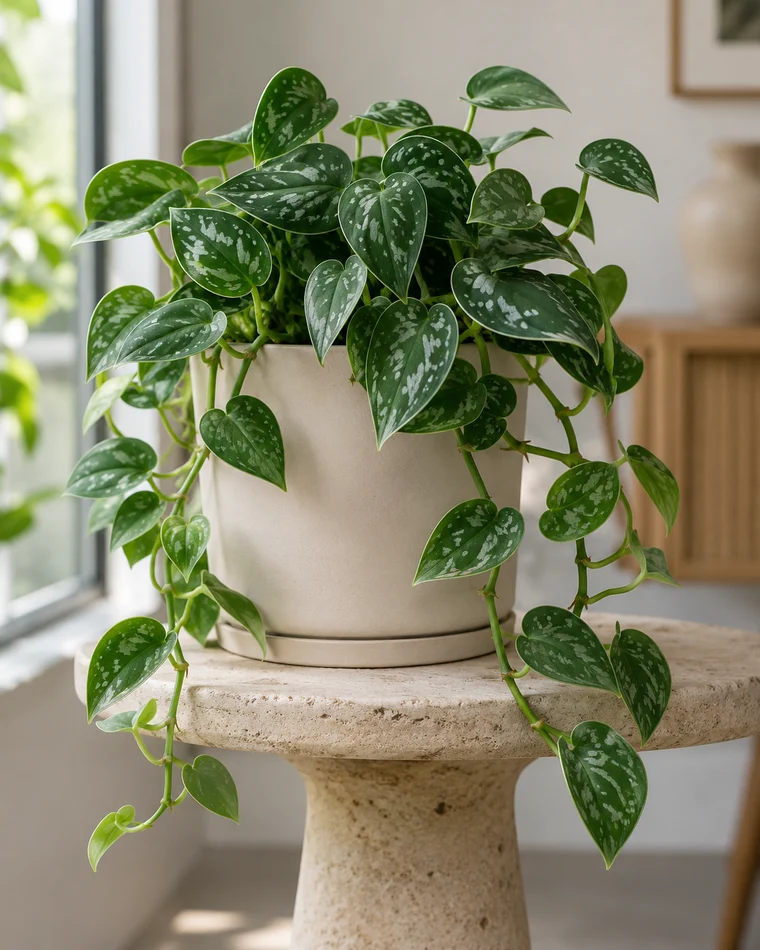
Satin pothos Argyraeus.
Scindapsus pictus 'Argyraeus'
Satin pothos Argyraeus carries scattered silver across small dark leaves, whether it trails from a shelf or climbs a support. It is a Scindapsus, distinct from golden pothos. The useful care decisions concern light along the whole vine, moisture beneath curled leaves and the living nodes needed to make a new plant.
How to help it thrive.
Checked:
Quick care reference
- Name: Scindapsus pictus Argyraeus is distinct from golden pothos.
- Pattern: scattered silver belongs to the leaf, not a removable coating.
- Position: check light at hanging tips, not just at the pot.
- Water cue: curled foliage prompts a root-zone check before watering.
- Root space: keep young cuttings in appropriately small drained containers.
- Training: either a trailing or supported display can work.
- Cuttings: retain a viable node and avoid soft damaged stem sections.
- Exposure: keep the entire toxic vine, including fallen pieces, out of reach.
A silver-marked climber with its own identity
Scindapsus pictus belongs to Araceae and comes from tropical parts of Bangladesh and Malesia. The encyclopedia selection is Argyraeus, a familiar small-leaved form with silver spotting. Although called satin pothos, it is distinct from Epipremnum aureum, the plant usually sold simply as pothos. Keeping those names separate makes the comparison useful without creating duplicate profiles for one species.
This evergreen vine can trail from a shelf or attach to a support using aerial roots. Its indoor size depends on the length of the stems retained and the space provided, rather than a fixed bush height. A well-kept plant can be renewed from healthy cuttings over time. Slow extension alone is not failure; the quality and spacing of the new leaves are more useful than competing with faster vines.
[1][2]Small satin leaves with scattered silver
Argyraeus has dark-green, heart-based leaves with silver spots and a relatively fine silver edge. The blade can be asymmetrical, and its surface looks matte or satin rather than highly glossy. The lower surface is paler and lacks the same silver pattern. Inspect several mature leaves, because a newly unfolding leaf may not yet show its final proportions.
The larger silver areas of Exotica or other selections should not be used as the target for every Argyraeus leaf. Silver markings are part of the plant’s appearance, not dirt to polish away. Dry deposits that sit on top of the surface and change after gentle cleaning are a separate matter. Keep the cultivar label if supplied, and do not infer a rare selection from one unusually pale leaf.
[1][2]Illuminate the vine where leaves are actually growing
Bright filtered light suits the satin foliage indoors. A pot on top of a tall cabinet may look close to a window while the trailing stems hang into much dimmer air below. Assess the light at both the growing tip and the root-side canopy. Sparse extension with small widely spaced leaves is a reason to improve that arrangement before adding fertilizer.
Protect an indoor-grown plant from sudden hot direct sun, which can bleach or scorch its surface. If a grow light is used, aim for useful coverage along the vine rather than a bright spot on the pot. Change the position gradually and compare subsequent leaves. Silver coverage is not a precise light meter, since genetic selection and leaf development also influence the pattern.
[1][2]Use curling as a prompt to inspect, not a command
Satin pothos often curls its leaves when short of water, but curling can also accompany stressed roots or other adverse conditions. Feel the growing medium and assess how long it has stayed wet or dry before adding water. During active growth, maintain modest moisture in an aerated mix, allowing the upper layer to dry between thorough waterings.
A hanging container can dry unevenly, especially near warm air or a sunny window. Water the root zone and let the pot drain where the runoff can be collected safely. Do not leave the base submerged in a cover pot to compensate for forgotten checks. If the plant remains curled above wet compost, review root condition instead of repeating the same watering response.
[1][2]A small root system needs a breathable container
Choose a well-drained houseplant substrate that retains some moisture but does not pack tightly around the roots. A very large pot can remain wet long after a young vine has used what it needs. Match the container to the actual root system and provide an unobstructed drainage route. A decorative hanging bowl without drainage needs an inner pot that can be removed for watering.
Repot when roots and the condition of the mix justify it, preferably while the vine is growing. Support stems during the move so that their nodes are not torn at the rim. A root ball that repeatedly dries too quickly may need more space, whereas a nearly empty wet pot needs a different response. More soil is not an automatic cure for curled leaves.
[1][3]Warm air around the tips as well as the pot
NC State gives roughly 18–29°C as a suitable room-temperature range for satin pothos. Protect trailing stems from cold glass and draughts, which may affect them even when the pot itself sits in a warm room. A tender vine should not be treated as frost tolerant because a general outdoor hardiness summary appears on a plant listing.
Moderate indoor humidity is often workable, while very dry air can add stress during leaf expansion. Keep the plant away from direct heater or air-conditioner flow. Improve measured room conditions if necessary, but avoid keeping folded new leaves constantly wet in an enclosed cold space. Humidity is only one part of the environment; it cannot replace sufficient light or healthy roots.
[1][2]A restrained feed for a modest-growing vine
Feed during active extension with a balanced liquid fertilizer at an appropriate container rate. RHS describes monthly feeding during growth, but the product strength and nutrients already present in the mix still matter. A vine making little growth in winter does not need the same input as one extending steadily under useful light.
Extra fertilizer will not reliably enlarge the silver patches or turn Argyraeus into Exotica. Review light and root health when growth is weak, and avoid applying feed to a severely dry or damaged root ball. White deposits on the pot and repeated brown edges are reasons to review mineral inputs. Keep a record of the fertilizer used rather than layering several products.
[1][2]Choose a trailing display or a supported climb
A trailing vine and a climbing vine are both valid ways to display satin pothos. On a support, guide stems gently so that nodes can remain close to the surface without being crushed by ties. The aerial roots provide attachment; they are not spines or a reason to remove each node. Keep the support accessible enough to inspect the leaves behind it.
Pinching or shortening selected stems can encourage a fuller arrangement near the pot. Cut above a suitable node on the retained vine and save healthy node-bearing pieces for propagation. A long bare runner may be shortened after improving light, but cutting every stem at once can leave little foliage. Do not pull an attached vine off a wall without considering both plant and surface damage.
[1][2]The node is the useful part of a cutting
Take a healthy stem section with at least one viable node and a leaf, rather than a leaf blade alone. Nodes are the places where leaves and potential roots arise. This distinction prevents the common disappointment of an attractive leaf that persists but cannot rebuild a full vine. Avoid using a soft or blackened node from a declining stem.
Root a prepared cutting in an airy moist medium or a suitable water-rooting setup, keeping the leaf above the rooting zone. Once roots are established, move it into a small container and adjust moisture to the new medium. A cutting that roots in water still needs attention during the transition to potting mix. Preserve the Argyraeus label with the new plant, since seed is not the practical way to retain that selection.
[1][2]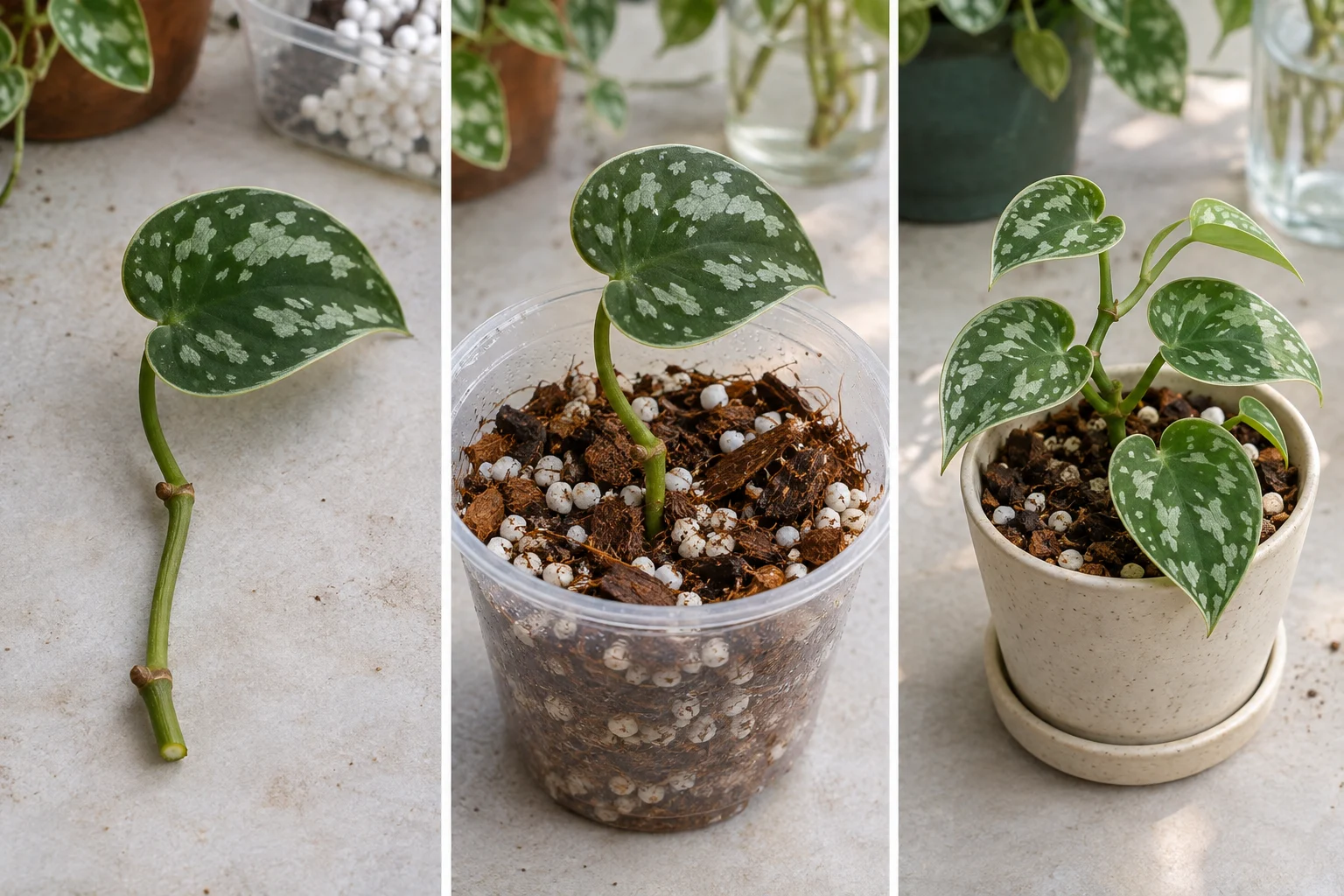
Panels, from left to right
- Find a healthy stem node beside a leaf and choose a section without soft or dark tissue.
- Prepare a node-bearing cutting with the leaf above the rooting zone, using clean tools and gloves.
- Root it in a suitable moist medium or water setup, then establish the rooted piece in a small drained pot.
Look beneath the satin surface and along nodes
Mealybugs, scale, mites and thrips are possible visitors even though a well-grown satin pothos often has few serious pest problems. Examine leaf undersides and the sheltered junctions along the vine. A silver pattern present from leaf development is normal; new scarring, sticky patches or moving insects require a different interpretation. Compare an affected leaf with a healthy one from the same plant.
Separate a suspect vine from neighbouring foliage before stems become intertwined. Identify the problem before using a treatment and check that any product is labelled for indoor ornamentals. Water-soaked spots, mould and soft stems also deserve a review of wet foliage, ventilation and root conditions. A pest spray will not repair a saturated pot or a cold-damaged growing tip.
[1][2]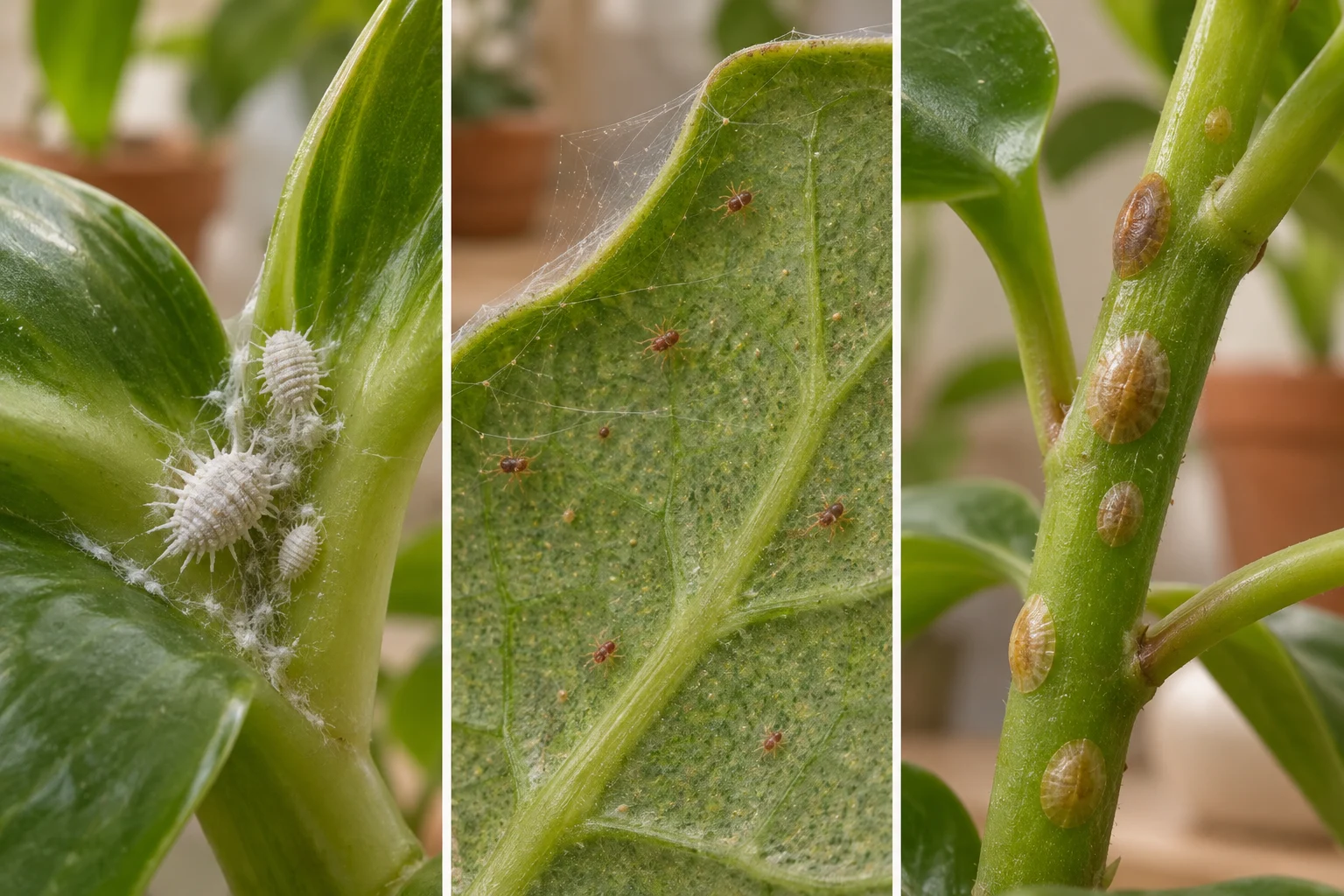
Panels, from left to right
- Mealybugs
- Spider mites
- Scale insects
Separate water shortage from root failure
A curled leaf above dry, light compost points toward water shortage more strongly than the same curl above a heavy wet pot. Check the root zone first and note whether older or newest leaves are affected. Yellowing can accompany excessive wetness, but it is not a unique diagnosis. Record the progression and look for soft stems or roots before deciding on a response.
A vine with long gaps between leaves may be stretching in inadequate light or recovering after earlier leaf loss. Improving light helps future growth but does not refill every bare internode with a new leaf. Propagating healthy tips can rebuild the pot when conditions are corrected. Do not remove all damaged leaves immediately if doing so prevents you from seeing whether the problem is still spreading.
[1][2]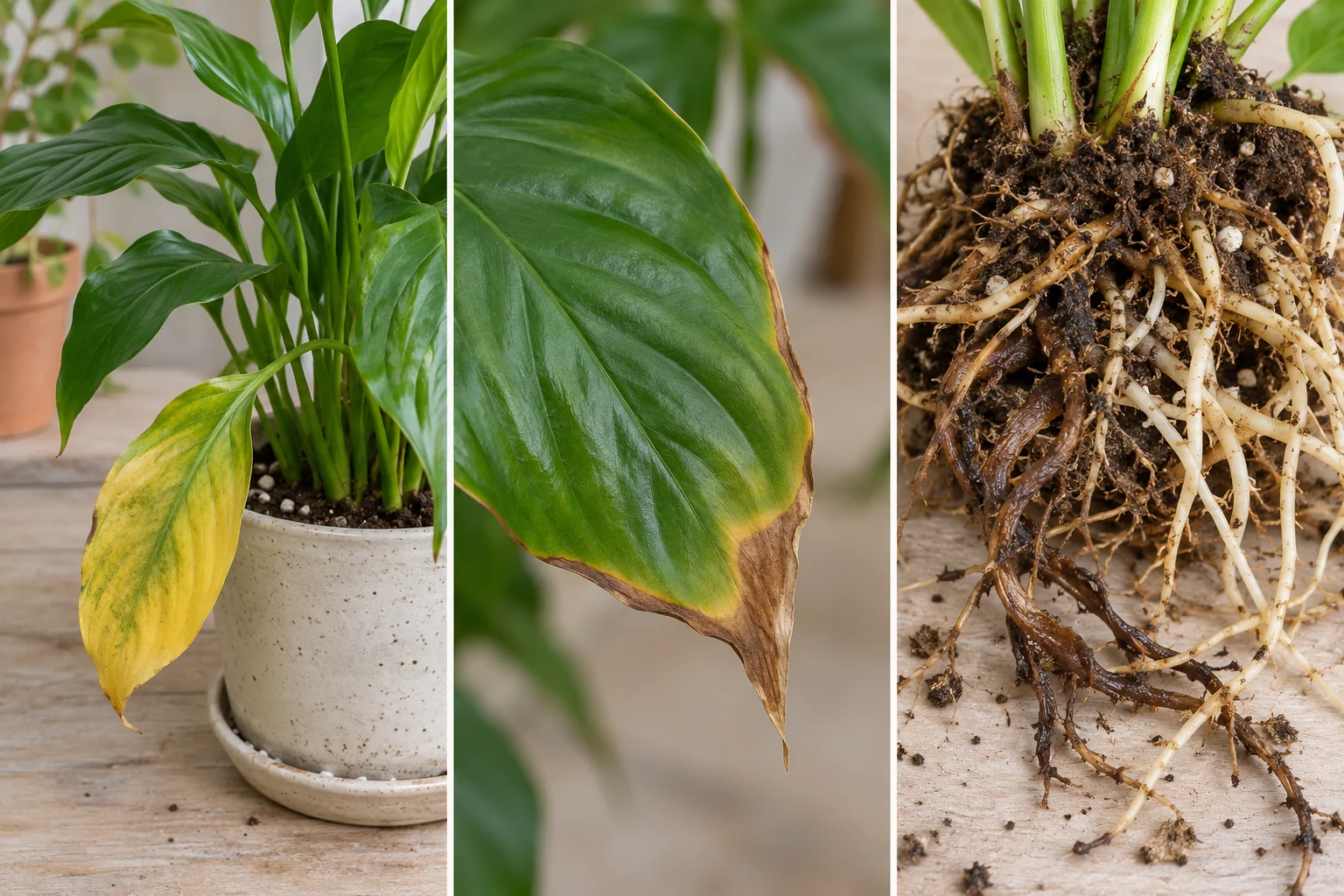
Panels, from left to right
- Yellowing foliage
- Brown leaf edges
- Damaged roots
Leaves curl above a heavy wet pot
- Possible causes
- Root stress can leave satin leaves curled even when water remains in the medium.
- What to check
- Compare the duration of wetness with root firmness and inspect drainage rather than relying on leaf shape alone.
- Next step
- Correct the wet-root condition before watering again and monitor the next unfolding leaves.
Small leaves separated by long bare gaps
- Possible causes
- Trailing tips may extend into shade while the top of the satin-pothos pot remains well lit.
- What to check
- Follow the vine from the pot to its tip and compare light at each leafy section.
- Next step
- Improve light coverage and use healthy node cuttings to rebuild a fuller display if needed.
New rough marks interrupt the silver pattern
- Possible causes
- Thrips or other pests may scar a leaf, while normal silver markings remain smooth and patterned.
- What to check
- Inspect undersides and nodes for insects, residues or webbing and compare with undamaged foliage.
- Next step
- Separate the vine, identify the cause and use a targeted labelled response rather than polishing away silver.
Follow extension growth rather than the calendar alone
During a bright warm season, growing tips and newly rooted cuttings usually use water more quickly. Check hanging baskets after changes in exposure or airflow. A temporary outdoor display needs shelter from strong sun, wind and cold nights, and trailing stems should not be allowed to root into surrounding soil or escape into warm landscapes.
As daylight decreases, the same pot may remain moist for longer even in a heated room. Adjust checks and feeding to actual extension growth. Give the plant the best available winter light without pressing leaves against cold glass. Before bringing a seasonal outdoor vine inside, inspect the nodes and leaf undersides where pests can travel unnoticed.
[1][2]An aroid flower is not the usual indoor reward
Scindapsus pictus produces small flowers on a spadix within a spathe when conditions and maturity permit. Indoor specimens rarely flower or fruit. The attractive leaves and healthy growing tips are sufficient goals for a houseplant; lack of blooms does not indicate a missing bloom fertilizer. A sudden unfamiliar structure should be inspected before being removed as a pest.
In mature climbing growth, leaf form may differ from the familiar juvenile heart-shaped blade. Ordinary home plants often remain in the juvenile appearance for long periods. Do not promise fenestrated or deeply divided leaves merely by adding a moss pole. Support, maturity, light and growing conditions interact, and a household display may never resemble a mature wild vine.
[1][2]Keep reachable vines away from chewing animals
NC State Extension flags Scindapsus pictus as a problem for cats and dogs, while RHS warns against ingestion and contact with skin or eyes. A high pot does not remove exposure when stems trail within reach. Check the full length of each vine and collect fallen leaves and pruning fragments before an animal finds them.
RHS also warns that the plant is harmful if eaten and can irritate skin or eyes. Wear gloves for substantial pruning or propagation, and avoid touching the face while handling cut stems. If ingestion is suspected, contact a veterinarian or appropriate medical service with the exact plant name. Do not confuse a satin-pothos exposure with an unrelated plant simply because both are called pothos.
[1][2]Build a support that remains manageable
A support can guide the vine and keep foliage at a useful light level, but it should not make watering the root ball or inspecting the back of the plant difficult. Check ties as stems expand and keep the pot stable against the weight of a long trained vine. A dry decorative pole is still a physical support; it does not require the roots below to remain saturated.
Semi-hydroponic growing changes the supply of water, air and nutrients and is an experiment rather than a necessary improvement. Begin with a healthy rooted cutting and a complete system if you want to try it. Converting a large struggling vine while also changing light makes the outcome hard to interpret. Keep an established plant while learning how the new root environment behaves.
[1][2]Argyraeus is a selection, not every silver vine
The selected encyclopedia entry is Scindapsus pictus Argyraeus. Its relatively small dark leaves with scattered silver distinguish the familiar display from larger, more extensively silvered selections such as Exotica. Silvery Ann and Silver Splash are other names encountered in cultivation. Pattern comparisons help describe plants but do not replace reliable nursery provenance.
The common names satin pothos, silk pothos and silver pothos can refer broadly to Scindapsus pictus. They do not make it a cultivar of Epipremnum aureum. Preserve the cultivar name where known and leave uncertain specimens at species level. No fertilizer or pruning technique can be relied upon to transform one selection into another.
[1][2]Frequently asked questions
Is satin pothos Argyraeus a variety of golden pothos?
No. It belongs to Scindapsus pictus, whereas golden pothos is Epipremnum aureum. Their shared common name describes a similar indoor use, not a shared species identity. Keep separate care records and labels.
[1][2]Should the silver patches on Argyraeus wipe off?
No. The normal silver pattern is part of the leaf’s appearance. Dust or mineral deposits may sit on top, but polishing away the pattern is not a care goal. Clean gently and compare with an untouched healthy leaf.
[1][2]Why are the trailing tips sparse below a well-lit shelf?
The pot may receive light while the hanging tips sit in shadow. Assess illumination along the whole vine. Better light for future growth and selective propagation of healthy tips can rebuild a fuller display.
[1][2]Will extra fertilizer make Argyraeus as silver as Exotica?
No reliable feeding treatment changes one selection into another. The amount and distribution of silver depend strongly on the plant’s identity and leaf development. Feed to support growth, not to chase a different cultivar pattern.
[1][2]Are small roots at satin-pothos nodes a disease?
Aerial roots are normal attachment structures on this climber. Assess their presence separately from soft, dark or collapsing stems. They can help the vine grip a support and are useful landmarks when choosing node-bearing cuttings.
[1][2]Will a support guarantee split adult leaves on satin pothos?
No. Mature leaf form depends on more than adding a pole, and household plants often retain juvenile foliage. Use support for a manageable display and healthy growth rather than a promise of a particular mature leaf shape.
[1][2]Why is the underside of a satin leaf less silver?
The familiar silver markings are concentrated on the upper surface; the underside is naturally paler and less patterned. That difference is an identification feature, not a sign that the lower surface needs polishing or feeding.
[1][2]How can I distinguish satin markings from pest scarring?
Normal silver develops as part of the leaf pattern. New irregular damage, webbing, sticky deposits or visible insects suggests a separate problem. Compare several leaves and inspect undersides and nodes before applying a treatment.
[1][2]Is a hanging satin pothos out of reach just because the pot is high?
Trailing stems may still be accessible to pets or children. This plant contains irritating calcium oxalates, so assess the full length of the vine and keep cuttings and fallen pieces inaccessible too.
[1][2]Can an unlabelled silver Scindapsus be named Argyraeus from one leaf?
One leaf is insufficient because age, growing conditions and several selections can overlap in appearance. Compare mature foliage and preserve nursery provenance. When uncertain, Scindapsus pictus is a more honest identification than an invented cultivar name.
[1][2]Compare related plants
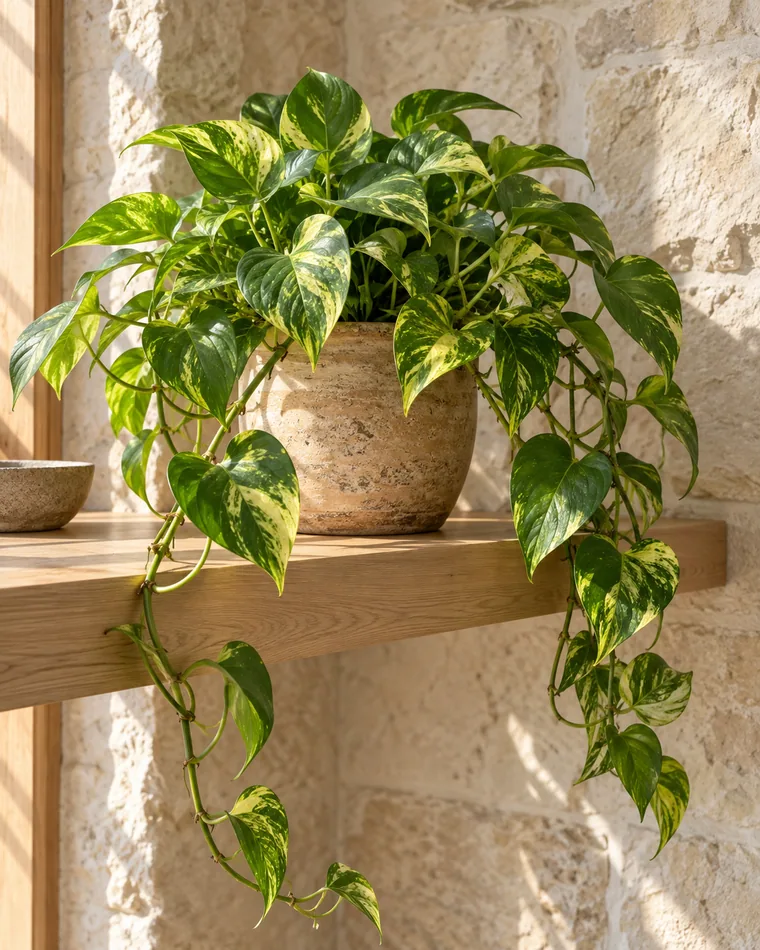
- Golden pothos: Golden pothos is Epipremnum aureum, often with yellow or cream variegation and a glossier surface. Argyraeus has a satin finish and silver spotting on a separate Scindapsus species.
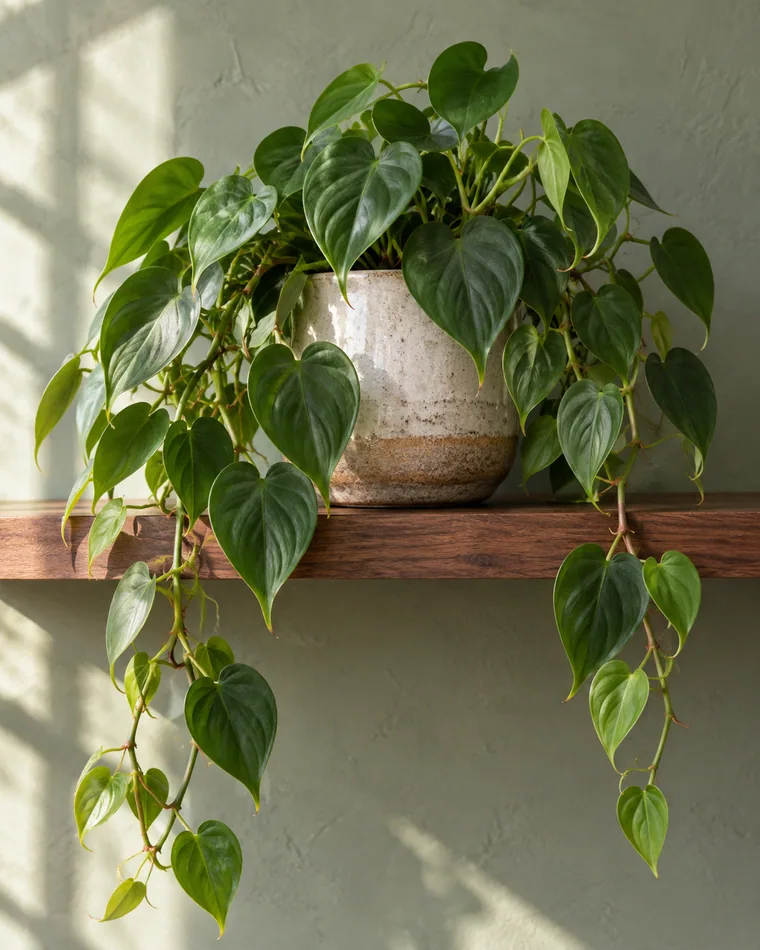
- Heartleaf philodendron: Heartleaf philodendron offers mainly green heart-shaped foliage on a flexible vine. Satin pothos adds a firmer matte blade and silver pattern, while still requiring attention to light along the trailing stems.
Care reminders with PlantPal
Save your satin pothos in PlantPal and set reminders to inspect curling leaves, root-zone moisture and the light reaching trailing tips.
Follow my satin pothos